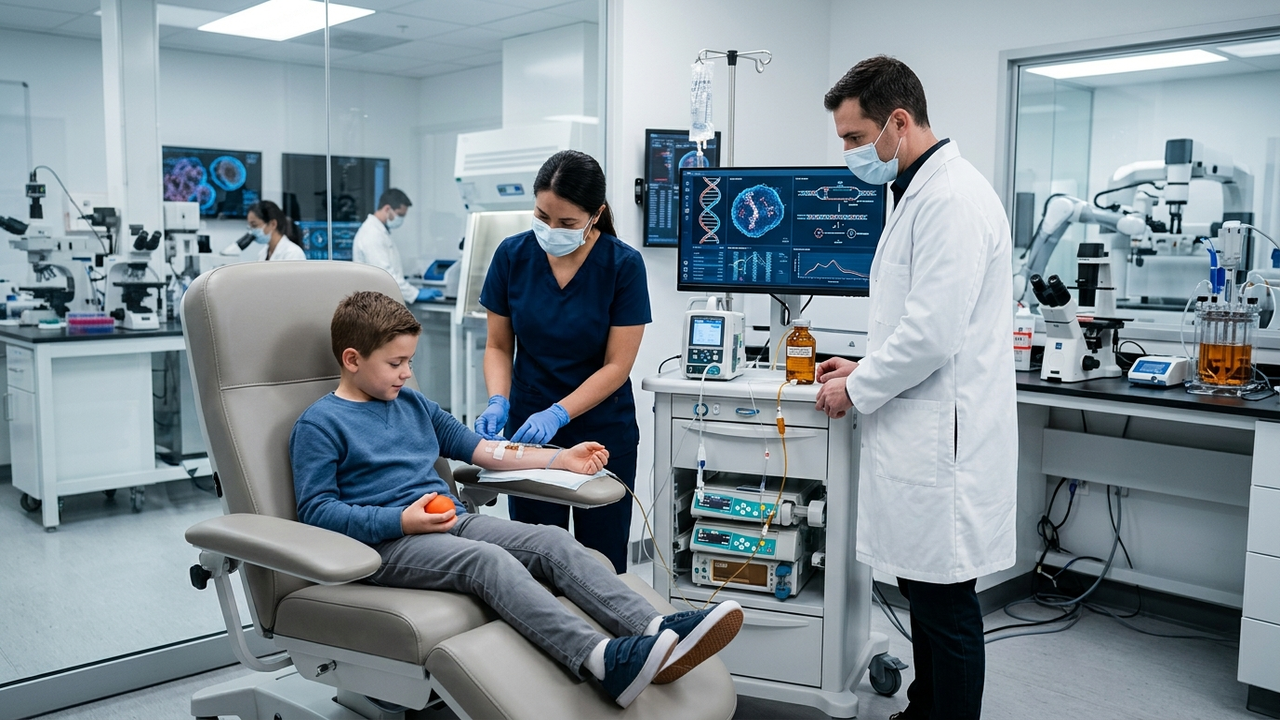
Key Finding: Precision BioSciences Initiates Clinical Trial for ARCUS Gene Editing Therapy PBGENE-DMD in DMD
Precision BioSciences has dosed the first patient in its Phase 1/2 clinical trial for PBGENE-DMD, a novel gene editing therapy targeting Duchenne muscular dystrophy (DMD). This therapeutic approach leverages the company’s proprietary ARCUS nuclease technology to restore dystrophin gene function by editing specific exons, addressing a primary cause of DMD.
Technical and Clinical Details: Restoring Near Full-Length Dystrophin via Exon 45-55 Excision
PBGENE-DMD employs a gene editing strategy using two ARCUS nucleases to precisely excise exons 45-55 of the dystrophin gene. This specific deletion accounts for approximately 8% of DMD patients, and the editing aims to restore the production of a functional (near full-length) dystrophin protein by skipping the affected region. The technology is delivered to target cells in vivo via an adeno-associated virus (AAV). The Phase 1/2 trial will evaluate the safety, tolerability, and initial indicators of efficacy.
Background and Industry Context: Diversification of Gene Editing and Advancements in DMD Treatment
DMD is a severe genetic disorder characterized by progressive muscle weakness, representing an area of high unmet medical need. While CRISPR-Cas9 systems have dominated gene editing discussions, Precision BioSciences’ ARCUS nuclease represents a distinct alternative with its own unique properties. ARCUS is characterized by its small size, high specificity, and low risk of off-target effects, offering a new option for in vivo gene editing. The initiation of this clinical trial diversifies therapeutic options for DMD patients and accelerates technological innovation across the broader gene therapy field.
Future Outlook: Hope for Improved Quality of Life for DMD Patients
The successful clinical development of PBGENE-DMD could lead to a transformative therapy that significantly improves muscle function and quality of life for DMD patients. In vivo gene editing offers the potential for a durable effect from a single treatment, which could substantially reduce patient burden. Future clinical data will be crucial in establishing the safety and efficacy of the ARCUS technology, opening up possibilities for its application not only in DMD but also in other genetic diseases. This technology is expected to bring significant hope to the DMD community.
Source: #
Get our weekly technology intelligence — free
Receive an infographic that lets you judge at a glance whether each field’s analysis report is worth reading.
Subscribe Free — Weekly Tech Intelligence
By subscribing, you’ll receive Troy-Technical’s weekly technology intelligence newsletter.
- Your email and selected fields are used only to deliver the newsletter.
- We never share your information with third parties.
- You can unsubscribe anytime via the link in each email.
See our Privacy Policy for details.
Takes about a minute · Unsubscribe anytime





Comments