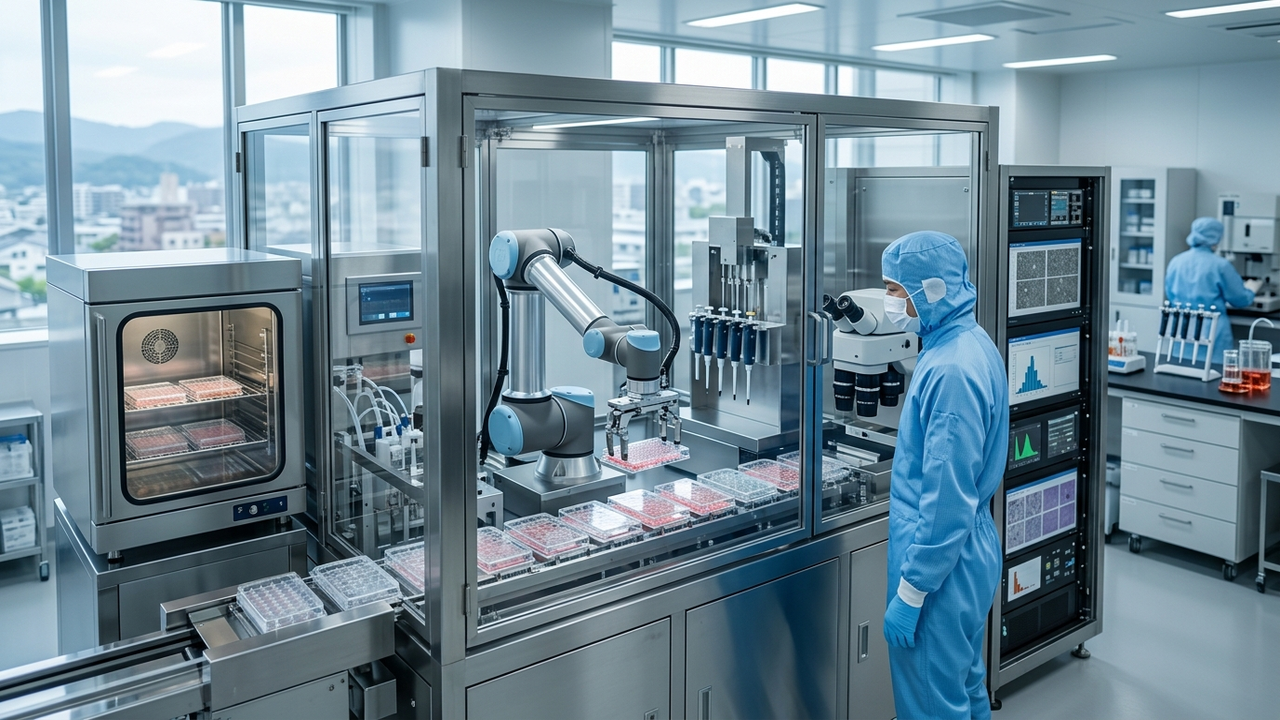
Key Finding: Panasonic and Kyoto University CiRA Foundation Develop Fully Automated iPSC Establishment System
Panasonic Holdings and the Kyoto University iPS Cell Research Institute (CiRA) Foundation have jointly developed an automated system capable of establishing high-quality iPS cells from individual patient blood samples. This “Automated iPSC Establishment System” aims to standardize and streamline the manufacturing process of iPS cells in regenerative medicine, ensuring consistency in reproducibility and quality while significantly reducing associated costs and labor burdens.
Technical & Manufacturing Details: High Automation for Quality and Efficiency
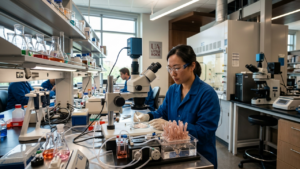
This automated system executes a series of complex steps, including cell isolation from blood samples, reprogramming, and selection and culturing of iPSC clones, with minimal human intervention. Traditional iPSC establishment processes are labor-intensive, require highly specialized expertise, and are time-consuming and costly bottlenecks. The integration of Panasonic’s cultivated automation technology with CiRA Foundation’s deep knowledge of iPS cells enables real-time monitoring of cell quality and maintenance of optimal culture conditions through high-precision robotic arms and AI-driven image analysis. This reduces the risk of human error, minimizes batch-to-batch variability, and contributes to establishing a stable supply system essential for regenerative medicine products.
Background & Industry Context: Regenerative Medicine Commercialization and Manufacturing Challenges
Regenerative medicine, particularly iPSC-based therapies, has shown promising results in clinical applications for severe conditions like spinal cord injury. However, its commercialization hinges on scaling up manufacturing processes and reducing costs. Many regenerative medicine products are “living drugs,” presenting significant challenges in manufacturing complexity, personalized processes, and quality control. This automated establishment system offers a direct solution to these challenges, removing high-cost barriers that impede the widespread adoption of iPSC therapies, thereby opening pathways to deliver treatments to more patients.
Future Outlook: Standardization and Global Expansion of Regenerative Medicine
The development of this automated iPSC establishment system was realized through the collaboration of CiRA Foundation, at the forefront of Japanese regenerative medicine research, and Panasonic, a leader in manufacturing technology. Moving forward, this technology has the potential to become a manufacturing standard for Japanese regenerative medicine products and further accelerate global regenerative medicine development. The automation and standardization of manufacturing processes will complement the future supply of off-the-shelf cell products from “iPSC banks” and provide a foundation for large-scale personalized regenerative medicine tailored to individual patient needs. This is expected to enhance the accessibility and economic viability of iPSC therapies for various diseases beyond spinal cord injury, accelerating their societal implementation.
Source: #
Get our weekly technology intelligence — free
Receive an infographic that lets you judge at a glance whether each field’s analysis report is worth reading.
Subscribe Free — Weekly Tech Intelligence
By subscribing, you’ll receive Troy-Technical’s weekly technology intelligence newsletter.
- Your email and selected fields are used only to deliver the newsletter.
- We never share your information with third parties.
- You can unsubscribe anytime via the link in each email.
See our Privacy Policy for details.
Takes about a minute · Unsubscribe anytime




Comments