Key Findings
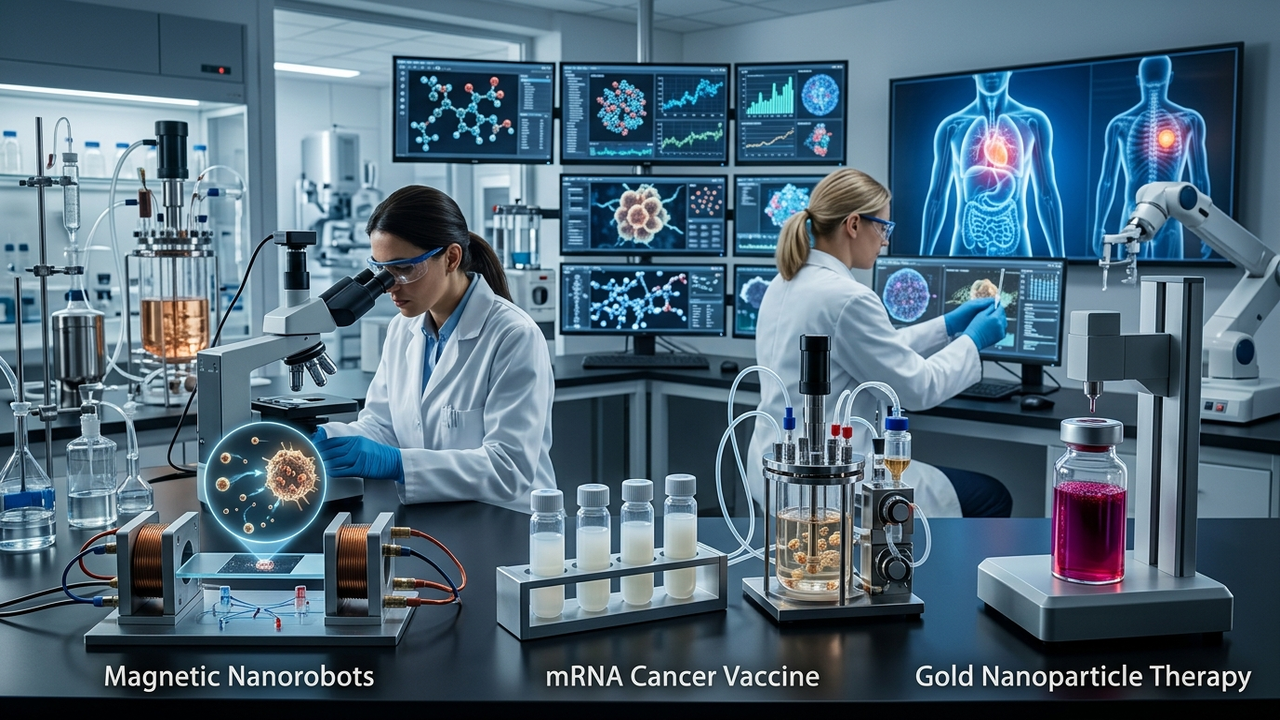
Nanotechnology is driving significant advancements in cancer therapy, with promising results from magnetic nanorobots for targeted drug delivery, mRNA cancer vaccines, and gold nanoparticle-based photothermal therapy. These approaches aim to precisely target malignant cells, reduce systemic side effects associated with conventional treatments, and enhance therapeutic efficacy.
Technical / Clinical Details
- Magnetic Nanorobots for Targeted Drug Delivery: Magnetic nanorobots are being developed to navigate the body under external magnetic fields, precisely delivering medicines and gene therapies to specific tumor sites, such as liver tumors. This technology protects therapeutic agents from early degradation and ensures precise release, minimizing systemic exposure and maximizing localized treatment effect.
- mRNA Cancer Vaccines: Lipid nanoparticles (LNPs) are utilized to encapsulate mRNA cancer vaccines, designed to train the immune system to recognize and attack melanoma cells. LNPs efficiently deliver mRNA into cells, promoting effective antigen presentation and eliciting robust anti-tumor immune responses.
- Gold Nanoparticle Photothermal Therapy: Dr. Hadiyah-Nicole Green’s research has successfully demonstrated the eradication of precancerous cells in mouse models using laser-activated gold nanoparticles. This photothermal therapy involves accumulating gold nanoparticles at tumor sites and then irradiating them with a near-infrared laser, causing the nanoparticles to generate heat and selectively destroy cancer cells. Notably, a single 10-minute treatment resulted in complete tumor regression over 15 days in mice, without observed side effects. This breakthrough, supported by a $1.1 million grant from the U.S. Department of Veterans Affairs, seeks to offer an alternative to chemotherapy, radiation, and surgery for human cancer patients.
Background & Context
The persistent challenges in cancer treatment include the high mortality rate and severe side effects from conventional therapies. Nanotechnology offers a paradigm shift by enabling highly precise interventions at the cellular and molecular level. Its ability to improve drug bioavailability, target specific tissues, and enhance imaging capabilities positions it as a transformative force in oncology, addressing the limitations of existing treatment modalities.
Strategic Significance & Outlook
These nanotechnology-based cancer interventions are rapidly progressing from preclinical studies towards clinical translation. The remarkable efficacy and safety profile observed in mouse models for gold nanoparticle laser therapy underscore its potential, with human clinical trials being the crucial next phase. Similarly, advancements in magnetic nanorobots and LNP-based mRNA vaccines suggest they could soon be integrated into standard cancer treatment protocols, offering more personalized, effective, and less toxic options for patients globally.
Get our weekly technology intelligence — free
Receive an infographic that lets you judge at a glance whether each field’s analysis report is worth reading.
Subscribe Free — Weekly Tech Intelligence
By subscribing, you’ll receive Troy-Technical’s weekly technology intelligence newsletter.
- Your email and selected fields are used only to deliver the newsletter.
- We never share your information with third parties.
- You can unsubscribe anytime via the link in each email.
See our Privacy Policy for details.
Takes about a minute · Unsubscribe anytime






Comments