Key Findings
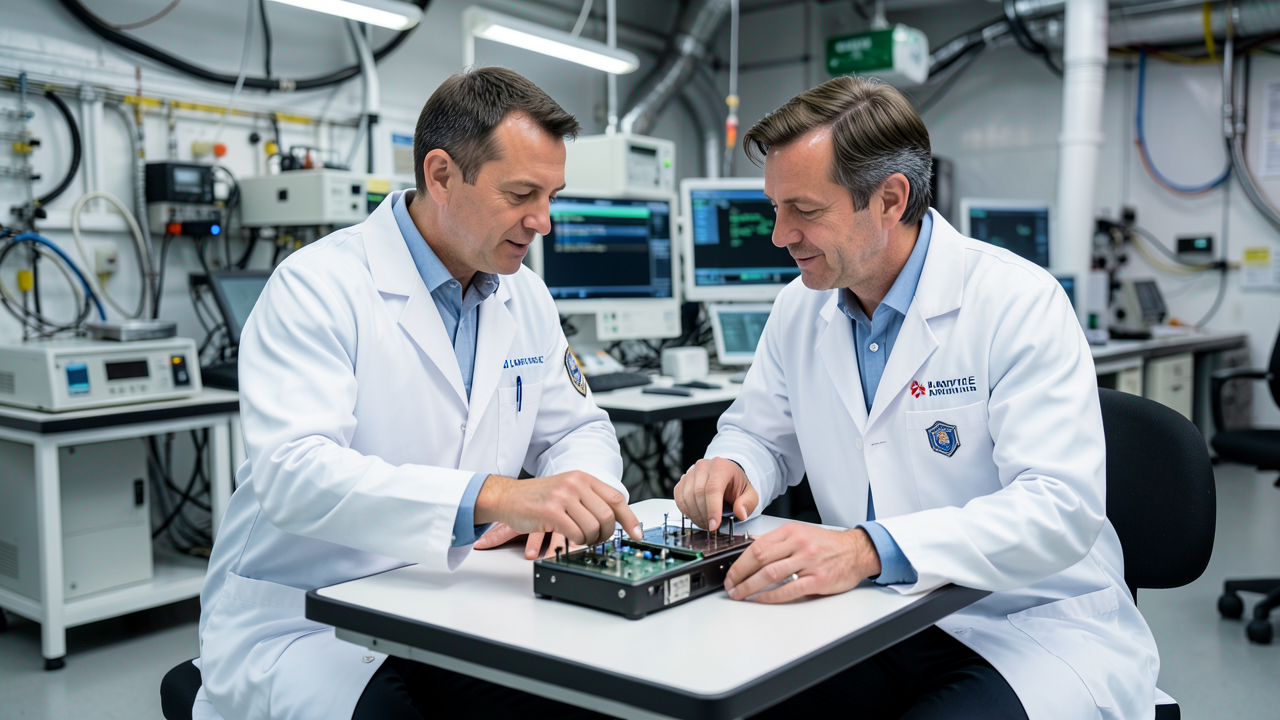
Clarivate, a global leader in analytics, has unveiled its 2026 Citation Laureates, recognizing scientists whose highly cited research has made transformative breakthroughs and are considered potential Nobel Prize recipients. In the Chemistry category, Professors David L. Allara and Ralph G. Nuzzo from Pennsylvania State University have been honored for their pioneering work in the field of self-assembled nanomaterials, particularly self-assembled monolayers (SAMs). Their collective research has laid the fundamental groundwork for precisely controlling surface properties at the nanoscale, thereby impacting a vast array of scientific and technological applications.
Technical / Clinical Details
Professors Allara and Nuzzo are credited with establishing much of the scientific understanding and practical applications of self-assembled monolayers (SAMs), where organic molecules spontaneously arrange themselves into highly ordered, single-molecule thick films on substrate surfaces. Their research meticulously elucidated the mechanisms of SAM formation, characterized their structural properties, and demonstrated methodologies for their functionalization. For instance, they were instrumental in identifying the processes by which various alkanethiol derivatives form dense, well-ordered monolayers on gold and silver surfaces, and how the thickness, orientation, and surface energy of these films could be precisely controlled. This fundamental work enabled the bespoke tailoring of surface chemical and physical properties at the nanoscale, leading to applications such as enhanced sensitivity in biosensors, precise interface control in microelectronic devices, and the development of advanced corrosion-resistant coatings. Their early work, for instance, demonstrated the ability to create defect-free films spanning square centimeters, a crucial step for industrial adoption.
Background & Context
Self-assembled nanomaterials represent a cornerstone of bottom-up nanotechnology, offering a highly promising approach to fabricating functional materials through molecular-level self-construction. Since the concept of SAMs emerged in the 1980s, Professors Allara and Nuzzo have made seminal contributions to enhancing their structural integrity and chemical stability. Their research significantly advanced the understanding of self-assembly phenomena in nanoscience and engineering, profoundly influencing diverse fields including materials science, surface chemistry, biotechnology, and electronics. Without their foundational discoveries, the development of many contemporary nanodevices and sophisticated sensors would have been significantly hindered, or even impossible, underscoring the broad impact of their work.
Strategic Significance & Outlook
The research by Professors Allara and Nuzzo on self-assembled nanomaterials continues to provide an indispensable foundation for the ongoing advancement of nanotechnology. SAMs are expected to unlock new possibilities in future applications such as molecular electronics, advanced functional coatings, precise drug delivery systems in personalized medicine, and efficiency improvements in renewable energy technologies, including solar cells. Clarivate’s Citation Laureate award validates the sustained influence of their research and its high esteem within the scientific community. Their accomplishments are recognized as truly ‘transformative scientific breakthroughs’ that the Nobel Prize Committee is highly likely to consider, solidifying their legacy as pioneers who fundamentally shaped our ability to manipulate matter at the nanoscale for technological benefit.
Get our weekly technology intelligence — free
Receive an infographic that lets you judge at a glance whether each field’s analysis report is worth reading.
Subscribe Free — Weekly Tech Intelligence
By subscribing, you’ll receive Troy-Technical’s weekly technology intelligence newsletter.
- Your email and selected fields are used only to deliver the newsletter.
- We never share your information with third parties.
- You can unsubscribe anytime via the link in each email.
See our Privacy Policy for details.
Takes about a minute · Unsubscribe anytime



Comments