

Key Findings
A medical team led by Kiran Musunuru (University of Pennsylvania) and Becca Ahrens-Nicholas (Children’s Hospital of Philadelphia) successfully administered a personalized CRISPR therapy to an infant, KJ, born with CPS1 deficiency. The FDA cleared the IND in one week to accommodate the urgency of the case. Two years after the infusion, the patient remains alive despite a disease that typically causes ammonia to destroy the brain within 48 hours of birth.
Technical Details
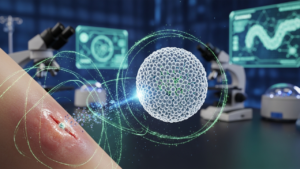
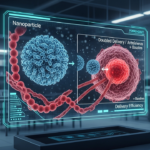
The therapy utilizes a modular delivery system consisting of lipid nanoparticles described as “soap bubbles.” These particles contain two RNA molecules: one encoding the gene editor and a 20-base guide RNA acting as a molecular GPS. This modularity allows the drug platform to remain constant while only the guide RNA is swapped to target specific genomic sequences. Once infused intravenously, the particles target hepatocytes in the liver. The team utilized whole genome sequencing, completed approximately one week after birth, to design the specific guide RNA required for the patient’s mutation.
Background and Context
Musunuru’s research began with cardiovascular disease, targeting genes like PCSK9. Because 2–3% of the population naturally possesses loss-of-function variants of PCSK9 without negative phenotypes, the target was considered “de-risked” by nature. This work led to the creation of Verve Therapeutics and current clinical data on liver-targeted base editing. The transition to rare metabolic diseases began in 2021, starting with PKU. In humanized mouse models, base editing normalized phenylalanine levels within 48 hours and improved neurological outcomes within weeks.
Significance and Outlook
The success with Baby KJ followed years of “theoretical time trials” to streamline the design-to-manufacturing pipeline. While urea cycle disorders lack recurrent variants and require individualized therapy, this case establishes a precedent for rapid regulatory clearance and manufacturing. Musunuru predicts that multiple therapies targeting lipid genes will be available by the early 2030s, shifting the treatment model from daily medication to one-time interventions.
Source: https://finance.biggo.com/news/095ffb5e6b1a108d
Get our weekly technology intelligence — free
Receive an infographic that lets you judge at a glance whether each field’s analysis report is worth reading.
Subscribe Free — Weekly Tech Intelligence
By subscribing, you’ll receive Troy-Technical’s weekly technology intelligence newsletter.
- Your email and selected fields are used only to deliver the newsletter.
- We never share your information with third parties.
- You can unsubscribe anytime via the link in each email.
See our Privacy Policy for details.
Takes about a minute · Unsubscribe anytime