

Key Findings
The study concludes that the concentration of carbon nanofiber ink is the primary driver of electrical performance in thermoelectric textiles. The highest performing fabric was coated with the highest concentration of PR 24 nanofibers, achieving a power factor of approximately 1.2 times 10 to the minus 3 microwatts per meter per square kelvin. This fabric reached an electrical conductivity of 35.4 siemens per meter, significantly higher than the 23.2 siemens per meter achieved by the PR 25 grade at the same concentration.
Technical Details
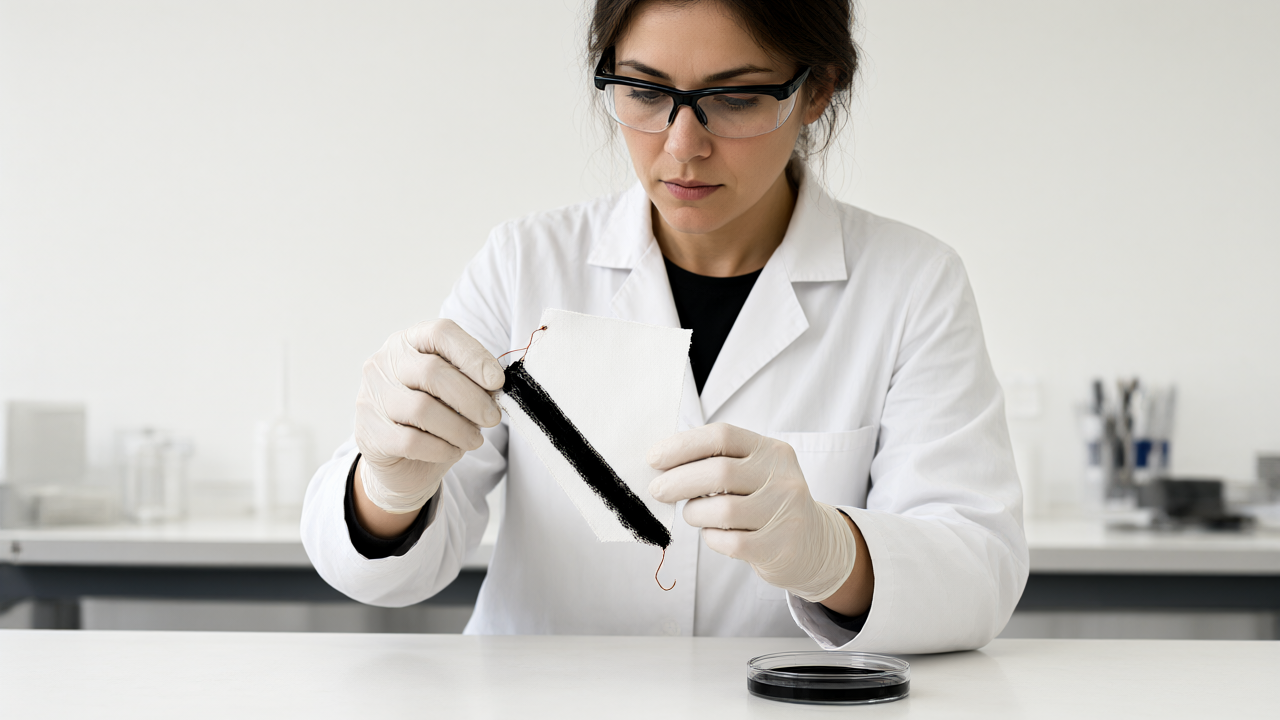
The research team utilized two commercial grades of Pyrograf III carbon nanofibers: PR 24 LHT XT and PR 25 PS XT. These nanofibers differ in their post-synthesis thermal treatments (1,500 degrees Celsius for PR 24 and 700 degrees Celsius for PR 25) and diameters (80 to 100 nanometers for PR 24 versus 125 to 150 nanometers for PR 25). The fabrics were functionalized via repeated immersion in aqueous inks with concentrations of 1.6, 3.2, or 6.4 milligrams of nanofibers per milliliter of distilled water, stabilized with sodium dodecybenzenesulfonate.
- Thermal Stability: Coated fabrics remained stable up to 300 degrees Celsius.
- Composition: High-concentration coatings resulted in 8 to 9 percent nanofiber content by weight.
- Thermoelectric Properties: Both grades exhibited negative Seebeck coefficients (n-type conduction), with PR 24 reaching about minus 6 microvolts per kelvin and PR 25 reaching minus 1.
- Thermal Conductivity: Measured at 0.06 watts per meter per kelvin, which is twice that of uncoated cotton.
Background & Context
Thermoelectric textiles rely on the Seebeck effect, where a temperature gradient—such as that between the human body (roughly 37 degrees Celsius) and cooler ambient air—generates voltage. While carbon nanotubes and nanofibers offer high electronic properties, they are typically solid powders. This study utilized water-based inks to integrate these materials into cotton, a widely used and skin-compatible substrate, without destroying its textile character.
Significance & Outlook
The discovery that absolute Seebeck values of the fabrics exceed those of the raw nanofibers suggests electron doping occurs between cellulose molecules and graphitic planes. By maintaining low thermal conductivity while increasing electrical conductivity through ink concentration, these textiles could trickle-charge health monitors and smart devices without the need for batteries.
Get our weekly technology intelligence — free
Receive an infographic that lets you judge at a glance whether each field’s analysis report is worth reading.
Subscribe Free — Weekly Tech Intelligence
By subscribing, you’ll receive Troy-Technical’s weekly technology intelligence newsletter.
- Your email and selected fields are used only to deliver the newsletter.
- We never share your information with third parties.
- You can unsubscribe anytime via the link in each email.
See our Privacy Policy for details.
Takes about a minute · Unsubscribe anytime