

Key Findings
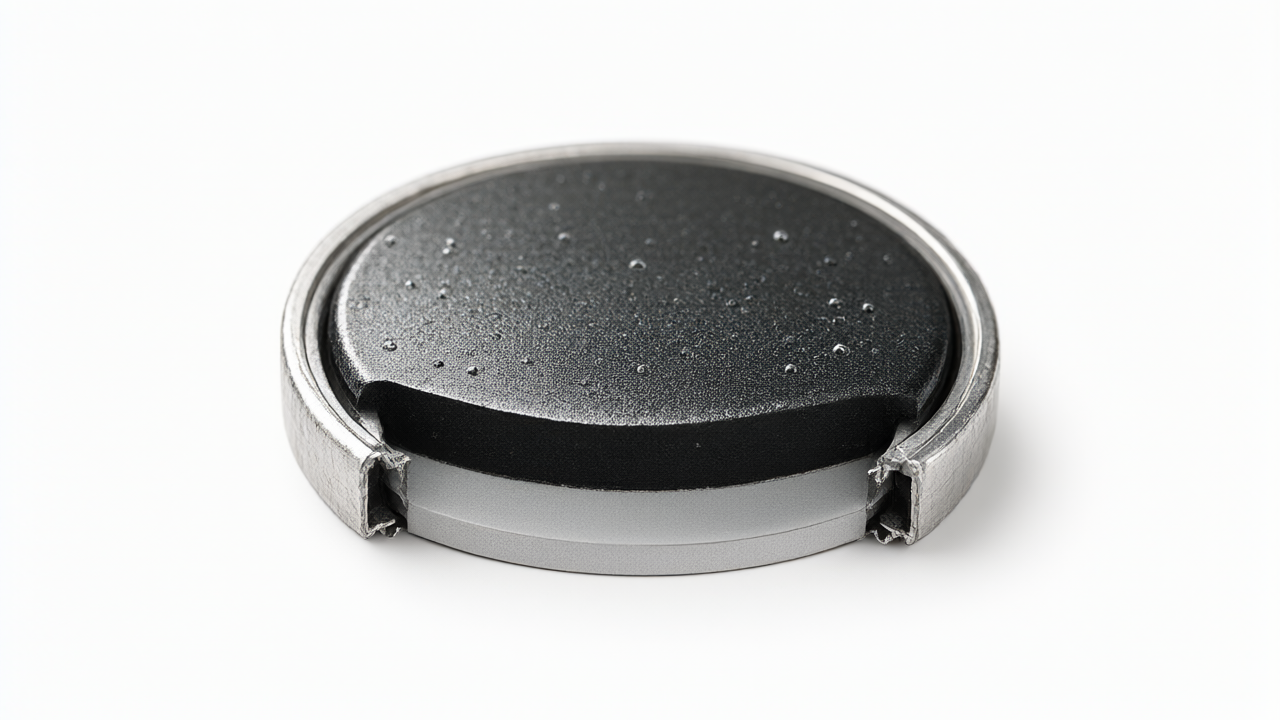
The optimized fluorinated graphene catalyst, designated as FG-3 (~3.1 at.% F), demonstrates exceptional bifunctional activity for 2e-ORR and POR. It achieves 97.4% H2O2 selectivity and 98.0% Faradaic efficiency. In practical applications, a primary zinc-oxygen battery using this catalyst delivers a peak power density of 569 mW cm-2, while the rechargeable version maintains a 98.0% round-trip efficiency at 2 mA cm-2 and retains 97.6% efficiency after 1500 cycles, operating stably for over 820 hours in ambient air.
Technical Details
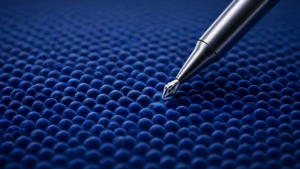
The research team, led by Profs. WEN Zhenhai and HUANG Junheng from the Fujian Institute of Research on the Structure of Matter (FJIRSM), utilized a thermal defluorination strategy to synthesize the catalyst. By using commercial highly fluorinated graphene as a precursor and applying stepwise pyrolysis under an inert atmosphere, the team tuned C-F bonding from insulating sp3-C-F to conductive sp2-C-F. This process restored the conjugated sp2 carbon network, resulting in a material with uniform fluorine distribution, high surface area, and improved wettability.
Mechanistic analysis using first-principles simulations and operando spectroscopy revealed that sp2-C-F bonds create localized electrostatic polarization on adjacent carbon sites. This polarization stabilizes the key *OOH intermediate, thereby lowering the kinetic barrier for the reaction.
Background & Context
Rechargeable zinc-air batteries (ZABs) are promising for their high theoretical energy density and safety. However, they are typically hindered by the sluggish kinetics of four-electron (4e-) oxygen electrocatalysis (ORR during discharge and OER during charge), which leads to high voltage polarization and catalyst degradation. While the two-electron (2e-) O2-H2O2 pathway offers faster kinetics, previous metal-based catalysts suffered from Fenton-like side reactions, and metal-free carbon catalysts faced a trade-off between conductivity and selectivity.
Significance & Outlook
This work establishes a structure-property relationship for fluorinated carbon electrocatalysis. The strategy for carbon material engineering provides a pathway for developing durable metal-air batteries and enabling on-site H2O2 electrosynthesis.
Source: https://english.cas.cn/newsroom/research-news/202610/t20261015_1203726.shtml
Get our weekly technology intelligence — free
Receive an infographic that lets you judge at a glance whether each field’s analysis report is worth reading.
Subscribe Free — Weekly Tech Intelligence
By subscribing, you’ll receive Troy-Technical’s weekly technology intelligence newsletter.
- Your email and selected fields are used only to deliver the newsletter.
- We never share your information with third parties.
- You can unsubscribe anytime via the link in each email.
See our Privacy Policy for details.
Takes about a minute · Unsubscribe anytime