

Key Findings
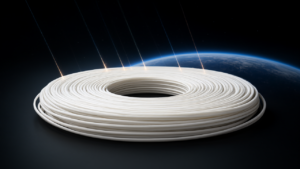
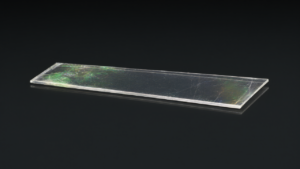
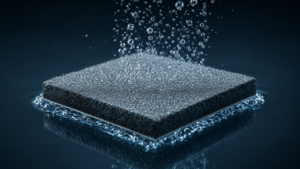
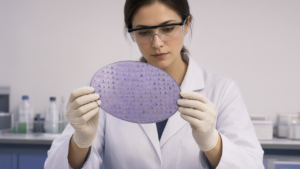
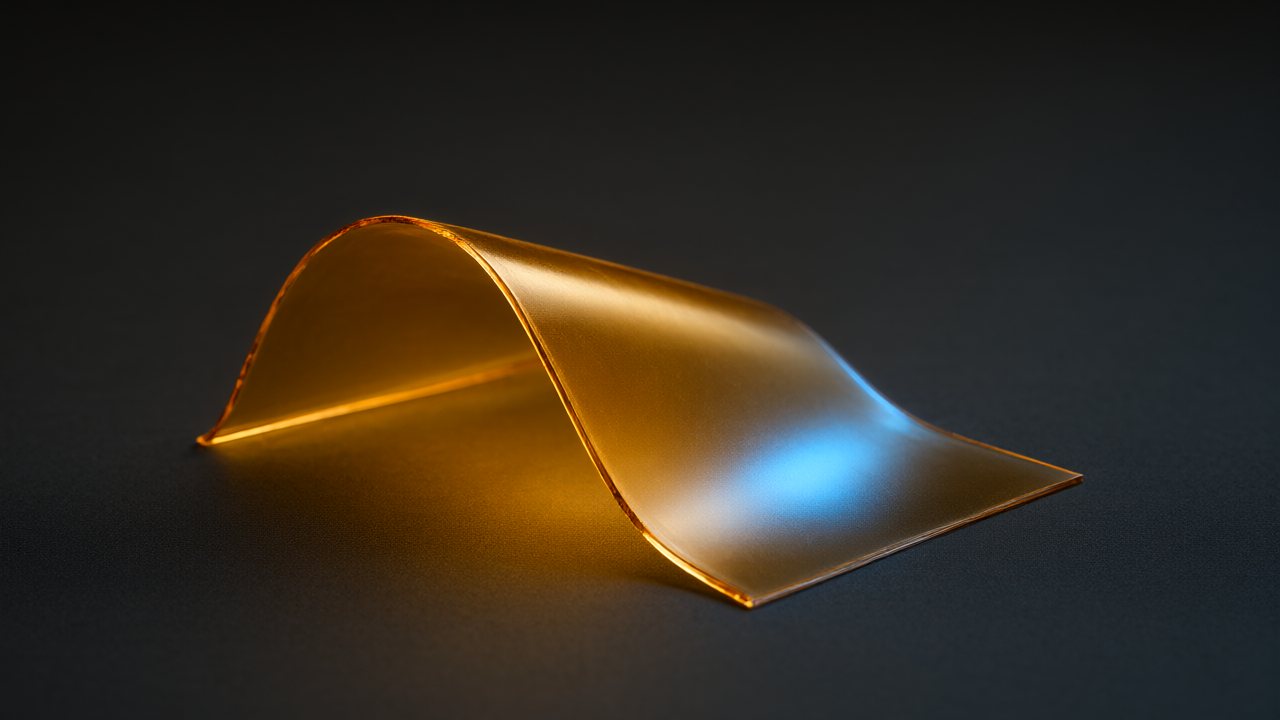
A research team led by Professor Kim Seong-ryong from the Department of Nano Chemical Materials Engineering at Korea National University of Transportation has successfully fabricated an ultra-thin composite film. The film integrates high-performance heat dissipation, electromagnetic wave shielding, and mechanical durability. Notably, the film blocks more than 99.999% of external electromagnetic waves at a thickness comparable to a human hair and retains approximately 95% of its initial performance after 10,000 repeated bending tests.
Technical Details
To overcome traditional trade-offs between strength and flexibility, the team focused on improving the alignment and bonding methods of aramid (Kevlar) nano-fibers rather than increasing additive content. The researchers addressed a common issue where using water for film reconstitution caused rapid bonding and non-uniform structures.
- Process Optimization: The team replaced water with a mixed solution of acetic acid and alcohol to control the coagulation speed of the nano-fibers. This allowed for gradual bonding and sufficient alignment, resulting in a denser and more uniform internal structure.
- Performance Gains: This method improved heat transfer performance by more than twofold compared to existing methods, without the need for additional additives, while also enhancing mechanical strength.
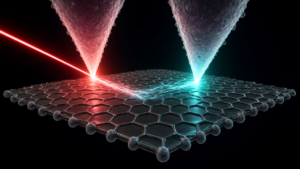
- Multifunctional Composite: By incorporating graphene nanoplatelets, the team produced a multifunctional composite film that simultaneously increases thermal conductivity, strength, and toughness.
Background & Context
The study was conducted as an international collaboration involving the CRANN Institute at Trinity College Dublin in Ireland and the Pontifical Catholic University of Peru (PUCP). The project received funding through the Mid-Career Researcher Support Program of the National Research Foundation of Korea and the Small and Medium Business Technology Innovation Development Project of the Ministry of SMEs and Startups. The results were published online in the journal Advanced Composites and Hybrid Materials.
Significance & Outlook
Professor Kim Seong-ryong stated that the research provides a new material design method to secure both thermal conductivity and strength by controlling the bonding time between fibers. Researcher Muhammad Yasir added that this molecular-level structural design approach enables the development of various other high-performance composite materials.
Source: https://www.gukjenews.com/news/articleView.html?idxno=3740665
Get our weekly technology intelligence — free
Receive an infographic that lets you judge at a glance whether each field’s analysis report is worth reading.
Subscribe Free — Weekly Tech Intelligence
By subscribing, you’ll receive Troy-Technical’s weekly technology intelligence newsletter.
- Your email and selected fields are used only to deliver the newsletter.
- We never share your information with third parties.
- You can unsubscribe anytime via the link in each email.
See our Privacy Policy for details.
Takes about a minute · Unsubscribe anytime