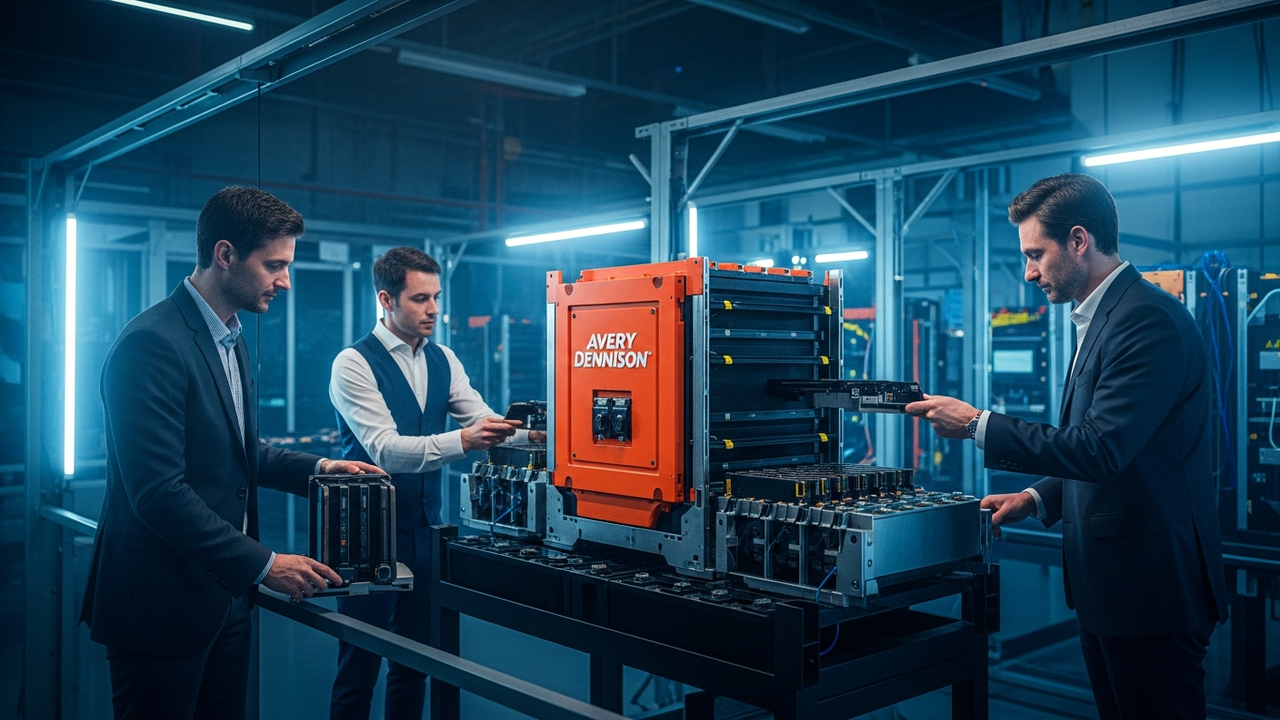
Background and Challenges in EV Battery Development
The rapid expansion of the electric vehicle (EV) market demands continuous innovation in EV battery technology across performance, safety, cost, and manufacturing efficiency. Next-generation EV battery systems aim for higher voltages, greater energy density, and more compact designs, which introduce new engineering challenges. Specifically, adhesive solutions for interconnecting numerous battery cells, managing heat, absorbing vibrations, and ensuring fire safety are crucial for determining the overall reliability and performance of the battery pack.
Avery Dennison’s Adhesive Technology Innovations
Avery Dennison has introduced advanced adhesive technologies designed to address these key challenges in EV battery development. Their new pressure-sensitive adhesive (PSA) tapes offer innovative solutions in the following areas:
- Simplified Cell Connection Systems: These tapes simplify the interconnection of battery cells, eliminating the need for complex wiring or welding processes. This leads to faster assembly, reduced manufacturing costs, and enables flexible designs that contribute to more compact battery packs.
- Enhanced Safety: Adhesives with flame retardancy and high-temperature resistance protect battery packs from risks such as thermal runaway. In the event of an anomaly, they help suppress the spread of flames, significantly enhancing safety—an indispensable feature as EV safety regulations become more stringent.
- Optimized Performance: Superior vibration absorption characteristics protect battery cells from road vibrations and impacts, reducing mechanical stress. This contributes to extended battery lifespan and stable performance. The stable interface provided by the adhesive also enhances the reliability of electrical connections.
Market Impact and Future Outlook
Avery Dennison’s adhesive technologies for EV batteries are expected to have a significant impact on the electric vehicle industry. The realization of safer, more efficient, and easier-to-assemble battery packs will further accelerate EV adoption. This technology empowers battery manufacturers to achieve greater design freedom, streamline production processes, and ultimately deliver high-quality, affordable EVs to consumers. In the future, these adhesive technologies are expected to play an indispensable role in the development of modular battery designs, cell-to-pack architectures, and next-generation battery technologies such as solid-state batteries. Adhesives will increasingly become strategic components for improving battery system performance and safety, rather than mere bonding materials.
Source: https://ai-online.com/2026/05/avery-dennison-powers-the-next-generation-of-ev-battery-innovation/









Comments