Background: Fundamental Principles of Molecular Recognition and Functional Materials
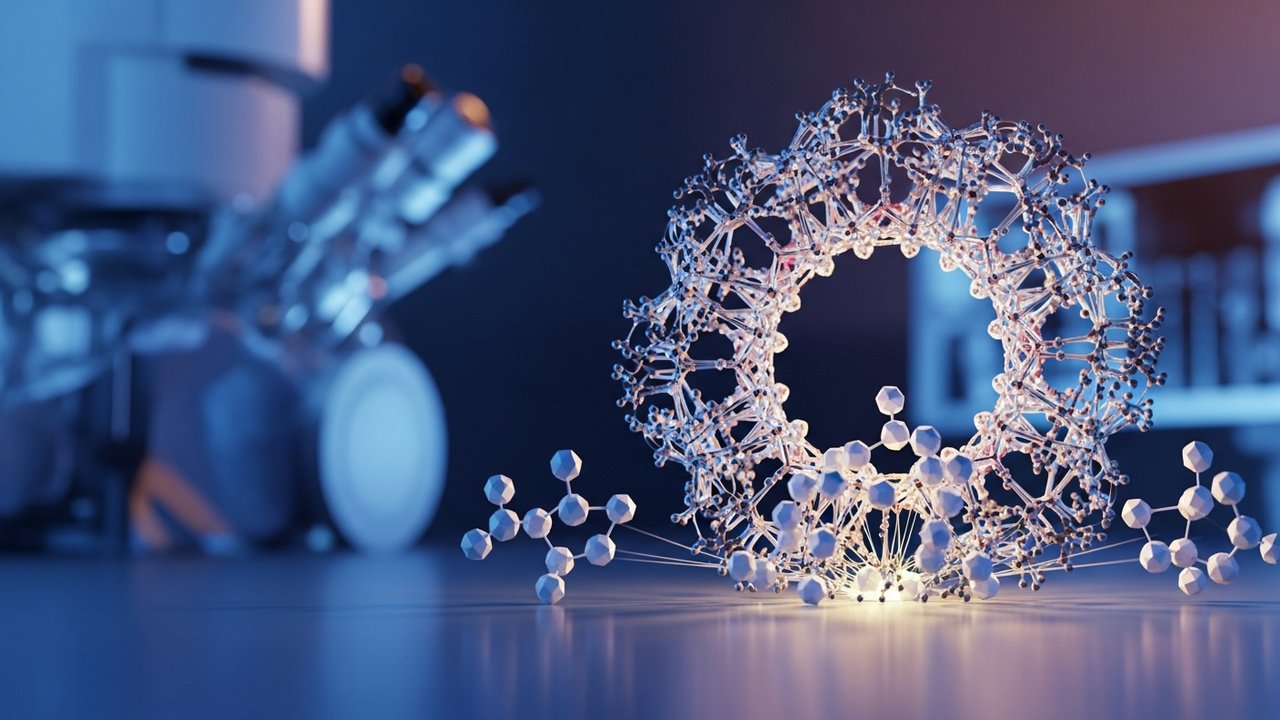
Molecular recognition, the selective binding and recognition of specific molecules by others, underpins various functional materials used in chemical sensors, pharmaceuticals, and separation processes. Macrocyclic host molecules, with their large cyclic structures, are particularly effective in encapsulating guest molecules within their cavities, enabling highly efficient molecular capture and selective transport. However, the exact mechanisms by which these molecules behave on solid surfaces and interact cooperatively to express their functions have not been fully understood. A deeper understanding of molecular arrangement and interactions on surfaces is essential for designing high-performance functional materials.
Key Findings: AFM Visualizes Single-Molecule Cooperative Behavior
A collaborative research team from multiple Japanese institutions (Osaka University, Tokyo Institute of Technology, Hiroshima University, and Kyushu University) experimentally demonstrated that macrocyclic host molecules immobilized on a solid surface exhibit “cooperative behavior” in guest molecule capture, but only when densely assembled. They successfully employed two atomic force microscopy (AFM) techniques—non-contact AFM and jump-scan AFM—to directly observe, at a single-molecule level, structural changes in host molecules and their interactions with guest molecules. Specifically, they proved that when host molecules are densely packed on a surface, their individual capture capabilities are enhanced beyond what they would exhibit in isolation, leading to more efficient guest molecule encapsulation. This cooperativity is believed to be induced by subtle structural changes and electronic interactions between adjacent host molecules.
Technical Significance and Outlook
This discovery provides new insights into the design principles of molecular assemblies and will significantly impact future functional materials development. The understanding that molecules can function not only individually but also collectively to enhance overall performance offers direct applications. For instance, it can be utilized in designing next-generation chemical sensors for ultra-sensitive detection of trace substances, advanced separation membranes for efficient isolation of specific compounds, or materials for effective gas and drug storage and release. Particularly in bottom-up approaches that leverage molecular self-assembly on surfaces to precisely construct nanostructures with targeted functions, controlling this cooperative behavior becomes a critical factor. In the future, applying this principle is expected to accelerate the creation of high-performance smart materials with diverse applications in environmental monitoring, medical diagnostics, and the energy sector.






Comments