Key Findings
Varda Space Industries has recently secured $187 million in funding, accelerating its efforts to commercialize pharmaceutical manufacturing in microgravity. Alongside other companies like the UK-based BioOrbit, Varda is pushing the boundaries of space-based drug production, with an ambitious goal to apply space-manufactured medicines to humans within five years.
Technical and Clinical Details
- Microgravity Drug Manufacturing: In microgravity, the absence of gravitational forces allows for the formation of larger, purer, and more uniform drug crystals compared to terrestrial production, where gravity can hinder uniform growth. This characteristic can potentially enhance drug solubility, stability, and efficacy. Particularly, protein-based drugs and complex molecules like anti-cancer antibodies are expected to benefit from high-quality crystal growth in microgravity, leading to the development of more effective therapeutic agents.
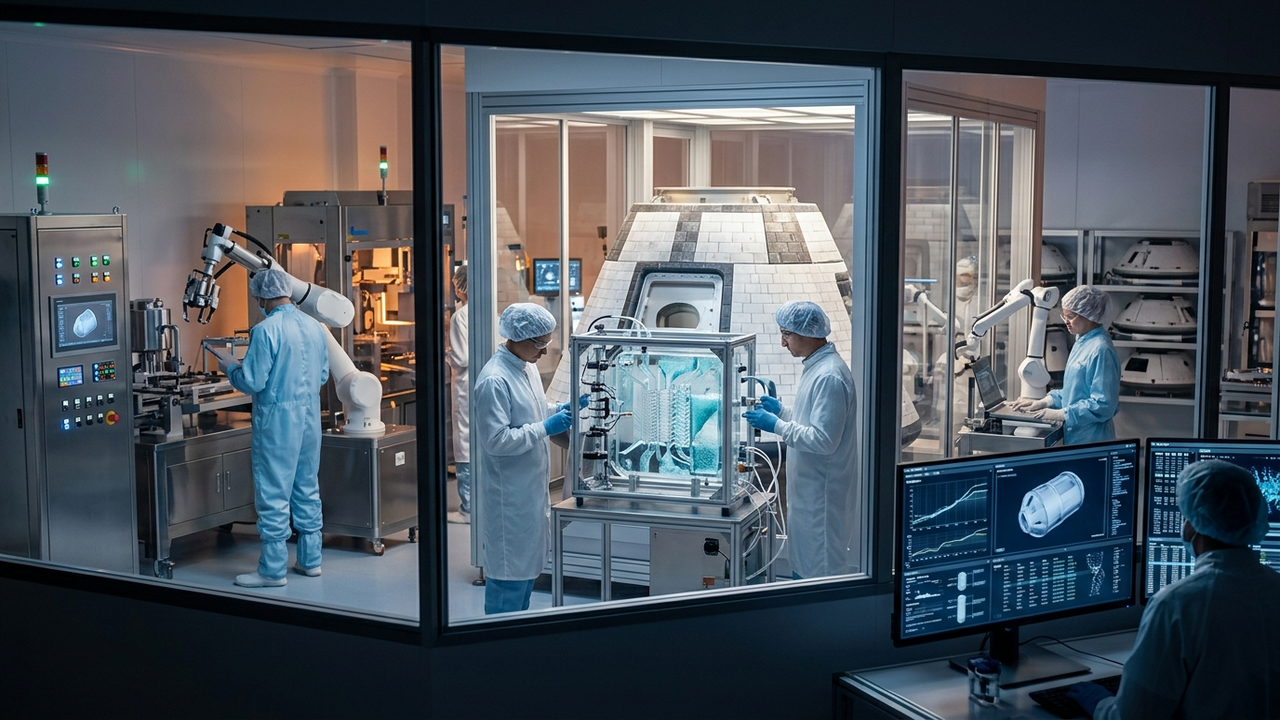
- Varda Space’s Approach: Varda Space is developing autonomous re-entry capsules designed to manufacture drug crystals in space and return them to Earth. The $187 million funding will enable the company to scale up its manufacturing capabilities and pursue the space production of more complex pharmaceutical compounds.
- BioOrbit’s Initiatives: UK-based BioOrbit, which raised £9.8 million (approximately $18 million) earlier this year, is establishing a pharmaceutical manufacturing facility in space. Their focus is on the in-space production of drug crystals, including specific anti-cancer antibodies that are challenging to produce on Earth.
- Human Application Goal: Varda Space’s “human application within five years” objective highlights the rapid progression towards clinical trials and patient delivery of space-manufactured pharmaceuticals. This timeline underscores the urgency and potential impact of achieving commercial maturity and regulatory approvals in this nascent field.
Background and Industry Context
The pharmaceutical industry continually seeks innovation in manufacturing processes to combat high development costs and low success rates for new drugs. Microgravity drug manufacturing presents a groundbreaking approach for both developing novel drugs and improving existing ones. Decades of experimentation aboard the International Space Station (ISS) have laid the scientific foundation for this technology. Companies like Varda Space and BioOrbit are now aiming to scale this potential through dedicated commercial platforms, independent of the ISS. This shift signifies space transitioning from merely an exploration domain to a high-value manufacturing frontier.
Strategic Significance and Outlook
The advancement of microgravity drug manufacturing by Varda Space and BioOrbit has the potential to profoundly transform the pharmaceutical industry. The production of high-quality drug crystals could lead to more effective medicines with fewer side effects, ultimately improving patient outcomes. Varda’s target of human application within five years indicates that this technology is rapidly moving toward commercialization. While overcoming technical challenges, optimizing manufacturing costs, and navigating regulatory pathways remain critical for success, the prospect of medicines originating from space contributing to human health is becoming increasingly tangible.
Get our weekly technology intelligence — free
Receive an infographic that lets you judge at a glance whether each field’s analysis report is worth reading.
Subscribe Free — Weekly Tech Intelligence
By subscribing, you’ll receive Troy-Technical’s weekly technology intelligence newsletter.
- Your email and selected fields are used only to deliver the newsletter.
- We never share your information with third parties.
- You can unsubscribe anytime via the link in each email.
See our Privacy Policy for details.
Takes about a minute · Unsubscribe anytime









Comments