Background
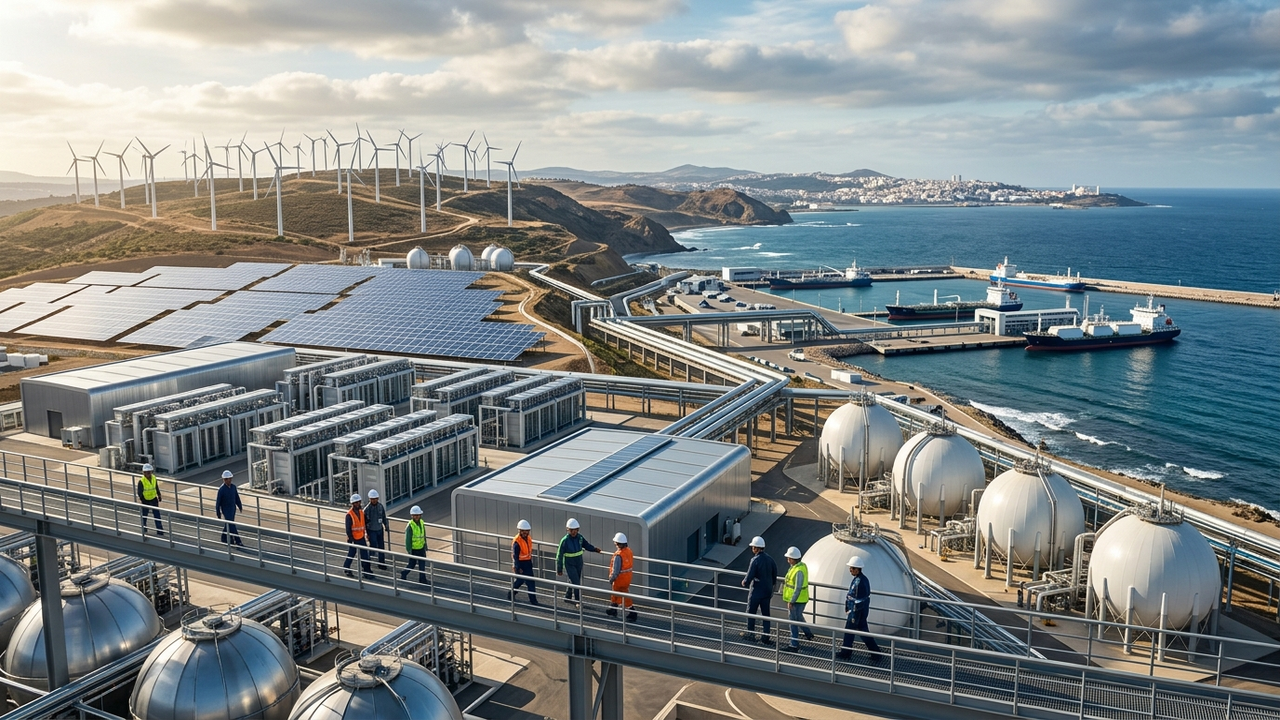
Morocco, a nation endowed with some of Africa’s most substantial renewable energy potential, particularly abundant solar and wind resources, is strategically positioning itself as a future leader in the global green hydrogen economy. The Moroccan government has proactively developed a comprehensive national hydrogen strategy. This strategy is designed to achieve multifaceted objectives: enhance the nation’s energy self-sufficiency, accelerate the decarbonization of its economy, and actively attract significant foreign direct investment into large-scale green hydrogen production. The Tangier region, with its unique geographical advantage of bordering both the Atlantic Ocean and the Mediterranean Sea, coupled with its close proximity to Europe, presents an ideal nexus for green hydrogen production and export. This ambitious undertaking is expected to not only solidify Morocco’s standing as a major player in the burgeoning international green hydrogen market but also to serve as a pioneering model for sustainable energy development across the entire African continent.
Key Findings
Recent reports confirm the emergence of a monumental green hydrogen production project in Morocco’s Tangier region, signaling a pivotal advancement in the nation’s renewable energy strategy. With an estimated investment of nearly $11 billion, this initiative underscores Morocco’s commitment to leveraging its abundant natural resources to become a leading global exporter of green hydrogen. The project is strategically designed to capitalize on Tangier’s prime geographical location, utilizing its Atlantic and Mediterranean access for efficient logistics. Technical plans involve generating hydrogen through advanced water electrolysis, powered by vast, integrated solar and wind energy facilities. While specific production capacities and electrolyzer scales are yet to be fully detailed, the colossal investment figure strongly indicates the development of gigawatt-scale electrolysis infrastructure, complemented by crucial ancillary facilities such as hydrogen transport pipelines, sophisticated storage solutions, and enhanced port amenities to facilitate large-scale exports. The primary market for this green hydrogen is envisioned to be the European Union, a critical step in supporting Europe’s energy transition and decarbonization efforts. Additionally, the project is expected to contribute to the decarbonization of Morocco’s domestic industrial sectors, particularly in areas like fertilizer production. Economically, this venture is projected to create hundreds to thousands of direct and indirect employment opportunities, fostering significant regional technological advancement and strengthening local supply chains. Beyond immediate economic gains, the project’s successful implementation will bolster Morocco’s role as an indispensable green hydrogen supplier for Europe, significantly contributing to global climate change mitigation goals. Moreover, it is anticipated to stimulate profound technological innovation across the entire hydrogen value chain—from production and storage to transportation—thereby cultivating a robust ecosystem of related industries and establishing a durable foundation for Morocco’s long-term economic growth and sustainability.
Get our weekly technology intelligence — free
Receive an infographic that lets you judge at a glance whether each field’s analysis report is worth reading.
Subscribe Free — Weekly Tech Intelligence
By subscribing, you’ll receive Troy-Technical’s weekly technology intelligence newsletter.
- Your email and selected fields are used only to deliver the newsletter.
- We never share your information with third parties.
- You can unsubscribe anytime via the link in each email.
See our Privacy Policy for details.
Takes about a minute · Unsubscribe anytime




Comments