Key Findings
Recent research published in Frontiers demonstrates that functional polymer 003B (FP003B) effectively suppresses excessive microcarrier/mesenchymal stromal cell (MSC) aggregation, a major challenge in microcarrier-based MSC cultures, while simultaneously significantly enhancing cell yield. This groundbreaking discovery addresses a critical bottleneck in scalable MSC manufacturing for the regenerative medicine field, representing a crucial step towards the commercialization of allogeneic MSC therapeutics.
Technical/Clinical Details
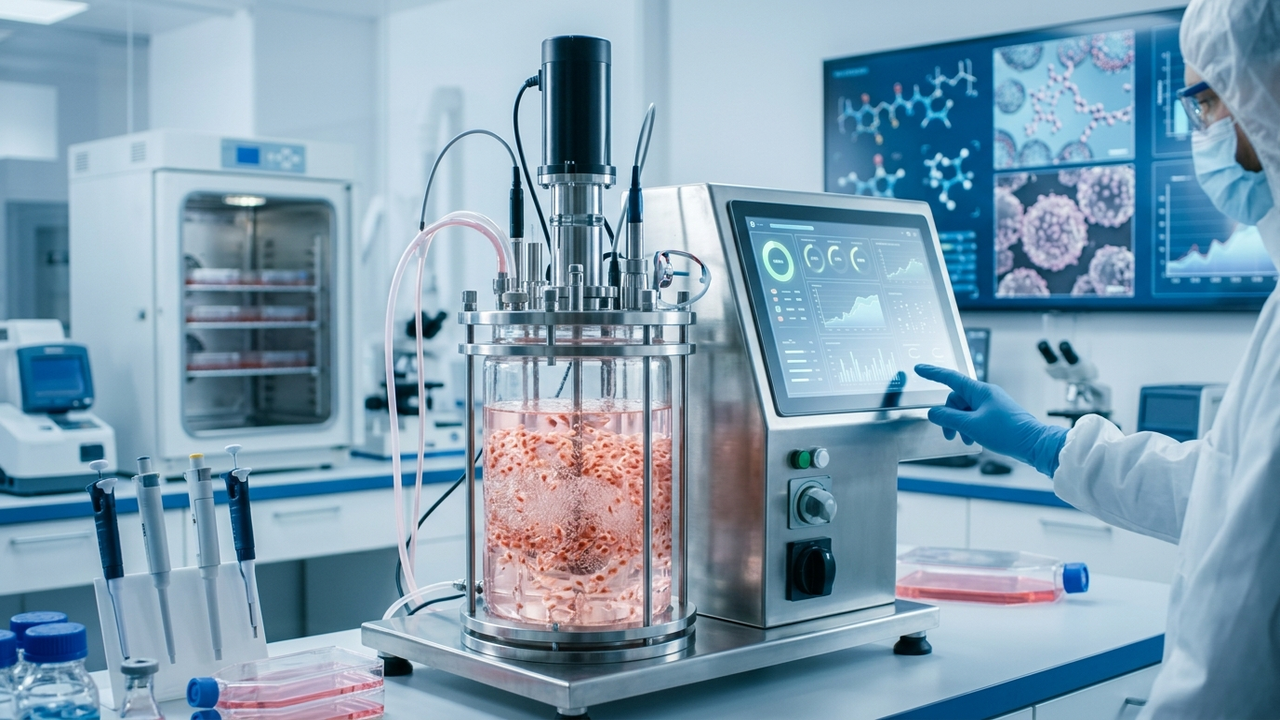
- FP003B’s Anti-Aggregation Effect: The study showed that introducing FP003B into MSC cultures dramatically reduced undesired aggregation of microcarriers and MSCs. Such aggregation is a primary cause of cell death and quality degradation when scaling up cultures.
- Significant Improvement in Cell Yield: The use of FP003B was confirmed to lead to a significant increase in viable cell numbers during culture. This means that more therapeutic MSCs can be efficiently produced, especially in large-scale bioreactor cultures.
- Maintenance of Cell Quality and Differentiation Potential: Crucially, while promoting MSC proliferation, FP003B was shown not to impair their essential cell quality (e.g., surface marker expression) or multipotency (ability to differentiate into bone, fat, and cartilage). This is a vital factor for maintaining therapeutic efficacy.
- Applicability to Diverse Culture Systems: The effects of FP003B were consistently reproduced across various microcarrier types (e.g., Cytodex, SoloHill) and different culture vessel formats (e.g., shaker flasks, bioreactors). This versatility suggests easy integration into existing manufacturing processes.
- Impact on Scalable Allogeneic MSC Production: Traditional 2D culture systems have limitations for large-scale MSC production. Microcarrier-based 3D culture using FP003B can achieve high cell density and yield, enabling cost-effective commercial production of allogeneic MSC therapeutics.
Background & Context
Mesenchymal stromal cells (MSCs) have garnered significant interest for numerous regenerative medicine and cell therapy applications due to their immunomodulatory properties and tissue repair capabilities. However, scaling MSC production to commercial levels has long been challenged by issues of scalability and consistency in cell quality. Three-dimensional culture on microcarriers holds promise as a scalable solution, but excessive aggregation of cells and microcarriers was known to adversely affect cell yield and product quality. This research provides a practical solution to this significant bottleneck.Strategic Significance & Outlook
The discovery and validation of FP003B represent a monumental advancement in reducing manufacturing costs and increasing the availability of MSC-based cell therapeutics. Widespread adoption of this technology could expand the clinical application of MSC therapies into broader disease areas, including arthritis, heart disease, and neurodegenerative disorders. For researchers, engineers, and investors, FP003B should be noted as a crucial tool for optimizing next-generation cell therapy manufacturing processes, with significant market value and application potential.
Get our weekly technology intelligence — free
Receive an infographic that lets you judge at a glance whether each field’s analysis report is worth reading.
Subscribe Free — Weekly Tech Intelligence
By subscribing, you’ll receive Troy-Technical’s weekly technology intelligence newsletter.
- Your email and selected fields are used only to deliver the newsletter.
- We never share your information with third parties.
- You can unsubscribe anytime via the link in each email.
See our Privacy Policy for details.
Takes about a minute · Unsubscribe anytime







Comments