Key Findings
Contract Development and Manufacturing Organizations (CDMOs) are confronting sophisticated challenges in the manufacturing of multispecific molecules—next-generation biologics possessing both target specificity and diverse pharmacological actions. These challenges span cell line development, intricate analytical characterization, and efficient downstream purification processes. To surmount these hurdles, intensified bioreactor processes, including perfusion and continuous feeding, are being actively adopted. This approach effectively addresses issues of low titer and stability, leading to a significant increase in volumetric productivity. Industry leader Catalent has strategically invested in its proprietary GPEx® Lightning platform and integrated analytical development capabilities to rapidly support the development and manufacturing of complex biologics.
Technical / Clinical Details
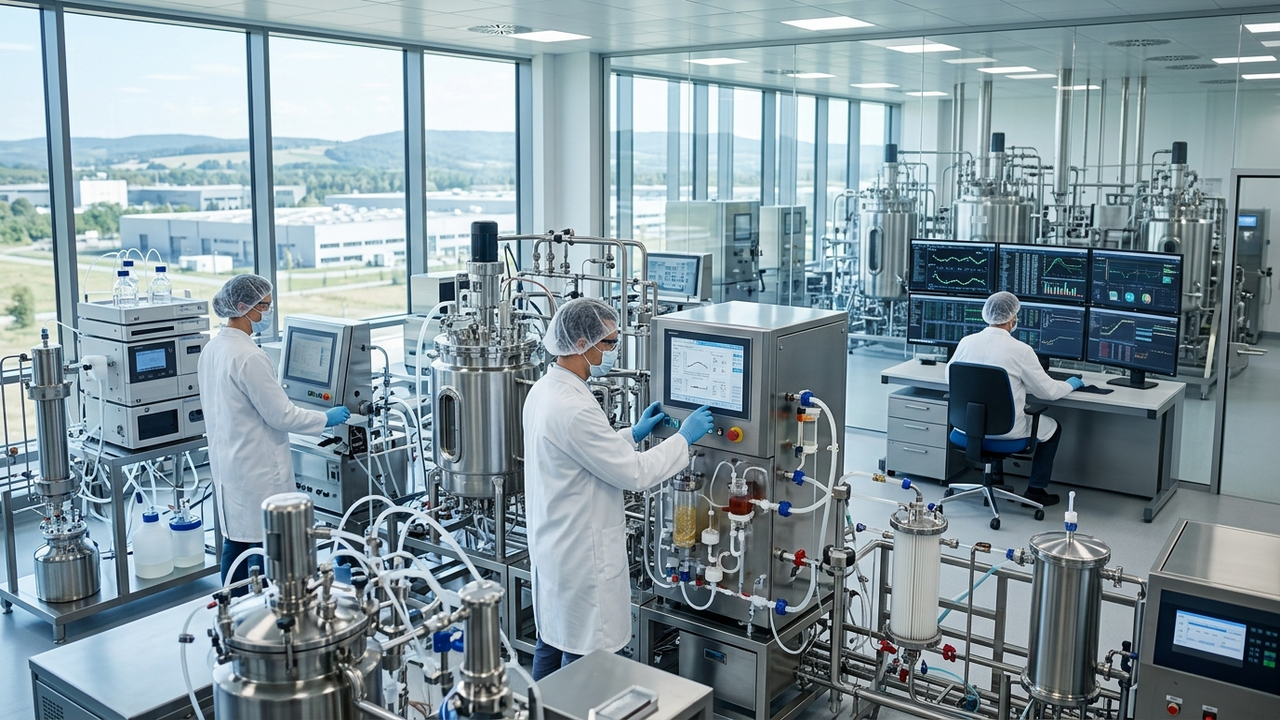
Complex biologics, such as multispecific antibodies, can bind to multiple antigens simultaneously, offering higher therapeutic potential than conventional monoclonal antibodies, but also presenting considerably more complex manufacturing processes. Key challenges include the precise assembly of multiple subunits, maintaining stability, and ensuring product homogeneity. Perfusion culture, a technique embraced by CDMOs, dramatically enhances productivity by maintaining high cell densities within the bioreactor while continuously supplying nutrients and removing metabolic waste products. This allows for smaller bioreactor footprints while increasing product yields by several-fold compared to traditional fed-batch cultures. Furthermore, continuous feeding processes facilitate stable product concentration in the culture broth, reducing the burden on downstream processing and improving overall process efficiency and economics. Catalent’s GPEx® Lightning platform, a proprietary gene expression technology for rapid development of high-producing cell lines, enables the rapid establishment of cell lines with high titers and stability, even for challenging multispecific molecules. By combining this platform with advanced analytical development capabilities, Catalent manages manufacturing complexities effectively, from molecular characterization to purification process optimization.
Background & Context
Multispecific molecules, such as bispecific T-cell engagers for cancer therapy, demonstrate immense therapeutic potential across various disease areas, including oncology and autoimmune diseases, positioning them as the next major wave in the biopharmaceutical market. However, due to their innovative nature, manufacturing technologies are still evolving, requiring specialized expertise and significant capital investment. CDMOs are indispensable partners for pharmaceutical companies, providing the necessary manufacturing know-how and infrastructure to mitigate development risks, reduce costs, and accelerate time-to-market. The adoption of continuous bioprocessing is a critical strategic investment for CDMOs seeking to differentiate themselves and meet client expectations in an increasingly competitive global landscape.
Strategic Significance & Outlook
As the pipeline of multispecific molecules continues to expand, CDMOs will be compelled to pursue further innovations in manufacturing technology. The following trends are anticipated to accelerate:
- Integration of AI and Machine Learning: AI will be incorporated for optimizing process development, quality control, and anomaly detection, enhancing manufacturing intelligence.
- Integrated Bioprocess Development: Establishing continuous processes from upstream to downstream to maximize efficiency and quality across the entire product lifecycle.
- Proliferation of Modular Manufacturing Facilities: Modular manufacturing solutions that can be rapidly constructed and scaled to flexibly adapt to demand fluctuations will become more prevalent.
Investments by CDMOs like Catalent in platforms such as GPEx® Lightning will have a significant impact across the industry, enabling the efficient production of more diverse and complex biopharmaceuticals, ultimately reaching patients. This technological innovation is an indispensable element in shaping the future of biopharmaceutical manufacturing.
Source: #
Get our weekly technology intelligence — free
Receive an infographic that lets you judge at a glance whether each field’s analysis report is worth reading.
Subscribe Free — Weekly Tech Intelligence
By subscribing, you’ll receive Troy-Technical’s weekly technology intelligence newsletter.
- Your email and selected fields are used only to deliver the newsletter.
- We never share your information with third parties.
- You can unsubscribe anytime via the link in each email.
See our Privacy Policy for details.
Takes about a minute · Unsubscribe anytime







Comments