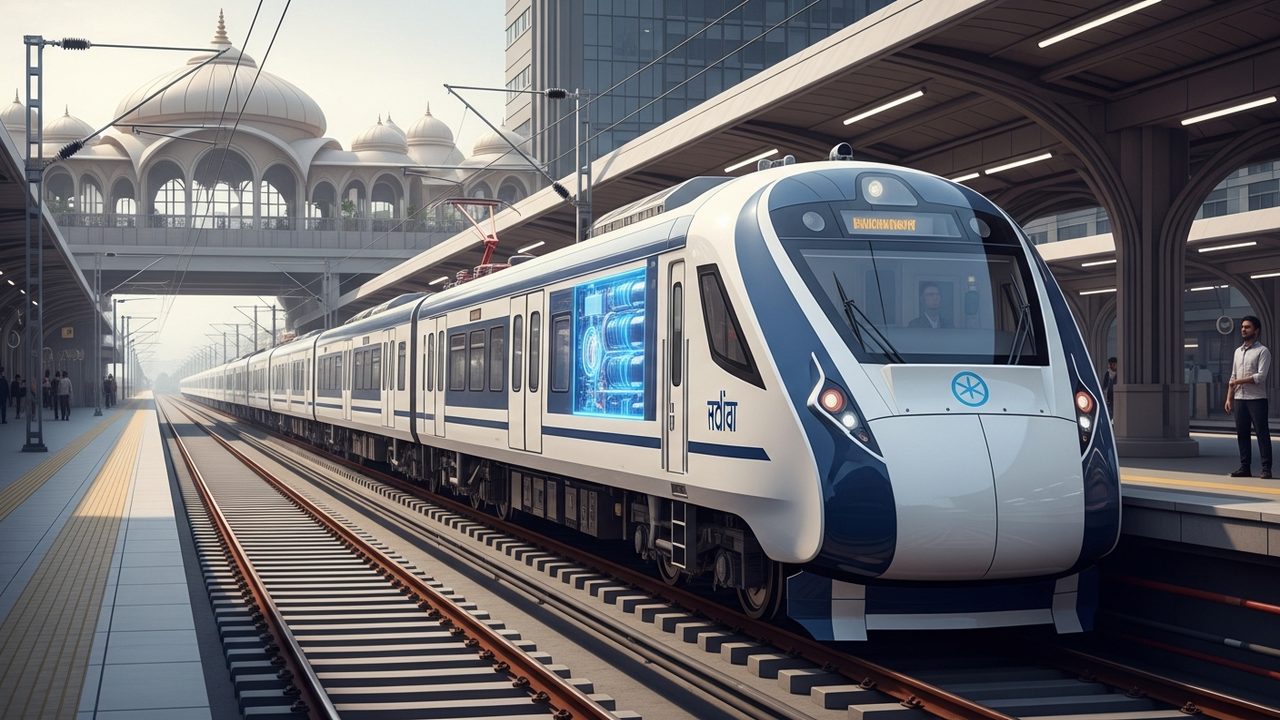
Background: Decarbonizing Indian Railways and Energy Transition
India’s railway network is one of the largest globally, serving as a vital artery supporting the nation’s economic activities and public mobility. However, its significant reliance on diesel locomotives poses a substantial challenge to the national goal of reducing CO2 emissions. Consequently, Indian Railways is exploring alternative, lower-carbon fuels, with hydrogen fuel attracting considerable attention as a clean and sustainable energy source. The introduction of hydrogen-powered trains represents a crucial step in this broader decarbonization strategy.
Approval and Deployment Plan for India’s First Hydrogen Train
The Indian Railway Board has officially approved the operation of India’s first hydrogen-powered train. This groundbreaking development signifies that India has initiated concrete actions towards decarbonizing its railway sector. The train incorporates hydrogen fuel cell technology, which generates electricity through a chemical reaction between hydrogen and oxygen, thereby powering its motors.
- “Hydrogen for Heritage” Program: Under an ambitious initiative dubbed the “Hydrogen for Heritage” program, Indian Railways plans to deploy a total of 35 hydrogen-powered trains across the nation’s historic heritage routes and scenic hill lines. This strategy aims to enhance tourist appeal while providing environmentally friendly transportation options.
- Hydrogen Fuel Cell Technology: This technology produces zero tailpipe emissions, emitting only water, thereby contributing to improved regional air quality. Compared to diesel vehicles, hydrogen trains are quieter and experience less vibration, enhancing passenger comfort.
- Alignment with National Green Hydrogen Mission: This railway project is closely integrated with India’s overarching “National Green Hydrogen Mission.” The mission targets establishing a minimum annual green hydrogen production capacity of 5 Million Metric Tons (MMT) by 2030, with the potential to reach 10 MMT if export markets grow, showcasing a comprehensive approach to hydrogen adoption.
Impact and Outlook: Contributing to Sustainable Transportation Systems
The introduction of hydrogen-powered trains in India is poised to be a catalyst, not only for decarbonizing the railway sector but also for accelerating the development of the entire domestic hydrogen ecosystem. The creation of large-scale hydrogen demand will stimulate the expansion of green hydrogen production, the development of storage and transport infrastructure, and innovation in related technologies. This positions India to establish itself as a global leader in clean energy technology and to spearhead the transition to sustainable transportation systems. In the long term, this initiative holds the potential to strengthen India’s energy security and serve as a model for other nations.
Source: #






Comments