Background: India’s Energy Transition and National Strategy
India, facing increasing global energy demands driven by economic growth and population expansion, is making substantial investments in renewable energy and green hydrogen. This strategy aims to meet its energy needs while simultaneously addressing climate change and ensuring energy security. The government’s “National Green Hydrogen Mission” specifically provides a comprehensive strategic framework to propel India into a global leadership role in green hydrogen.
Indian Companies Driving Green Hydrogen Production
As of 2026, a new generation of Indian energy companies, in alignment with national strategy, is leading the large-scale expansion of green hydrogen production capacity. These companies are not merely producing hydrogen but are striving to integrate it as part of a broader clean energy ecosystem.
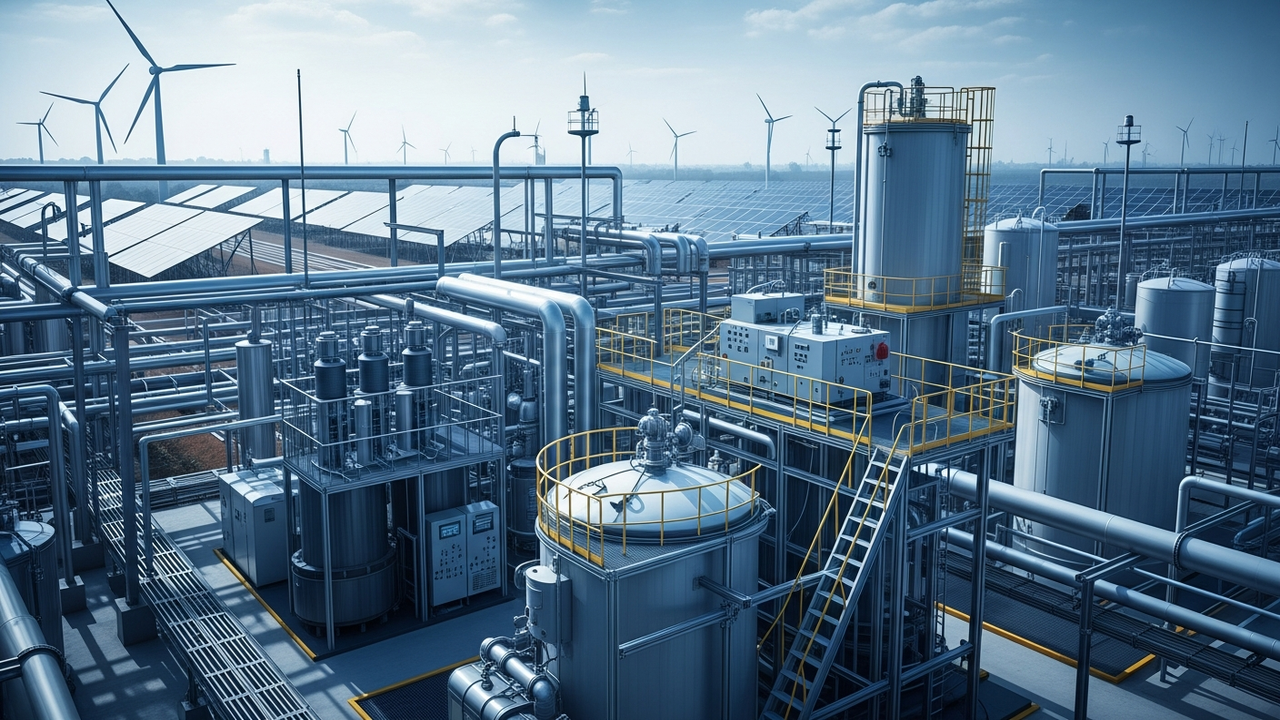
- Gigawatt-Scale Renewable Energy Capacity Building: To supply the necessary power for green hydrogen manufacturing, these companies are investing in the development of gigawatt-scale renewable energy power plants, including solar and wind farms. Stable and affordable renewable electricity is crucial for ensuring the cost competitiveness of green hydrogen.
- Promotion of Domestic Electrolyzer Manufacturing: To strengthen the supply chain and create domestic value addition, many companies are promoting the indigenous manufacturing of electrolyzers. This initiative aims to reduce import dependence and achieve technological self-reliance.
- Integration of Hydrogen into the Clean Energy Ecosystem: The produced green hydrogen is planned for diverse industrial applications beyond single use, including steel, fertilizers, transportation, and power storage. This offers comprehensive decarbonization solutions across multiple sectors.
National Green Hydrogen Mission and Targets
The Indian government’s National Green Hydrogen Mission sets ambitious targets. By 2030, it aims to establish an annual green hydrogen production capacity of 5 Million Metric Tons (MMT), supported by the development of approximately 125 Gigawatts (GW) of associated renewable energy capacity. This initiative is projected to attract about 8 trillion Indian Rupees (over 100 billion USD) in investment and create 600,000 jobs.
Impact and Outlook: Path to Global Leadership
These efforts by Indian companies and the government are critically important for India to establish global leadership in the green hydrogen sector. Beyond meeting domestic demand, there is potential to contribute to global decarbonization efforts through exports to Asian and European markets. With technological innovation, economies of scale, and strong government support converging, India is poised to become a major player in the energy transition toward a sustainable future. However, achieving these targets will continue to require substantial financing, infrastructure development, technological cooperation, and securing a skilled workforce.
Source: #







Comments