Key Findings
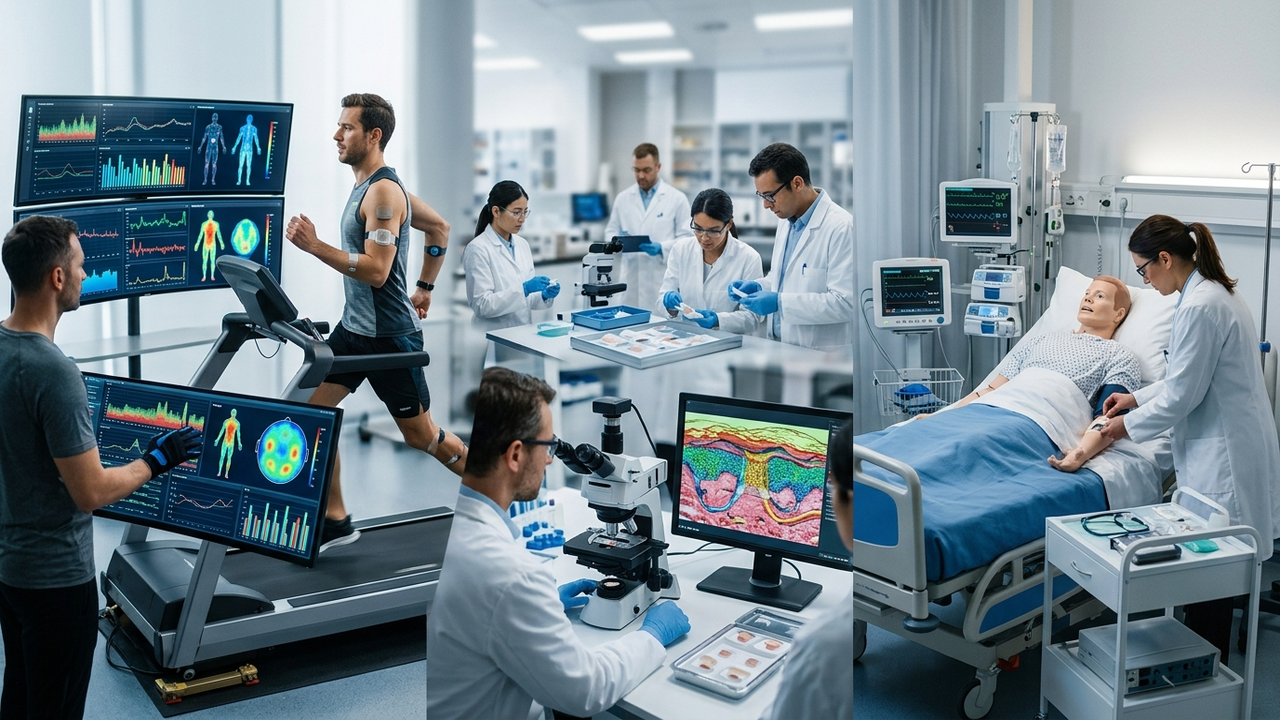
Significant advancements in wearable continuous lactate monitors (CLM) are set to transform both sports performance optimization and critical care diagnostics. Novel sweat-based and microneedle-based CLM technologies now offer unprecedented accuracy and real-time metabolic feedback, moving beyond traditional invasive blood sampling methods.
Technical / Clinical Details
A study published in the September 2026 issue of Talanta journal detailed a prototype patch-based sweat sensor capable of measuring lactate concentrations in sweat ranging from 1 to 80 mM, with a detection limit of 0.3 mM and an impressive accuracy exceeding 91%. This non-invasive device represents a major step forward in providing reliable physiological data without discomfort. Simultaneously, researchers at UC San Diego reported the first human use of a continuous microneedle interstitial fluid lactate sensor, tested on 11 collegiate baseball pitchers. This innovative sensor demonstrated a strong correlation with conventional capillary blood measurements, validating its potential for continuous, minimally invasive lactate monitoring.
Background & Context
Lactate is a crucial biomarker, reflecting metabolic state and exercise intensity in athletes, and serving as an early indicator of tissue hypoperfusion in critical conditions like sepsis. Current lactate monitoring primarily relies on intermittent blood draws, which are inconvenient and cannot provide continuous data streams. The advent of these advanced wearable CLMs addresses this limitation, enabling constant, real-time tracking of lactate levels. This capability is vital for athletes to fine-tune training regimens, prevent overtraining, and enhance performance, as well as for clinicians to monitor patients at risk of metabolic distress or sepsis, where early detection can significantly improve outcomes.
Strategic Significance & Outlook
These breakthroughs have profound implications across sports science and clinical medicine. In sports, athletes can gain a deeper understanding of their physiological responses to training, allowing for highly personalized and data-driven performance management. In healthcare, particularly in intensive care units, wearable continuous lactate sensors could enable earlier intervention for patients developing sepsis or other critical metabolic imbalances, potentially reducing morbidity and mortality. Future research will focus on validating the long-term stability, user-friendliness, and clinical efficacy of these sensors in broader populations and diverse real-world settings.
Source: https://www.reendure.com/post/continuous-lactate-monitors-endurance-athletes-2026
Get our weekly technology intelligence — free
Receive an infographic that lets you judge at a glance whether each field’s analysis report is worth reading.
Subscribe Free — Weekly Tech Intelligence
By subscribing, you’ll receive Troy-Technical’s weekly technology intelligence newsletter.
- Your email and selected fields are used only to deliver the newsletter.
- We never share your information with third parties.
- You can unsubscribe anytime via the link in each email.
See our Privacy Policy for details.
Takes about a minute · Unsubscribe anytime

Comments