Key Findings
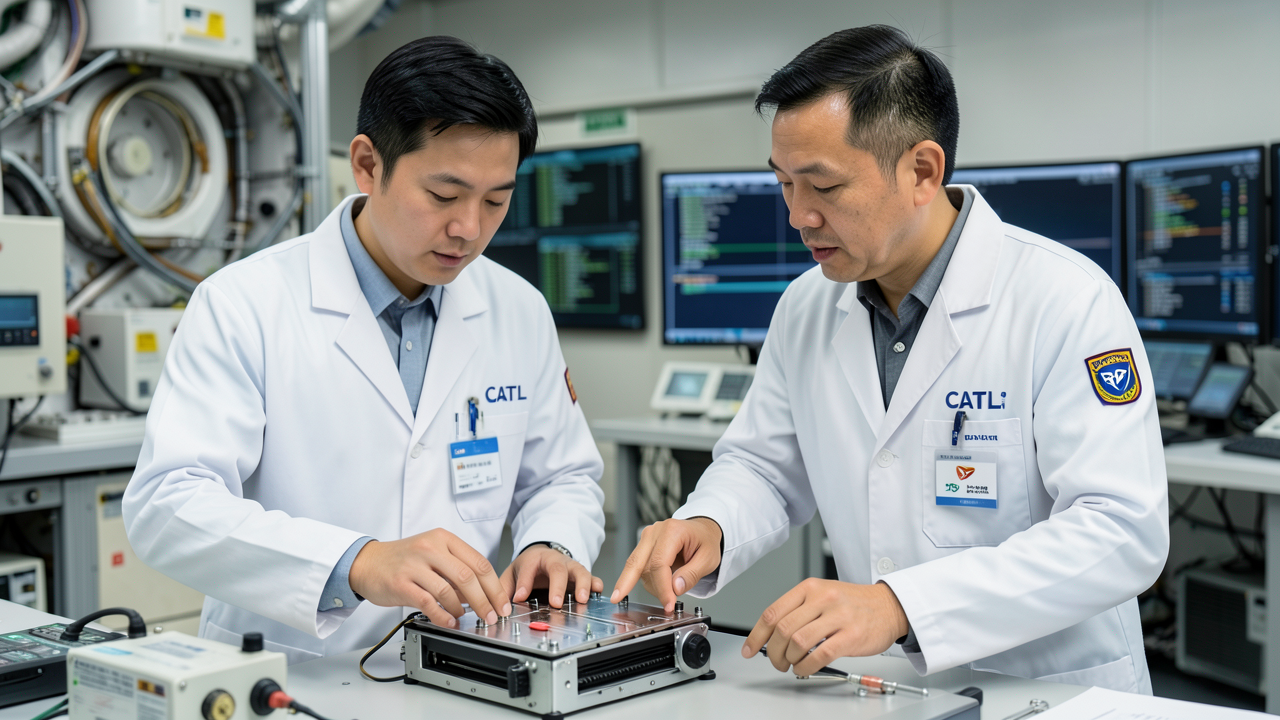
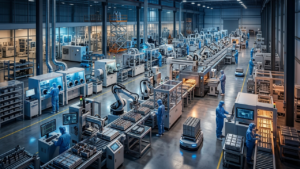
Leading Chinese battery manufacturers are accelerating their efforts towards the commercialization of all-solid-state battery technology, with numerous companies including BYD, Gotion High-tech, Qingtao, WeLion, CALB, EVE Energy, Farasis Energy, and Tailan New Energy, having either initiated or completed pilot and experimental production lines between 2025 and 2026. Notably, BYD launched a 20 GWh mass production line in Chongqing in Q3 2026, aiming for integration into a small batch of vehicles by Q1 2027. CATL, meanwhile, operationalized the first phase of its solid-state battery production base in July 2026, which boasts single-cell energy densities exceeding 500 Wh/kg. Despite this rapid expansion of manufacturing capabilities, projections indicate that the utilization rate for solid-state batteries will remain low, at 1-15%, between 2026 and 2030, suggesting a potential significant mismatch between initial supply capacity and market demand.
Technical / Clinical Details
Various solid-state electrolyte materials and manufacturing processes are being tested in these newly operational pilot lines. The efforts by BYD and CATL are particularly noteworthy. BYD is building a massive 20 GWh line with a focus on large-scale production for automotive applications. CATL’s achievement of over 500 Wh/kg in single-cell energy density represents a substantial leap beyond current top-tier lithium-ion batteries (around 300 Wh/kg), potentially revolutionizing EV driving ranges. These technologies are expected to contribute to enhanced battery safety, faster charging, and extended lifespan. However, the stable and cost-effective mass production of these advanced technologies is still evolving, a reality reflected in the low projected utilization rates.
Background & Context
All-solid-state batteries are anticipated as the ‘holy grail’ of battery technology, designed to overcome the challenges (such as thermal runaway risks and energy density limits) inherent in conventional liquid-electrolyte lithium-ion batteries. A global race is underway among major countries and corporations to develop this technology. The Chinese government has designated the development of the new energy vehicle industry as a national strategic priority, driving rapid advancements in R&D and production capacity among domestic battery manufacturers through substantial investment and support. While the successive activation of pilot lines signals progress towards practical implementation, the uncertainty of demand in the initial market phases has emerged as a new challenge.
Strategic Significance & Outlook
The rapid commissioning of solid-state battery pilot lines indicates that the technology is entering a practical implementation phase. However, the forecasted low utilization rates reflect the current stage of technological maturity, manufacturing costs, and uncertainty in initial market demand. This suggests that widespread market penetration for all-solid-state batteries will still take several years. Key factors moving forward will include standardization of technology, cost reduction through optimized manufacturing processes, and gaining consumer trust. Crucially, successful vehicle integration in close collaboration with automakers will be essential for stimulating genuine demand and market expansion. The industry will need to strategically optimize the balance between production capacity and demand as it heads towards full-scale mass production post-2030.
Get our weekly technology intelligence — free
Receive an infographic that lets you judge at a glance whether each field’s analysis report is worth reading.
Subscribe Free — Weekly Tech Intelligence
By subscribing, you’ll receive Troy-Technical’s weekly technology intelligence newsletter.
- Your email and selected fields are used only to deliver the newsletter.
- We never share your information with third parties.
- You can unsubscribe anytime via the link in each email.
See our Privacy Policy for details.
Takes about a minute · Unsubscribe anytime





Comments