Background
Per- and polyfluoroalkyl substances (PFAS), commonly known as ‘forever chemicals,’ have been ubiquitous in various industrial and consumer products due to their exceptional resistance to heat, water, and oil. However, their extreme persistence in the environment and accumulation in living organisms pose severe long-term risks to human health and ecosystems. With PFAS contamination emerging as a global environmental and public health crisis, the urgent demand for effective, scalable, and sustainable removal technologies has intensified. This collaboration between Finnish chemical giant Kemira and UK-based AI materials science firm CuspAI demonstrates the transformative potential of artificial intelligence in delivering innovative solutions to pressing global environmental challenges, bolstering the water treatment industry’s drive towards digitalization and sustainability.
Key Findings
In a rapid and groundbreaking collaborative effort, Finnish chemical company Kemira and UK-based AI materials science firm CuspAI have successfully leveraged generative AI to create over 5,000 novel material designs specifically engineered for the removal of per- and polyfluoroalkyl substances (PFAS) within an astonishing six-month timeframe. This achievement drastically compresses the material discovery timeline compared to conventional, labor-intensive trial-and-error methods, representing a monumental leap forward in the development of environmental water treatment solutions.
Technical Details
- Generative AI for Vast Material Exploration: CuspAI’s sophisticated generative AI models systematically navigated a colossal design space, probing approximately 300 trillion potential material structures—a scale unfathomable through traditional human-driven exploration. The AI, trained on extensive existing material datasets, autonomously synthesized novel molecular architectures specifically designed for the efficient adsorption or degradation of targeted PFAS molecules, including notorious compounds like GenX, PFBS, and PFOS.
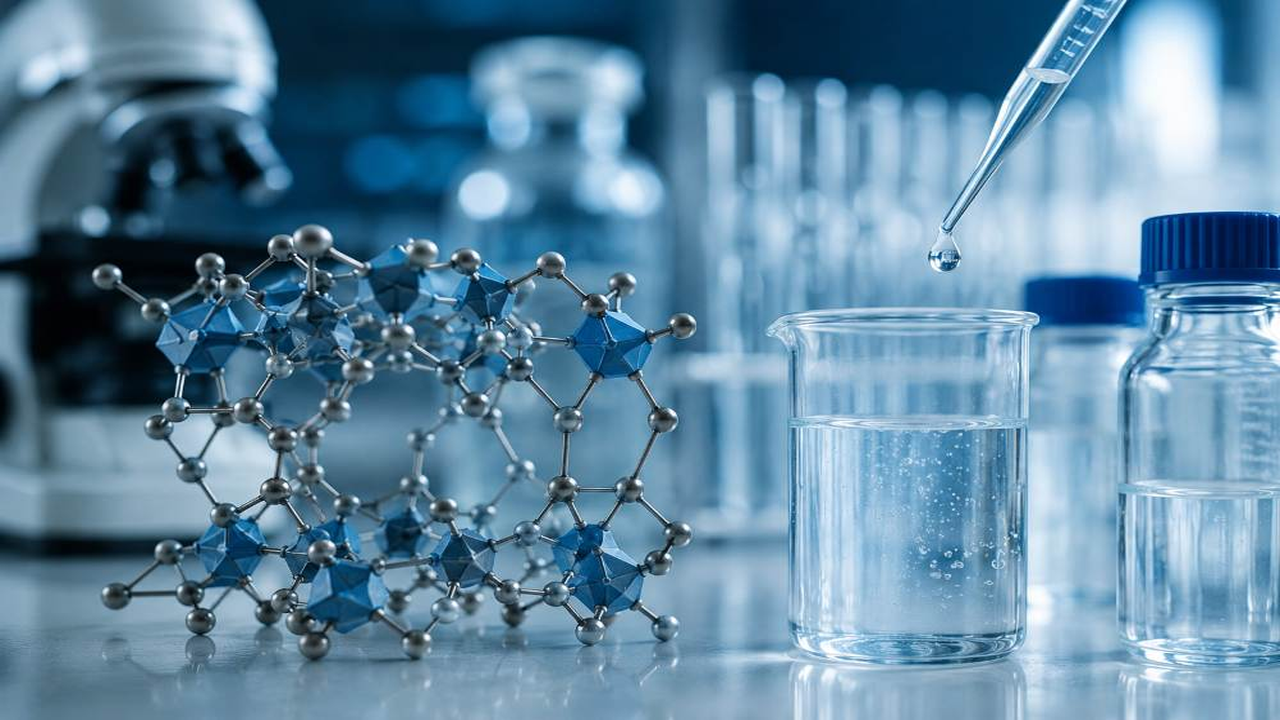
- Targeted Optimization of Metal-Organic Frameworks (MOFs): The project primarily concentrated on Metal-Organic Frameworks (MOFs), a class of highly porous materials renowned for their exceptional surface areas and tunable pore structures. These attributes make MOFs particularly promising for capturing organic pollutants such as PFAS. The generative AI meticulously optimized the chemical composition, pore dimensions, and internal surface functionalization of these MOFs to propose designs engineered for maximum selectivity and adsorption capacity towards various PFAS species.
- Unprecedented Acceleration in Development: Historically, the conceptualization, design, and preliminary evaluation of 5,000 novel materials would typically span years, if not decades, through conventional research and development cycles. The application of generative AI has condensed this process into a mere six months, representing an order-of-magnitude acceleration that is critical for addressing the escalating global crisis of PFAS contamination with requisite urgency.
- AI-Powered Predictive Screening: Beyond material generation, the AI platform integrates robust predictive capabilities, enabling it to accurately forecast the properties of each newly designed structure. This allows for an efficient, in-silico screening of the most promising candidates, drastically reducing the number of materials that require costly and time-consuming physical synthesis and validation in experimental laboratories, thereby optimizing research resource allocation.
Strategic Significance & Outlook
The profound success of this generative AI-driven materials design platform signals its expansive applicability far beyond PFAS remediation. Its methodologies hold immense promise for revolutionizing other critical water treatment challenges, including heavy metal and microplastic removal, as well as broader environmental technologies and diverse fields where MOFs excel, such as catalysis, gas separation, and energy storage. Looking ahead, AI-designed materials are poised for commercial-scale production and widespread implementation in water treatment facilities globally, offering a transformative contribution to ensuring safe drinking water and robust environmental protection. This pioneering achievement further solidifies the pivotal role of AI in materials science, concretizing the vision of ‘AI co-scientists’ as indispensable partners in accelerated discovery and innovation.
Source: https://h2oglobalnews.com/kemira-and-cuspai-use-generative-ai-to-design-new-pfas-removal-materials/