Key Findings
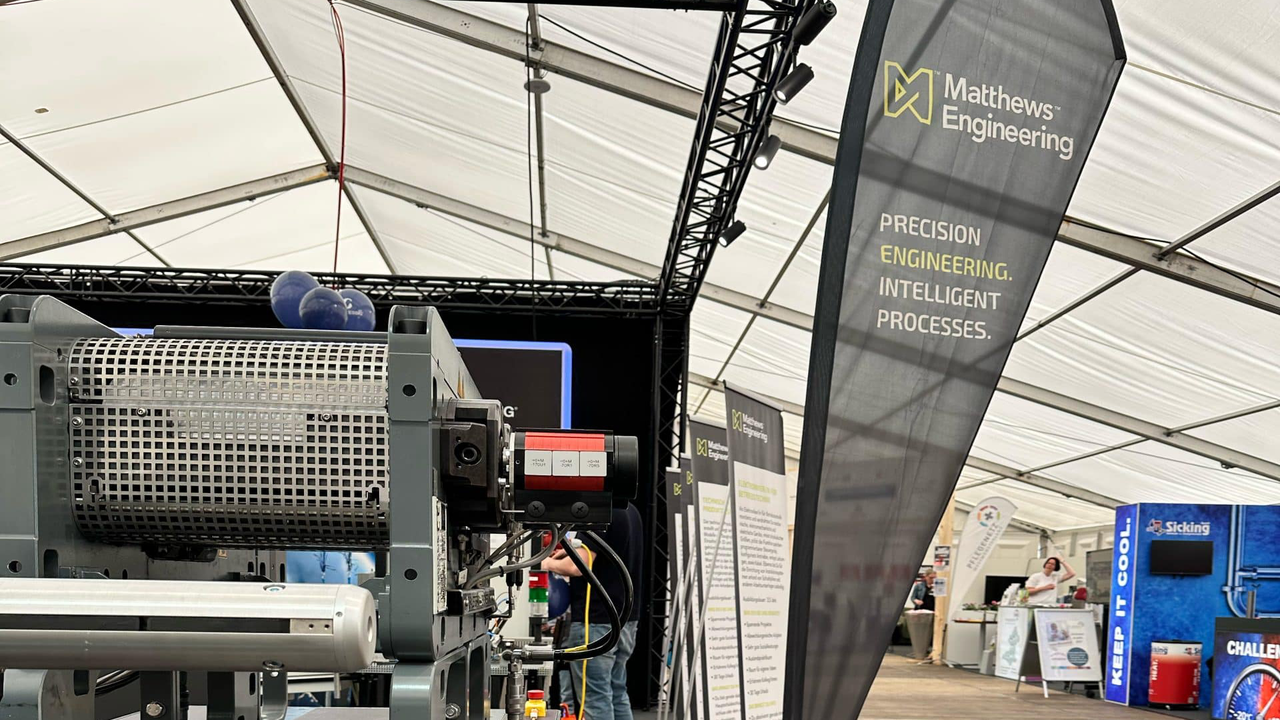
Matthews Engineering has inaugurated its innovative MEODEO dry-electrode production line at its state-of-the-art Development Center in Vreden, Germany. The MEODEO line is a full-scale demonstration and test facility specifically engineered for developing and testing manufacturing processes for dry electrode batteries, solid-state batteries, and ultracapacitors. A key differentiator of this line is its ability to generate process data that is directly transferable to commercial production lines, thereby dramatically accelerating the transition from battery manufacturing R&D to industrial-scale production.
Technical Details and Manufacturing Capabilities
The MEODEO dry-electrode production line is designed for efficient battery production, particularly for gigafactory environments, and incorporates the following technical features:
- Core of Dry Electrode Manufacturing: MEODEO focuses on a powder-based coating method that eliminates the use of liquid solvents. This addresses challenges inherent in conventional wet processes, such as solvent emissions, energy-intensive drying, and high costs. Dry processes are known to minimize electrode defects, enhance material utilization efficiency, and have the potential to reduce manufacturing costs by up to 50%.
- Multi-Roll Calendaring Solution: The line features a multi-roll calendaring solution for precisely pressing electrodes, achieving optimal density and uniformity. It offers flexibility to accommodate various roller numbers, hardness levels, and winding concepts. The ability to process electrodes up to 850 mm width at 150 m/min meets the high production requirements of large-scale battery manufacturing.
- Application for Solid-State Batteries: Dry electrode technology plays an especially crucial role in the manufacturing of solid-state batteries (SSBs). SSBs are next-generation technologies promising higher safety and energy density, and the MEODEO line enables dry processing of solid electrolyte membranes and electrodes. This addresses a critical gap, as conventional slurry-based coating is challenging for SSBs due to incompatibility with certain solid electrolyte materials.
- Data Generation and Transfer: A significant advantage of MEODEO is its capability to translate process data collected during development directly into production parameters for commercial gigafactories. This feature substantially reduces the risks and time associated with scaling up new battery technologies and manufacturing processes.
Background & Industry Context
The burgeoning electric vehicle (EV) market and the accelerated adoption of renewable energy are driving unprecedented demand for batteries. Nations worldwide are striving to establish domestic battery manufacturing capabilities. In Europe, however, challenges such as high scrap rates and low yields during factory ramp-ups—exemplified by the bankruptcy of Morrow Batteries and challenges at Northvolt—highlight a significant cost gap. The provision of dry electrode production lines by companies like Matthews Engineering is a critical step towards overcoming these hurdles and achieving efficient, sustainable battery production. Leading players such as Tesla and CATL are also actively adopting dry electrode technology, increasing its likelihood of becoming an industry standard.
Strategic Significance & Outlook
The commissioning of the MEODEO dry-electrode production line will contribute to the democratization and acceleration of battery manufacturing technology. This platform will enable battery manufacturers and research institutions to rapidly develop and scale up new electrode materials and processes with reduced risk. It is particularly expected to accelerate the commercialization of innovative technologies like solid-state batteries, contribute to EV cost reduction, enhance energy density, and foster the creation of sustainable battery supply chains. In the future, such modular production lines are anticipated to be widely adopted in gigafactories globally, driving the transformation of the entire battery industry.
Source: https://www.bestmag.co.uk/matthews-meodeo-dry-electrode-production/