Key Findings
Indian commercial vehicle giant Ashok Leyland marked its 75th anniversary by revealing two significant innovations in sustainable mobility. The company showcased India’s first hydrogen fuel cell electric bus, developed for NTPC (National Thermal Power Corporation), and the nation’s first hydrogen internal combustion engine (ICE) truck, created through a strategic partnership with Reliance Industries. These vehicles symbolize Ashok Leyland’s commitment to decarbonizing India’s heavy-duty transport sector and its multi-pronged technological exploration approach.
Technical & Partnership Details
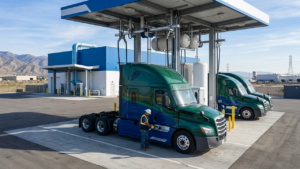
The hydrogen fuel cell electric bus is a zero-emission vehicle, contributing to improved air quality, especially in urban public transport. In contrast, the hydrogen ICE truck is noteworthy as a transitional technology, utilizing existing internal combustion engine technology with hydrogen as fuel, offering a relatively quick and cost-effective path to emission reduction. The partnership with Reliance Industries aims to collaborate on both fuel supply and technological development, accelerating the establishment of a hydrogen ecosystem within India. Such collaborations demonstrate Ashok Leyland’s strategic approach to providing integrated, sustainable solutions—from vehicle development to fuel supply—for the challenging long-haul transport segment.
Background & Industry Context
India faces urgent challenges in reducing emissions from its transportation sector due to economic growth and population increase. The government is actively promoting hydrogen energy through initiatives like the National Green Hydrogen Mission, which targets 5 million tons of green hydrogen production annually by 2030. Investments by major domestic manufacturers like Ashok Leyland in hydrogen-powered vehicles are crucial for achieving the nation’s energy transition goals. Hydrogen fuel cell vehicles offer advantages over battery electric vehicles, such as shorter refueling times, extended range, and lighter energy systems, giving them an edge particularly in the commercial vehicle sector. India is currently piloting hydrogen fuel cell buses and trains to evaluate their practicality in heavy-duty vehicles, long-distance buses, and mining trucks.
Strategic Significance & Outlook
The vehicles unveiled by Ashok Leyland are poised to play a significant role in India’s transition to sustainable mobility. The hydrogen fuel cell bus will advance zero-emission public transport, while the hydrogen ICE truck offers a rapid decarbonization pathway for existing fleets. As the Indian government’s policy support and infrastructure development progress, the commercialization of these hydrogen-powered vehicles is expected to accelerate. Particularly, if green hydrogen production costs decrease, hydrogen ICE trucks could become a more economically attractive option, significantly contributing to India’s emission reduction targets. Ashok Leyland is anticipated to continue shaping the future of mobility in India and globally through ongoing partnerships and technological innovation.
Source: https://cvnews.co.in/ashok-leyland-marks-75th-anniversary-with-innovations-in-sustainable-mobility/



Comments