Key Findings
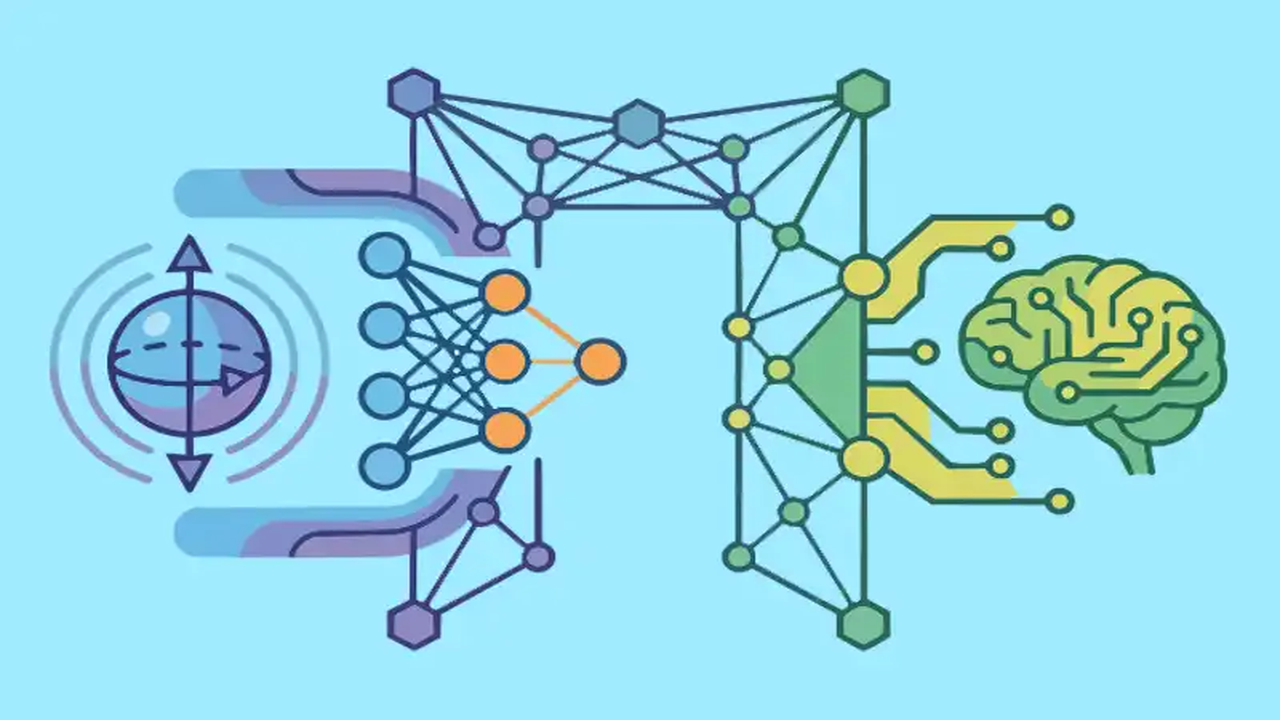
Quantum Machine Learning (QML) is demonstrating promising early results in critical sectors like pharmaceuticals and finance, signaling a potential revolution in AI capabilities. By merging quantum computing with artificial intelligence, QML is proving effective in accelerating drug discovery, optimizing financial portfolios, and enhancing risk assessment through its unique ability to process ultra-high-dimensional data and extract deeper insights.
Technical / Clinical Details
- Fusion of Quantum Computing and AI: QML harnesses the unique properties of quantum mechanics, such as superposition and entanglement, to handle complex data structures more efficiently than classical computers. This capability allows it to overcome the computational limitations of traditional AI algorithms and construct more sophisticated pattern recognition and predictive models.
- Specific Applications:
- Pharmaceutical Sector: QML is being applied to significantly shorten drug candidate screening times and improve the accuracy of molecular simulations, thereby accelerating the entire drug discovery process.
- Financial Sector: Advances include optimizing investment portfolios through complex market data analysis, more precise evaluation of credit and market risks, and enhanced fraud detection capabilities.
- Leveraging Quantum Data Structures: QML capitalizes on the exponential information storage capacity of quantum states to explore high-dimensional data spaces unattainable by classical bits. This enables the extraction of more relevant features from data, holding the potential to achieve higher accuracy with less input data.
Background & Context
Classical machine learning faces increasing computational hurdles as data volumes grow and models become more complex. Extracting actionable insights from vast, intricately correlated datasets often requires prohibitive amounts of time and resources even on supercomputers. Quantum computing offers a potential solution to this computational bottleneck, positioning QML as the next frontier for AI. The promising early demonstrations indicate that quantum technologies are approaching a point of delivering practical value, leading to accelerated investment in research and development across industries.
Strategic Significance & Outlook
While still in its nascent stages, QML’s transformative potential is immense. Over the coming years, the advent of more powerful quantum hardware and advanced QML algorithms is expected to enable solutions for problems of unprecedented scale and complexity. QML is particularly anticipated to establish a “quantum advantage” over classical approaches in areas like quantum chemistry simulations, complex optimization problems, and deep learning model training. This will drive innovative changes not only in pharmaceuticals and finance but also in logistics, energy, and materials science, reshaping multiple industries and offering significant competitive advantages to early adopters and developers.
Source: https://www.opensourceforu.com/2026/06/quantum-machine-learning-merging-quantum-computing-and-ai/