Key Findings
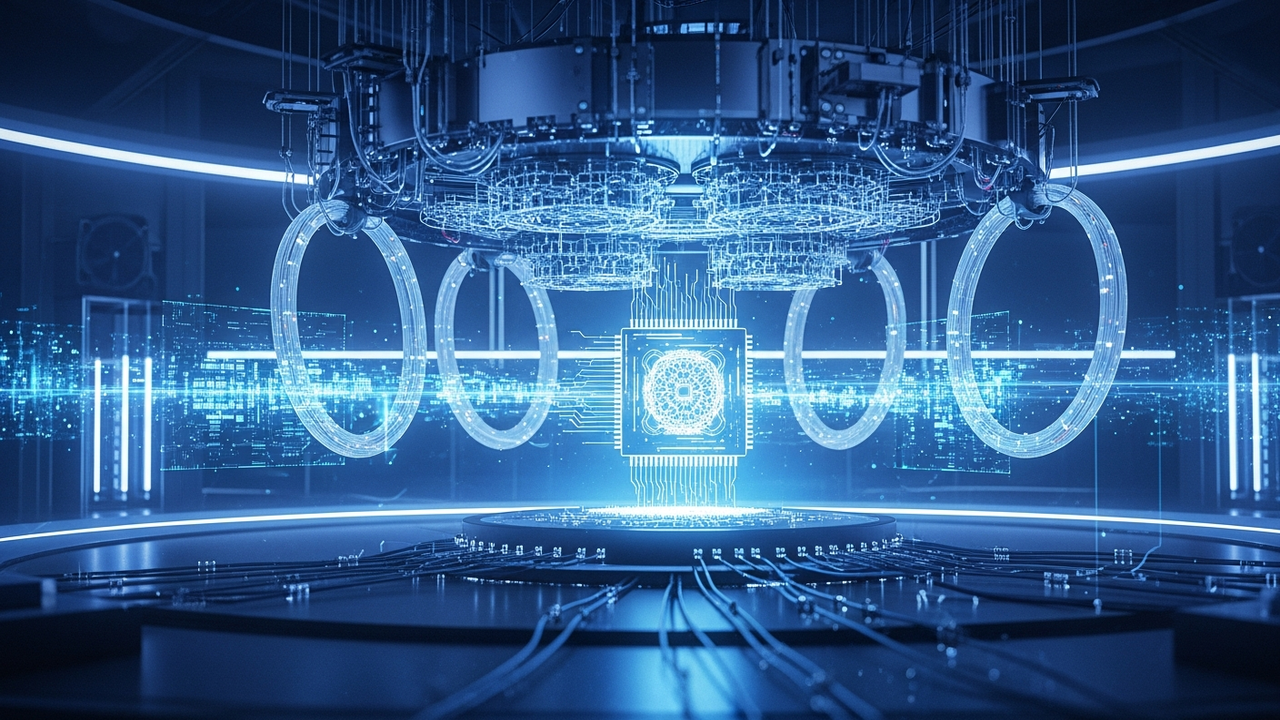
Microsoft has announced its new ‘Majorana 2’ quantum computer chip, which was designed and optimized using artificial intelligence (AI). This groundbreaking chip achieves a 1,000-fold performance improvement in certain metrics compared to the previous-generation Majorana chip. A key technological breakthrough was realized through the adoption of lead as a material. Building on the ‘Majorana 2’ chip, Microsoft has set an ambitious goal to launch a commercially available quantum machine by 2029.
Technical / Clinical Details
- Majorana 2 Chip Performance Enhancement: The new ‘Majorana 2’ chip reportedly offers a 1,000-fold performance improvement. This indicates significant advancements in key quantum metrics such as qubit stability, coherence time, and operational fidelity, which are crucial for reliable quantum computation.
- Adoption of Lead Material: The breakthrough was achieved by using lead as a semiconductor material. The selection of specific materials is critical for the physical properties of qubits, particularly for superconductivity and the stability of topological qubits. Lead may be particularly suitable for realizing topological superconductors.
- Topological Quantum Computing: Microsoft is pursuing a topological quantum computing approach based on topological qubits (Majorana fermions). This method offers a significant advantage for building large-scale, fault-tolerant quantum computers because topological qubits are inherently robust against local physical errors, potentially reducing the need for extensive quantum error correction.
- Application Domains: Microsoft anticipates that Majorana 2-based quantum machines will solve computational problems in areas such as healthcare (e.g., drug discovery, disease diagnostics), chemistry (e.g., new material design, catalyst optimization), and cybersecurity (e.g., post-quantum cryptography) that would take classical computers thousands of years to complete.
Background & Industry Context
Quantum computing is a strategic technology field characterized by intense global competition among nations and major technology companies, including Google, IBM, and China’s national projects. Microsoft has long focused on topological quantum computing research, though its technical difficulty has made development time-consuming. The announcement of the Majorana 2 chip signals Microsoft’s continued commitment and progress in this challenging domain. Leveraging AI for chip design is a modern approach that accelerates the optimization of complex quantum systems.
Strategic Significance & Outlook
Microsoft’s announcement of the Majorana 2 chip and its goal to deliver a commercial quantum system by 2029 significantly raises industry expectations for the practical realization of quantum computing. Topological quantum computing, due to its inherent robustness, is considered a promising candidate for future fault-tolerant quantum computers, and Microsoft’s success in this area will accelerate its advancement. In the coming years, how Microsoft executes its technological roadmap and demonstrates “quantum advantage” in real-world applications will be closely watched. This achievement holds the potential to contribute to groundbreaking discoveries and industrial transformation in healthcare, chemistry, and cybersecurity.






Comments