Key Findings
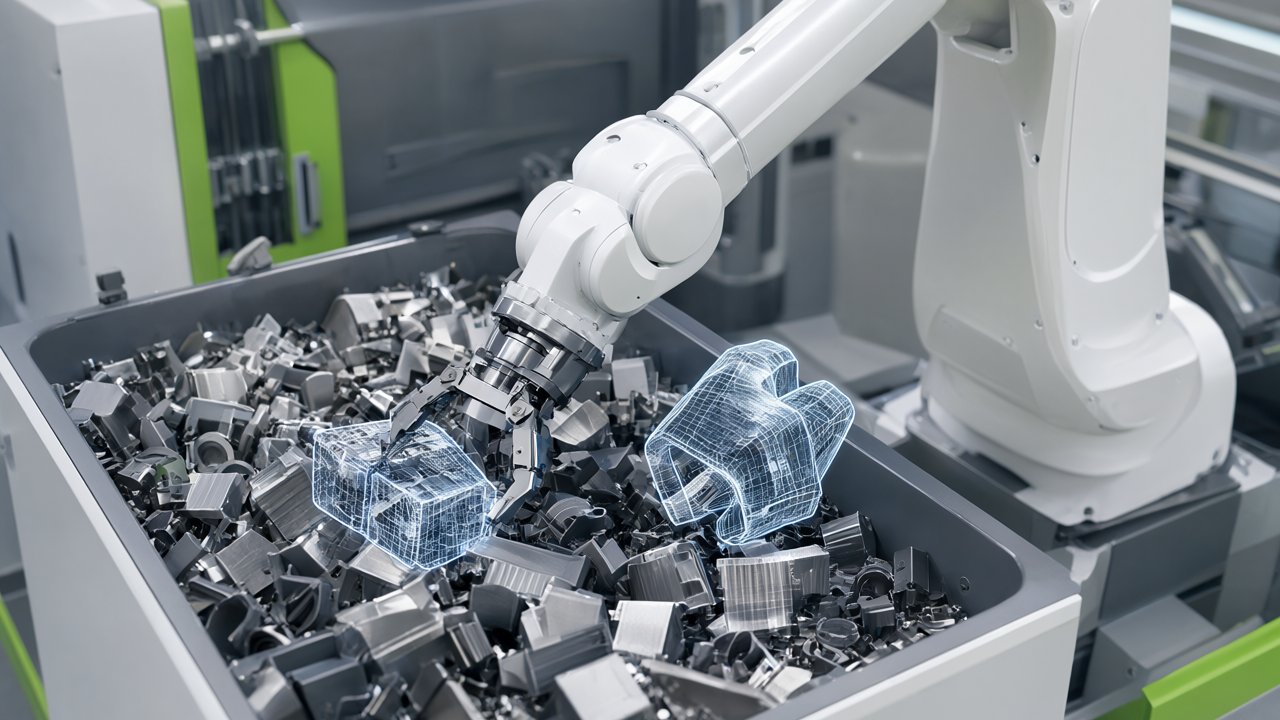
NVIDIA has made a significant leap forward in robotics development with the release of Isaac ROS 5.0. This latest version introduces “FoundationPose,” a groundbreaking foundational model for object pose estimation and tracking, enabling robots to perceive and track object positions and orientations up to 5.5 times faster. This represents a crucial advancement in accelerating agent-enabled robotics development.
Technical/Clinical Details
At the core of Isaac ROS 5.0 is FoundationPose, a technology that dramatically improves a robot’s environmental perception capabilities. This foundational model estimates the 3D pose (position and orientation) of target objects with high accuracy and speed from diverse input data, including depth sensors, RGB cameras, and IMUs. The 5.5x speed increase over conventional methods holds significant potential for boosting productivity and safety in real-time industrial and collaborative robotics applications. FoundationPose integrates with NVIDIA’s inference libraries to support the construction of agent-enabled systems.
Furthermore, Isaac ROS 5.0 now offers the “picking and placing” task for robot arms as a standalone agent-enabled skill. This skill integrates the following common workflow components:
- Object Detection: Accurately identifies target objects from camera images.
- Depth Estimation: Precisely measures the distance and shape of detected objects.
- Pose Output: Provides 3D pose information of the objects, utilized for robot arm grasping plans.
The integration of these elements allows developers to more easily incorporate complex pick-and-place functionalities into robot applications, accelerating automation in fields such as logistics, manufacturing, and assembly.
Background & Context
Modern robotics is evolving from monotonous repetitive tasks to autonomous execution in more complex and dynamic environments. Achieving this evolution requires robots to accurately and rapidly perceive their surroundings and objects. NVIDIA Isaac ROS has been providing high-performance modules and tools to robotics developers through a suite of GPU-accelerated packages operating on the ROS (Robot Operating System) framework. This latest update suggests a deep integration of agentic AI concepts into robotics, indicating a direction towards enhancing robots’ ability to make autonomous decisions and adapt to their environment.
Strategic Significance & Outlook
The introduction of NVIDIA Isaac ROS 5.0 will significantly accelerate the development of next-generation autonomous robotic systems. Specifically, the rapid object pose estimation capabilities offered by FoundationPose and the agent-enabled pick-and-place skills have the potential to reduce deployment barriers and create new value in a wide range of industrial applications, including smart factories, automated warehouses, and service robots. Through this open-source platform, NVIDIA aims to support robotics researchers and developers worldwide in rapidly building innovative solutions.
Source: https://blogs.nvidia.com/blog/isaac-ros-5-0-agentic-open-source-robotics/
Get our weekly technology intelligence — free
Receive an infographic that lets you judge at a glance whether each field’s analysis report is worth reading.
Subscribe Free — Weekly Tech Intelligence
By subscribing, you’ll receive Troy-Technical’s weekly technology intelligence newsletter.
- Your email and selected fields are used only to deliver the newsletter.
- We never share your information with third parties.
- You can unsubscribe anytime via the link in each email.
See our Privacy Policy for details.
Takes about a minute · Unsubscribe anytime







Comments