Background & Context
The semiconductor industry confronts a multifaceted array of challenges, from the persistent strain on Moore’s Law and geopolitical pressures impacting supply chains, to the burgeoning, exponential demand for AI-specific chips. Process innovation is not merely beneficial but indispensable to navigate these complexities, with Artificial Intelligence recognized as a central catalyst for this transformation. While many semiconductor manufacturers have engaged in AI pilot projects over recent years, discussions at ASMC 2026 marked a pivotal shift: moving beyond isolated initiatives towards comprehensive factory digitalization and deeper integration into AI-driven decision-making architectures. Within this transition, robust data governance and assured data quality are emerging as critical determinants for success.
Key Findings
The 2026 Advanced Semiconductor Manufacturing Conference (ASMC) delivered a powerful message: Artificial Intelligence (AI) is no longer a distant prospect for semiconductor manufacturing but has definitively entered a concrete implementation phase focused on delivering measurable business value. A consensus emerged emphasizing that the efficient collection, storage, organization, and analysis of immense volumes of sensor, process, and operational data are paramount for successful, large-scale AI deployment. This unequivocally signals AI’s progression beyond the ‘hype’ cycle, solidifying its role as a practical, indispensable solution.
Technical Details
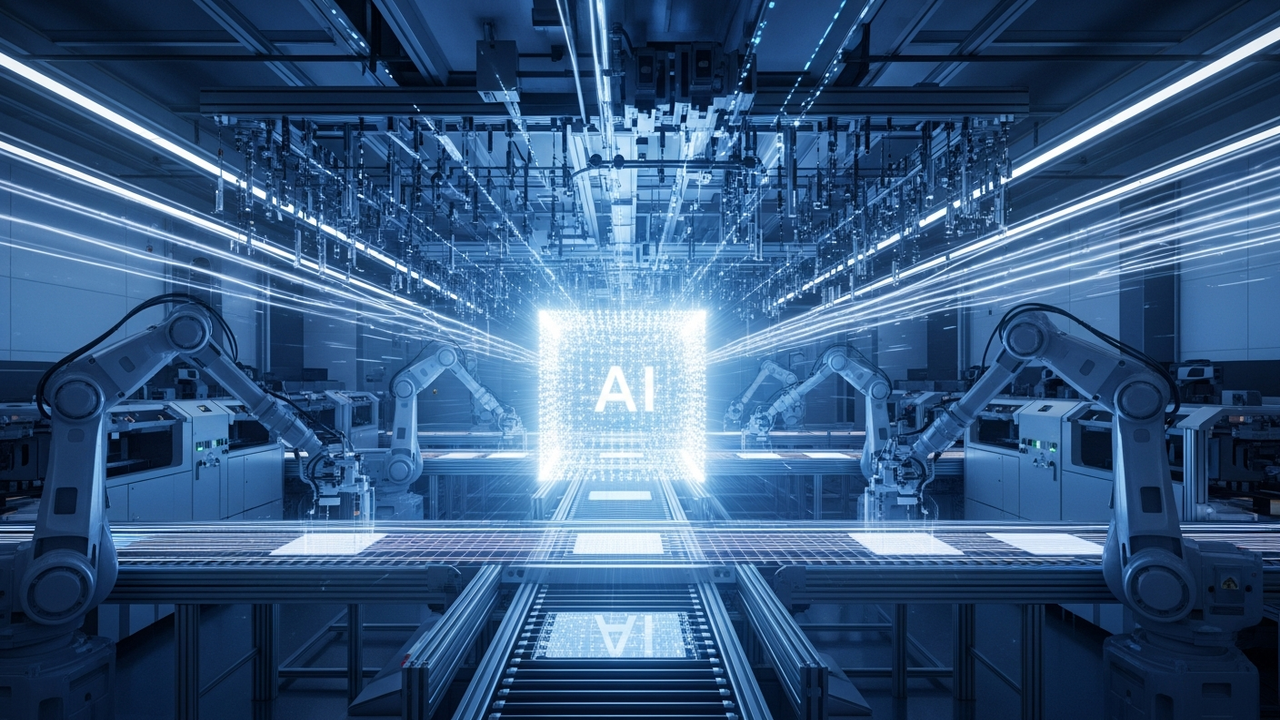
Semiconductor fabrication plants (fabs) are data behemoths, generating terabytes daily from thousands of sensors spanning their entire production lifecycle. This encompasses critical data such as equipment operational status, wafer quality metrics, and precise process parameters. Effective AI implementation necessitates a robust data infrastructure capable of integrating these disparate sources and enabling real-time analysis. This specifically entails high-performance data lakes and data warehouses, strong edge computing capabilities, and Machine Learning as a Service (MaaS) platforms to efficiently train and deploy complex AI models. AI dramatically elevates production efficiency by delivering insights for predictive maintenance, yield optimization, process anomaly detection, and quality control with a level of precision and speed far beyond human capabilities.
Strategic Significance & Outlook
The full-scale deployment of AI in semiconductor manufacturing is anticipated to unlock unprecedented opportunities for productivity gains and substantial cost reductions across the industry. As foundational data infrastructures are solidified and comprehensive enterprise AI platforms are established, fabs will evolve towards more autonomous and intelligent operational paradigms. This transformation promises to shorten product development cycles, enhance responsiveness to dynamic market fluctuations, and ultimately bolster global competitive advantage. By aligning investments and technological development with the strategic roadmap articulated at ASMC 2026, the semiconductor industry is positioned to assume a leading role in the digital transformation of the AI era, establishing new benchmarks for efficiency and innovation.