Key Findings
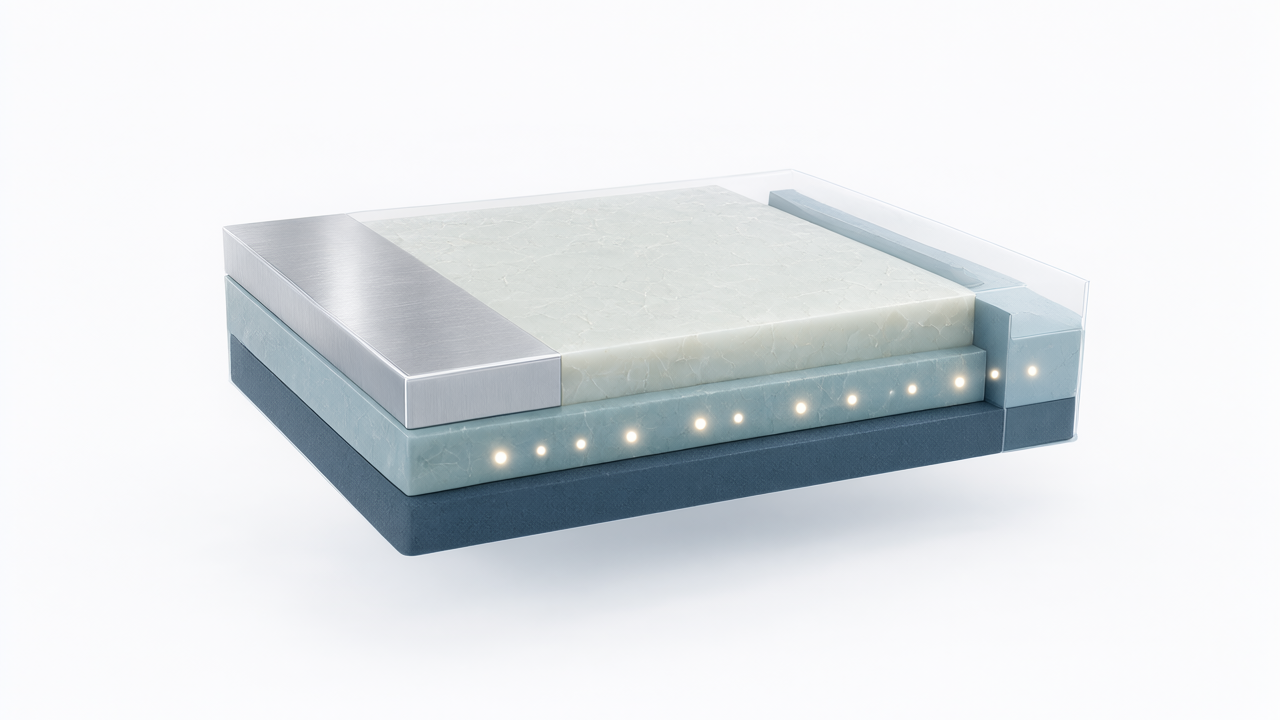
A comprehensive review paper published in ‘Discover Electrochemistry’ has laid out a clear roadmap for solid electrolyte materials, aiming to accelerate the commercialization of all-solid-state lithium batteries. The paper specifically identifies sulfide and LLZO (Lithium Lanthanum Zirconium Oxide) electrolytes as the most promising candidates for next-generation all-solid-state batteries, demonstrating that atomic-scale engineering of crystal structures, defects, and interfaces can achieve ionic conductivities that rival or surpass those of existing flammable liquid electrolytes.
Technical / Clinical Details
The research, conducted by Mohan Jagan and S. P. Vijayachamundeeswari, systematically analyzed four major inorganic solid electrolyte families: NASICON, garnet, perovskite, and sulfide. A key insight from the study is the potential for achieving high ionic conductivity through precise engineering at the atomic scale, focusing on crystal structure, defect chemistry, and interfacial properties. Sulfide-based electrolytes, such as Li10GeP2S12 (LGPS), are noted for their high room-temperature ionic conductivity, often exceeding 10-2 S cm-1, which is comparable to liquid electrolytes. Garnet-type electrolytes, particularly LLZO, are praised for their excellent stability with lithium metal and high safety profiles, despite challenges related to high grain boundary resistance. The paper details that a multi-pronged strategy involving compositional optimization, precise control over defect density, and stabilization of different phases is crucial for reducing interfacial resistance and enhancing the chemical and electrochemical stability of these materials. This comprehensive analysis provides a vital framework for developing solid electrolytes that offer both high practical ionic conductivity and long-term stability.
Background & Context
All-solid-state batteries are anticipated to be a transformative technology, offering significant advantages over conventional lithium-ion batteries that use liquid electrolytes. These advantages include inherent safety due to the elimination of flammable liquid components, higher energy density, and extended cycle life, making them critical for the advancement of electric vehicles (EVs) and grid-scale energy storage. However, the primary hurdles to their widespread adoption have been the relatively low ionic conductivity of solid electrolytes and high interfacial resistance between the solid electrolyte and electrodes. This review paper addresses these challenges directly by providing specific directions for overcoming them, thus offering clear guidance to research institutions and industrial players in the development of solid electrolyte materials. The clarification of technical milestones is expected to streamline and accelerate the overall development process.
Strategic Significance & Outlook
This roadmap is fundamental to resolving the technological bottlenecks hindering the commercialization of all-solid-state batteries. Further research and development focusing on sulfide and LLZO electrolytes are expected to intensify, with advances in atomic-level material design and interface engineering poised to make the mass production of high-performance and safe all-solid-state batteries a reality. Key challenges ahead will include establishing cost-effective synthesis methods for large-scale production and optimizing the matching between electrolyte and electrode materials. The findings from this research are set to significantly bolster the evolution of next-generation battery technologies, which are essential for realizing a cleaner energy future.
Source: https://bioengineer.org/solid-state-battery-breakthrough-scientists-map-the-perfect-electrolyte/
Get our weekly technology intelligence — free
Receive an infographic that lets you judge at a glance whether each field’s analysis report is worth reading.
Subscribe Free — Weekly Tech Intelligence
By subscribing, you’ll receive Troy-Technical’s weekly technology intelligence newsletter.
- Your email and selected fields are used only to deliver the newsletter.
- We never share your information with third parties.
- You can unsubscribe anytime via the link in each email.
See our Privacy Policy for details.
Takes about a minute · Unsubscribe anytime






Comments