Key Findings
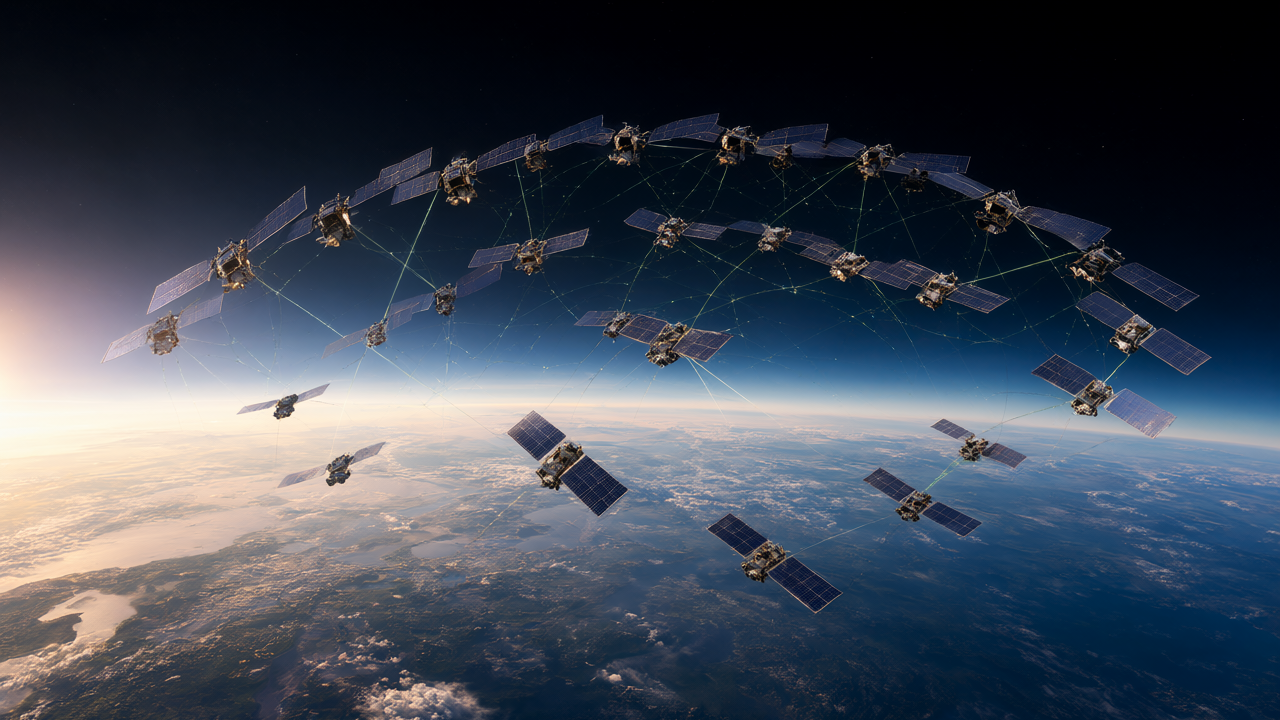
Google has announced that it will conduct the first in-orbit test for ‘Project Suncatcher’ next week, an initiative exploring the potential for large-scale AI computing infrastructure to operate in space. A prototype satellite will be launched as part of SpaceX’s Transporter-18 rideshare mission to validate AI processing capabilities and thermal management technologies in the orbital environment. This endeavor marks a significant step towards pioneering new frontiers for AI technology applications in space.
Technical / Clinical Details
One of the primary technical focuses of this in-orbit test is efficient thermal management in the vacuum of space. As conventional air-cooling systems are non-functional in a vacuum, Google has developed an innovative cooling system combining heat pipes and radiators. This system aims to efficiently collect heat generated by the Tensor Processing Units (TPUs) on board the satellite and dissipate it into space. The success of thermal management is critical for the sustainable operation of space AI data centers, and the data from this test will be crucial in evaluating its feasibility. The satellite is planned to operate for one year handling AI processing requests, which will also test its reliability and performance during long-term operation.
Background & Context
As AI processing capabilities advance, the associated power consumption and cooling challenges pose significant burdens for terrestrial data centers. Google’s Project Suncatcher proposes utilizing space as a strategic solution to this global challenge. Space offers abundant energy sources through solar power generation and the potential for passive cooling leveraging the cold vacuum, making it an ideal platform for AI computing. This move aligns with a broader trend of accelerating AI and computing integration within the space industry, exemplified by Elon Musk’s prediction that ‘most AI computing will move to space.’ SpaceX’s rideshare program economically provides launch opportunities for such experimental payloads, fostering space technology innovation.
Strategic Significance & Outlook
The success of this first in-orbit test for Project Suncatcher will be a crucial milestone for Google in its efforts to build large-scale, space-based AI computing infrastructure in the future. Specifically, the validation results of thermal management technology in a vacuum environment will significantly influence the direction of future space AI technology development. If this technology is established, it is expected to enable a wide range of applications, including processing Earth observation data from space, autonomous satellite networks, advanced space exploration missions, and the creation of new data services in orbit. Google’s initiative has the potential to expand the role of AI in the space economy and elevate humanity’s utilization of space to a new stage.
Source: https://www.hungarianconservative.com/articles/tech/google-suncatcher-ai-computing-space-test/
Get our weekly technology intelligence — free
Receive an infographic that lets you judge at a glance whether each field’s analysis report is worth reading.
Subscribe Free — Weekly Tech Intelligence
By subscribing, you’ll receive Troy-Technical’s weekly technology intelligence newsletter.
- Your email and selected fields are used only to deliver the newsletter.
- We never share your information with third parties.
- You can unsubscribe anytime via the link in each email.
See our Privacy Policy for details.
Takes about a minute · Unsubscribe anytime







Comments