Key Findings
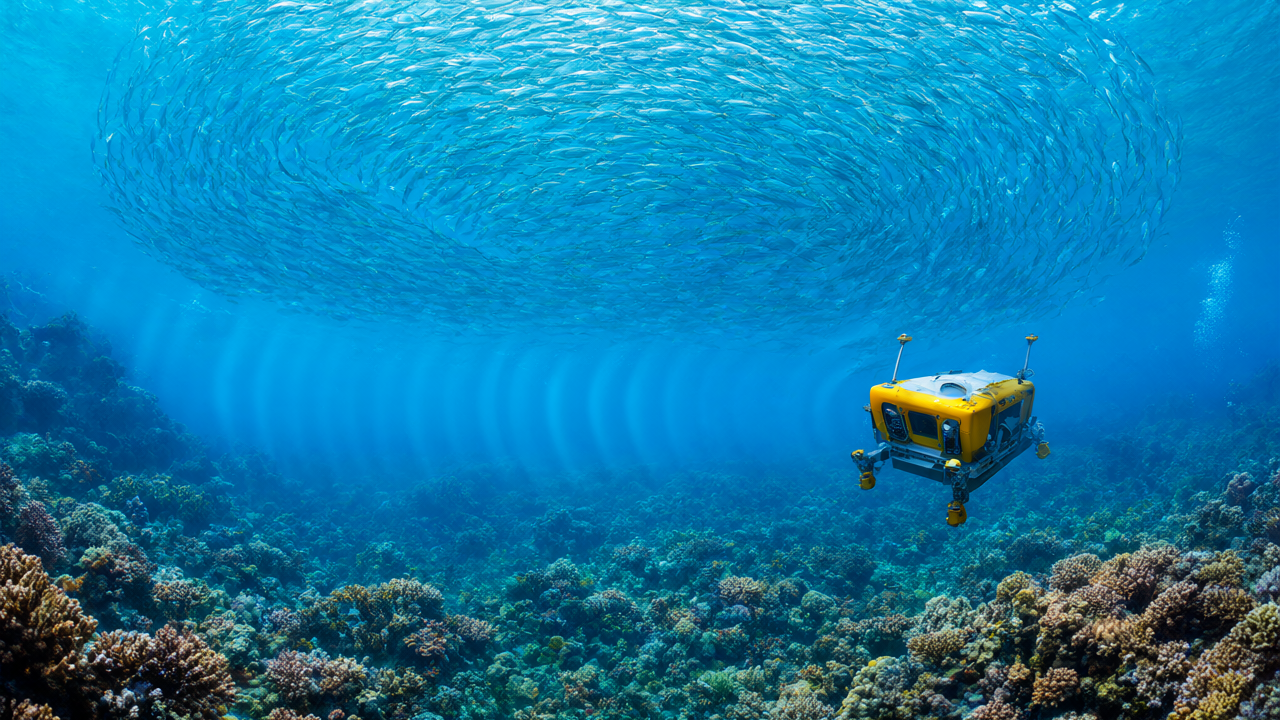
The autonomous underwater robot ‘CUREE’ (Curious Underwater Robot for Ecosystem Exploration), developed by researchers at the Woods Hole Oceanographic Institution (WHOI), has established a groundbreaking method for identifying biological activity hotspots in coral reefs. CUREE successfully detected specific fish aggregation hotspots with high precision by tracking sounds emitted by marine animals using an underwater microphone (hydrophone) from distances up to 80 meters. This acoustics-based approach significantly surpasses the limitations of traditional visually dependent survey methods.
Technical Details
CUREE integrates a high-resolution camera with a sensitive hydrophone system. The hydrophone detects a wide range of acoustic signals produced by marine life, including fish vocalizations and shrimp clicking sounds. By combining this acoustic data with visual information, the robot can identify areas with particularly active biological presence and efficiently scan large areas without requiring constant direct visual observation. This capability allows for the tracking of subtle ecological patterns and individual marine animal behaviors that might be overlooked by human divers or limited camera footage in coral reef environments.
Background & Context
Coral reefs are among the most biodiverse ecosystems on Earth, yet they face severe threats from climate change, pollution, and overfishing. Effective conservation of these vital ecosystems necessitates accurate and non-invasive monitoring technologies to assess their health. Traditional survey methods are often time-consuming, costly, and can potentially disturb marine life. Autonomous robots like CUREE, employing acoustic monitoring, offer a solution to these challenges by enabling extensive and continuous data collection, thereby opening new avenues for conservation science.
Strategic Significance & Outlook
CUREE’s technology represents a significant advancement for coral reef ecosystem research and conservation efforts. For instance, identifying specific fish spawning aggregation sites can inform the establishment of more effective protected areas. Long-term monitoring of how changes in water temperature or environmental stress affect marine acoustic activity can provide early indicators of reef health, offering crucial information for adaptation strategies. In the future, this technology is expected to be applied to biodiversity monitoring in broader marine environments and to studies of population dynamics.
Get our weekly technology intelligence — free
Receive an infographic that lets you judge at a glance whether each field’s analysis report is worth reading.
Subscribe Free — Weekly Tech Intelligence
By subscribing, you’ll receive Troy-Technical’s weekly technology intelligence newsletter.
- Your email and selected fields are used only to deliver the newsletter.
- We never share your information with third parties.
- You can unsubscribe anytime via the link in each email.
See our Privacy Policy for details.
Takes about a minute · Unsubscribe anytime