Key Findings
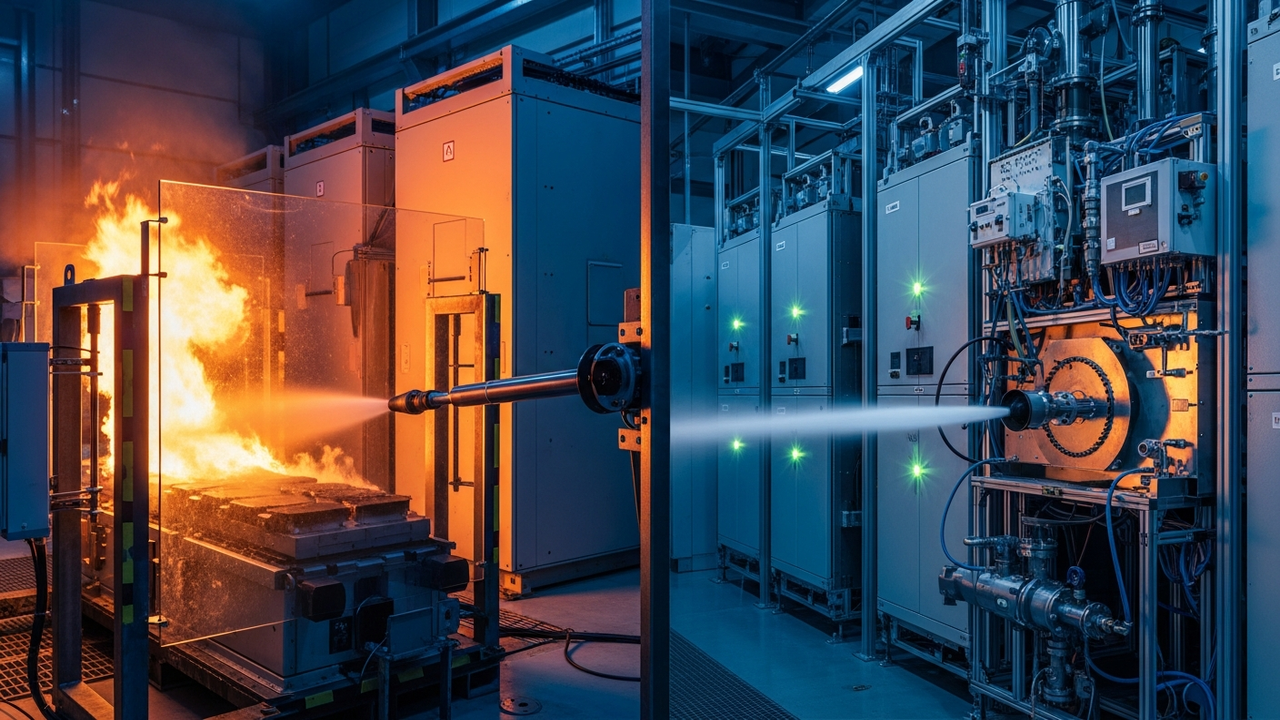
Major technical standards for ensuring the safety and reliability of Battery Energy Storage Systems (BESS) have been significantly strengthened in the United States. Notably, the 6th Edition of UL 9540A, published on March 13, 2026, now mandates large-scale, installation-level fire testing under real-world failure conditions, such as thermal runaway, moving beyond mere component-level certifications for BESS developers. Furthermore, the updated NFPA 855 restricts the use of passive deflagration venting, requiring the implementation of more active explosion control systems and Combustible Concentration Reduction (CCR) systems for enclosed BESS installations. Compliance with these stringent standards is a prerequisite for BESS projects to secure financing and integrate safely and effectively into the electrical grid.
Technical Details
For BESS to be grid-connected, adherence to strict technical standards including IEC 62933 (electrical safety), UL 9540 (fire safety), and IEEE 1547 (grid interconnection) is essential. UL 9540A 6th Edition aims to validate safe designs by evaluating thermal runaway propagation and fire behavior at the battery module, rack, and container levels through fire tests simulating actual installation environments. The revisions to NFPA 855 enhance responses to the severity and complexity of BESS fires, specifically addressing the potential risks associated with thermal runaway in lithium-ion batteries. To secure financing, BESS projects must also meet high-performance requirements, including a round-trip efficiency exceeding 85%, a cycle life of over 6,000 cycles at 80% depth of discharge, and response times under 100 milliseconds for grid services. Lithium Iron Phosphate (LFP) batteries are widely adopted as the dominant technology for grid-scale storage due to their superior safety profile and extended cycle life (up to 8,000 cycles).
Background and Industry Context
The large-scale deployment of renewable energy and the rapid growth in electricity demand driven by AI data centers are accelerating the adoption of BESS for grid stabilization and resilience. However, BESS fire incidents have occurred worldwide, making safety the paramount concern for the entire industry. The tightening of UL 9540A and NFPA 855 reflects lessons learned from these incidents, representing critical measures to align safety standards with modern technology and risk assessments. International standards like IEEE 1547 and IEC 62933 for grid interconnection provide the technical framework for BESS to seamlessly integrate into the power grid and reliably provide ancillary services such as frequency regulation, voltage support, and peak shifting. These standards serve as a common language for suppliers, developers, financiers, and regulators in evaluating BESS reliability and safety.
Outlook
Compliance with these strengthened safety and performance standards is crucial for the sustainable growth and enhanced reliability of the BESS market. BESS designers and manufacturers will be driven to innovate further in areas such as thermal management systems (with advanced liquid-cooling becoming standard), cell balancing, and data monitoring. Reliable and safe BESS solutions are indispensable, particularly for facilities with power-intensive loads like AI data centers. This will enable companies that provide high-quality, compliant BESS to establish a competitive advantage in the market, accelerating BESS adoption. Consequently, the proliferation of safer and more efficient energy storage solutions is expected to accelerate the clean energy transition.
Source: https://jmbatteries.com/blogs/news/bess-problems-and-risks