Key Findings
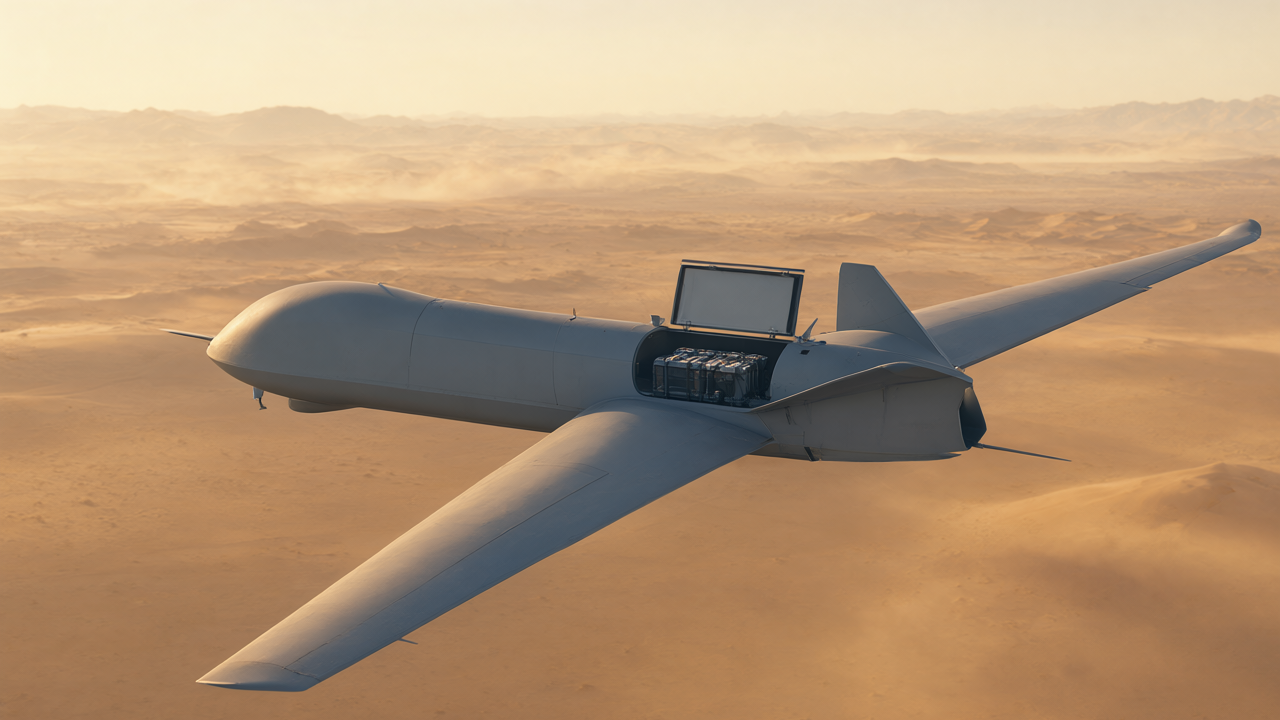
High-performance silicon anode lithium-ion (Li-ion) batteries have been developed for military drones (UAVs), achieving a 30-40% increase in energy density compared to conventional graphite anode cells. This innovative battery technology boasts an impressive energy density of approximately 350–450+ Wh/kg, enabling a dramatic extension of flight times for long-range ISR (Intelligence, Surveillance, and Reconnaissance) UAVs. Moreover, these battery packs are engineered with MIL-STD-810H compliant thermal runaway mitigation and mechanical reinforcement, maximizing safety and reliability under stringent operational conditions.
Technical / Clinical Details
Battery technology for military drones is a critical component for mission success, demanding high energy density, safety, and durability. This new battery leverages key chemical properties and technical features:
- Silicon Li-ion Battery: While traditional Li-ion batteries use graphite as the anode material, silicon can theoretically intercalate significantly more lithium ions—up to ten times the capacity of graphite. This high-energy silicon anode cell achieves a 30-40% higher energy density (approximately 350–450+ Wh/kg) compared to conventional graphite cells, substantially extending drone flight endurance.
- LiPo (Lithium Polymer): Offers flexible packaging and supports high discharge rates, but generally has lower energy density than silicon Li-ion.
- Primary Cells (Non-rechargeable): Provide long shelf life and low self-discharge but incur higher operational costs due to their single-use nature.
- Solid-State Batteries: An emerging technology aiming for ultimate safety and energy density, currently in development.
Furthermore, military battery packs incorporate crucial characteristics:
- Thermal Runaway Mitigation: Advanced Battery Management Systems (BMS) and physical designs (e.g., thermal conductive materials, cooling fins, fire barriers) are integrated to prevent overheating and uncontrolled thermal reactions.
- Mechanical Hardening: Robust casings and reinforced internal structures are designed to withstand harsh environments including vibration, shock, drops, and extreme temperature variations, complying with military standards such as MIL-STD-810H.
Background & Context
In modern military operations, UAVs play an indispensable role across a wide range of missions, including intelligence gathering, reconnaissance, surveillance, attack, and logistics support. The effectiveness of these missions heavily depends on the UAV’s endurance, range, and reliability. Particularly in ISR missions, prolonged surveillance capabilities are critical for accurately monitoring enemy movements. The limitations of conventional battery technology have been a significant constraint on drone operational capabilities.
The introduction of silicon anode Li-ion batteries offers a strategic solution to this challenge, markedly improving the operational capabilities of military UAVs. This enables surveillance over wider areas, execution of longer missions, and more rapid deployment, serving as a vital factor in securing tactical advantages.
Strategic Significance & Outlook
This high-performance battery technology will significantly impact the military drone market, driving new UAV designs and enhancing mission capabilities. Specifically, the development of compact, long-range, and long-endurance tactical UAVs will accelerate, allowing for adaptation to more diverse battlefield scenarios. In the future, further improvements in energy density and safety are anticipated, potentially through integration with solid-state battery technology and more advanced self-diagnostic and self-healing functions. This evolution is expected to make military UAVs more autonomous and resilient systems, playing an even more central role in future defense strategies.
Source: https://www.ayaauavpower.com/news/military-drone-battery/
Get our weekly technology intelligence — free
Receive an infographic that lets you judge at a glance whether each field’s analysis report is worth reading.
Subscribe Free — Weekly Tech Intelligence
By subscribing, you’ll receive Troy-Technical’s weekly technology intelligence newsletter.
- Your email and selected fields are used only to deliver the newsletter.
- We never share your information with third parties.
- You can unsubscribe anytime via the link in each email.
See our Privacy Policy for details.
Takes about a minute · Unsubscribe anytime