Key Findings
Four primary engineering methodologies for maximizing robot actuator power density—coaxial integration, miniaturization of reducers, topology-optimized housings, and optimized motor slot filling—have been thoroughly discussed. A coaxial integrated joint prototype unveiled by the Hong Kong University of Science and Technology (Guangzhou) [HKUST(GZ)] in 2026 notably achieved a high torque density of 35.7 Nm/kg, marking a pivotal advancement for contributing to the miniaturization and enhanced performance of robots.
Technical / Clinical Details
The four discussed methods are:
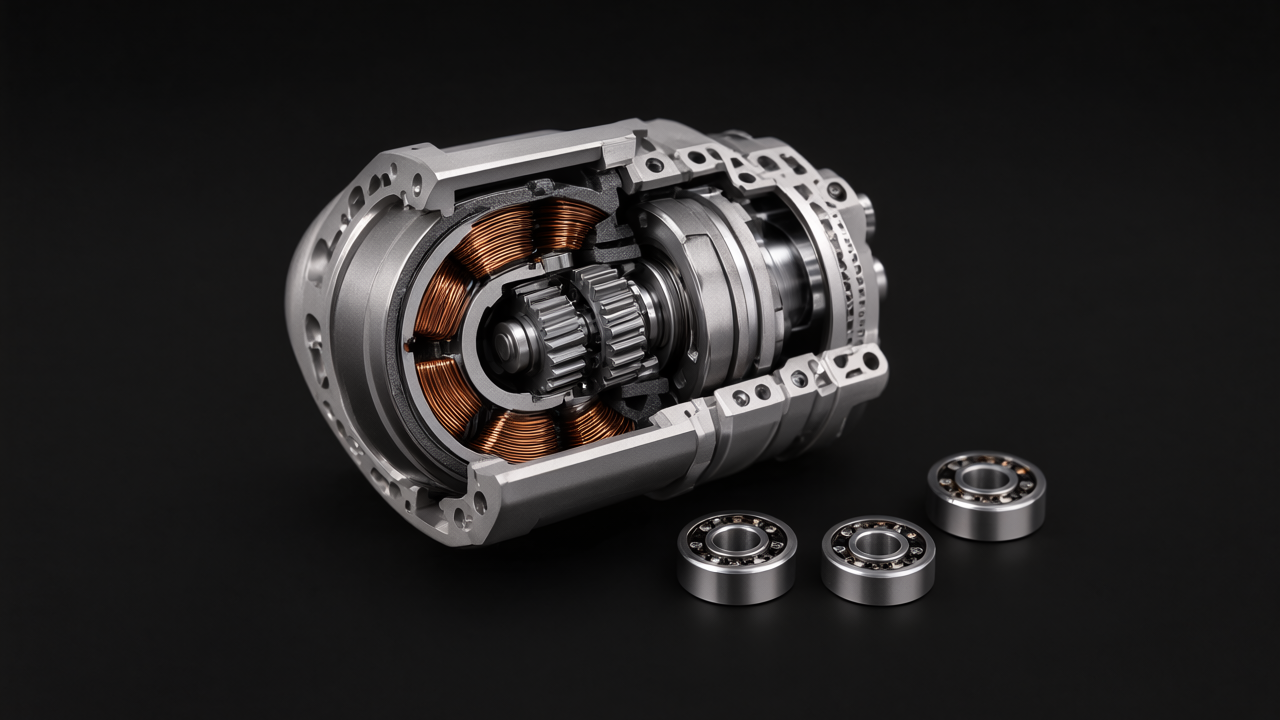
- Coaxial Integration: This involves integrating the motor, reducer, sensors, and other components into a single, compact unit. This approach reduces overall volume and weight while simultaneously simplifying wiring and assembly complexity. The HKUST(GZ) prototype successfully applied this, achieving an impressive torque density of 35.7 Nm/kg.
- Miniaturization of Reducer: Designing high-efficiency and compact reducers significantly reduces the overall size and weight of the actuator. Optimization of advanced technologies such as planetary gears and harmonic drives is crucial here.
- Topology Optimized Housing: Utilizing computer simulations to design housings that maintain strength and rigidity while minimizing material usage. This process eliminates unnecessary weight and often improves heat dissipation.
- Motor Slot Filling: Maximizing the utilization of winding space within the motor and increasing the copper fill factor directly enhances the motor’s electromagnetic torque. This is one of the most effective ways to boost motor performance.
Background & Context
The widespread adoption of robots, particularly humanoid and collaborative robots, critically depends on actuators that are high-power yet lightweight and compact. Actuators with low power density increase the robot’s overall size and weight, thereby reducing agility and energy efficiency. Consequently, improving actuator power density is recognized as one of the most crucial challenges in robotics development. These engineering methods combine and optimize existing technologies to push performance boundaries.
Strategic Significance & Outlook
These power density enhancement techniques hold the potential to dramatically improve the performance of diverse robotic applications, including robot arms, humanoid robot joints, and drone propulsion systems. The achievements by research institutions like HKUST(GZ) will significantly influence the design of future robotic products, accelerating the realization of higher-performing robots capable of executing a wider range of tasks. Critically, improved energy efficiency is paramount for battery-powered autonomous robots, directly extending operational duration and diversifying mission capabilities.
Source: https://eyoubot.com/en/blog/robot-actuator-power-density
Get our weekly technology intelligence — free
Receive an infographic that lets you judge at a glance whether each field’s analysis report is worth reading.
Subscribe Free — Weekly Tech Intelligence
By subscribing, you’ll receive Troy-Technical’s weekly technology intelligence newsletter.
- Your email and selected fields are used only to deliver the newsletter.
- We never share your information with third parties.
- You can unsubscribe anytime via the link in each email.
See our Privacy Policy for details.
Takes about a minute · Unsubscribe anytime