Key Findings
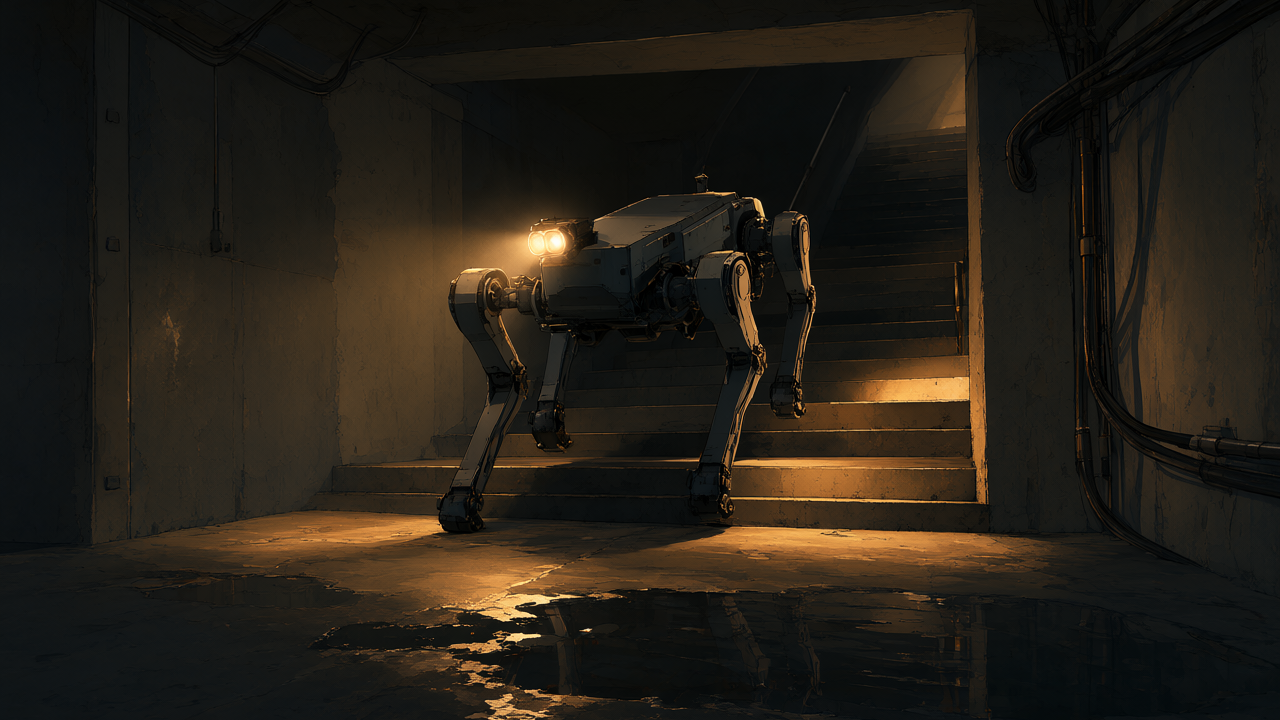
Taiwan’s Industrial Technology Research Institute (ITRI) is making significant strides in developing domestic quadruped robots designed to operate in hazardous environments inaccessible to humans, such as fire scenes and underground tunnels. These “robot dogs” have demonstrated the ability to rapidly acquire complex skills like maintaining balance on challenging terrains and climbing stairs within just three days, thanks to simulation training utilizing NVIDIA’s supercomputer and Omniverse platform, dramatically accelerating the development process.
Technical / Clinical Details
Under the patronage of the Ministry of Economic Affairs, ITRI has established an open research platform that integrates a wide array of technologies, including mechanical engineering, motor control, sensing, ICT, semiconductor, and AI. The quadruped robots developed on this platform process visual and foot-sole tactile information to achieve highly stable autonomous movement across complex environments, including uneven ground, rubble, and stairs. Crucially, the high-fidelity virtual environment provided by NVIDIA’s Omniverse for simulation training drastically cuts down the time and cost associated with physical trial and error, accelerating AI learning and skill deployment to physical robots. This approach also allows for efficient verification of robot behavior in extreme conditions that are difficult to replicate in real-world tests.
Background & Context
Globally, including Taiwan, natural disasters and industrial accidents are frequent occurrences, creating demands for rescue and infrastructure inspection activities in areas that are difficult or dangerous for humans to access. In such scenarios, quadruped robots are highly anticipated as platforms for reconnaissance, surveillance, material transport, and even light tasks, owing to their high mobility and off-road capabilities. However, achieving stable autonomous locomotion in complex environments has long been a significant technical challenge. ITRI’s approach demonstrates an effective method to overcome this challenge through the fusion of simulation and AI.
Strategic Significance & Outlook
The domestic quadruped robots developed by ITRI are expected to find diverse applications in the future, including disaster relief, hazardous material inspection, routine inspection of infrastructure, and surveillance in smart agriculture. The shortened training period and enhanced technical reliability will enable rapid practical implementation, opening new avenues for robots to contribute to societal safety and sustainability. This technology is poised to play a vital role in supporting Taiwan’s robotics R&D and smart manufacturing teams, thereby strengthening its international competitiveness.
Source: https://money.udn.com/money/story/122331/9801394
Get our weekly technology intelligence — free
Receive an infographic that lets you judge at a glance whether each field’s analysis report is worth reading.
Subscribe Free — Weekly Tech Intelligence
By subscribing, you’ll receive Troy-Technical’s weekly technology intelligence newsletter.
- Your email and selected fields are used only to deliver the newsletter.
- We never share your information with third parties.
- You can unsubscribe anytime via the link in each email.
See our Privacy Policy for details.
Takes about a minute · Unsubscribe anytime