Key Findings
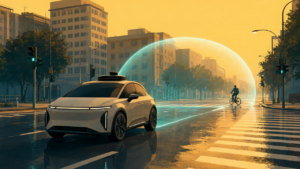
Evaluation using the new modular benchmark “Radar2Plan” has demonstrated that 4D radar alone delivers highly competitive performance in ego-trajectory planning for autonomous vehicles, even under challenging conditions such as adverse weather and low light. This indicates a potential to overcome the environmental dependencies faced by other primary sensors like cameras and LiDAR.
Technical / Clinical Details
The research employed real-world 4D radar data to assess open-loop ego-trajectory planning capabilities. Seven different sensor combinations, including cameras, 4D radar, and LiDAR, were systematically evaluated against four representative planning baselines across twelve diverse weather and lighting conditions. The results unequivocally showed that 4D radar exhibited robust detection and planning capabilities, often matching or surpassing combined sensor systems, particularly in low-visibility situations like rain, fog, and darkness. The ability of 4D radar to acquire height information in addition to velocity, distance, and angle enables more detailed environmental mapping.
Background & Context
Current autonomous driving systems heavily rely on LiDAR and cameras, but these sensors suffer significant performance degradation under adverse conditions such as rain, snow, heavy fog, or strong backlight. This fundamental limitation has been a major barrier to all-weather operation of autonomous driving technology. 4D radar, utilizing radio waves, is inherently robust to these environmental factors, and this study highlights its potential to significantly enhance the reliability of autonomous driving’s perception capabilities.
Strategic Significance & Outlook
The confirmation of 4D radar’s robust standalone performance will have a substantial impact on the design and implementation of autonomous driving systems. It is expected to elevate the importance of 4D radar in sensor fusion strategies, potentially enabling future autonomous vehicles to achieve safer and more reliable all-weather driving capabilities. If cost-effectiveness and performance can be balanced, 4D radar adoption in production vehicles could accelerate, significantly advancing the practical deployment of autonomous driving.
Source: https://arxiv.org/html/2610.06121v1
Get our weekly technology intelligence — free
Receive an infographic that lets you judge at a glance whether each field’s analysis report is worth reading.
Subscribe Free — Weekly Tech Intelligence
By subscribing, you’ll receive Troy-Technical’s weekly technology intelligence newsletter.
- Your email and selected fields are used only to deliver the newsletter.
- We never share your information with third parties.
- You can unsubscribe anytime via the link in each email.
See our Privacy Policy for details.
Takes about a minute · Unsubscribe anytime