InGaAs Quantum Dots Achieve 90% Quantum Photon Interference Visibility, Driving Quantum Technology Forward
A research team has successfully elevated quantum photon interference visibility to an astonishing 90% by strategically embedding indium gallium arsenide (InGaAs) quantum dots within optical microcavities. This groundbreaking achievement capitalizes on the quantum dots’ intrinsic property to confine electron excitations, thereby mimicking the behavior of artificial atoms. A 90% interference visibility represents a critical advance in developing high-fidelity photon sources for both quantum communication and quantum computing applications.
Technical and Experimental Details
- Role of Quantum Dots: InGaAs quantum dots, due to their electronic structure, serve as ideal quantum emitters capable of generating single photons with high efficiency. Their ability to confine electrons and holes within a minute semiconductor structure, leading to discrete energy levels, makes them excellent single-photon sources.
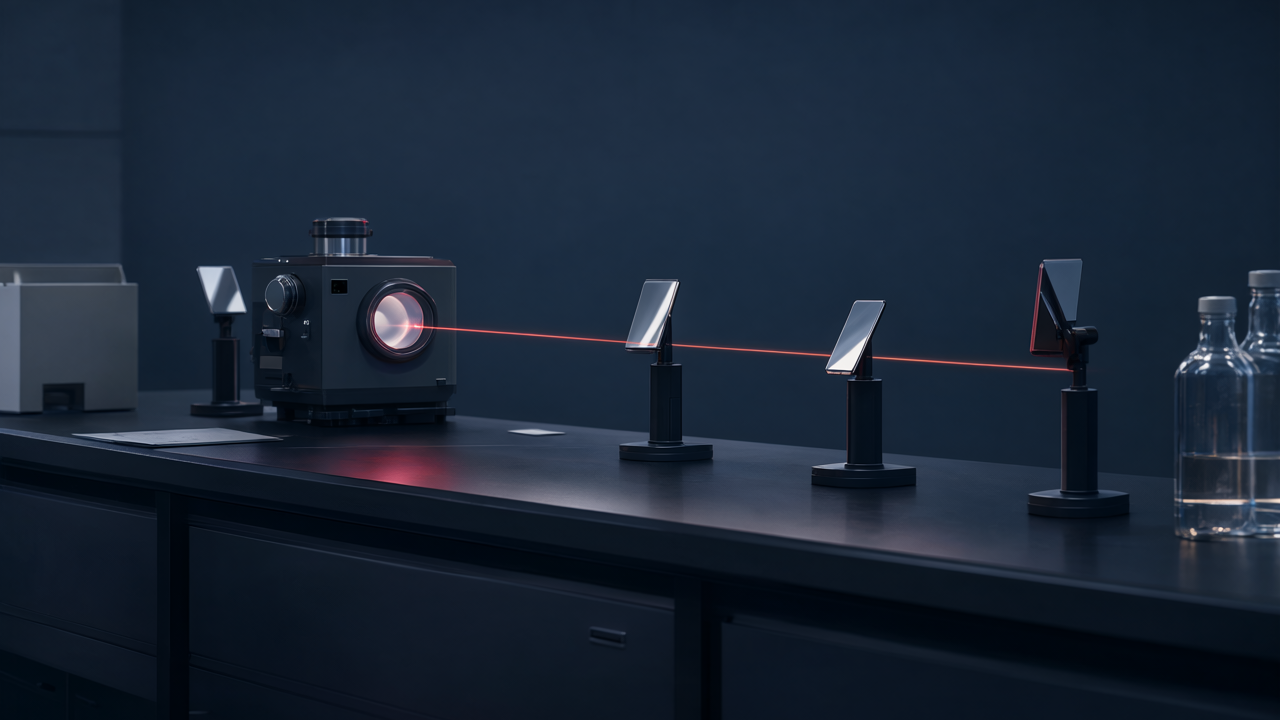
- Enhancement via Optical Microcavities: By positioning quantum dots within precisely engineered optical microcavities, the spontaneous emission of photons from the quantum dots is guided and enhanced, significantly improving the purity and indistinguishability of the emitted photons. The microcavity amplifies specific wavelengths while suppressing noise, thereby elevating the quality of quantum interference.
- 90% Interference Visibility: Achieving 90% photon interference visibility implies that the generated photons are almost perfectly indistinguishable. This is a crucial prerequisite for multi-photon quantum information processing protocols, such as Bell-state measurements and linear optical quantum computing. This level of photon coherence was previously challenging to attain with conventional systems.
Background and Industry Context
In the fields of quantum communication and quantum computing, a persistent challenge has been the generation of photons, which serve as qubits, with high purity and indistinguishability. Low photon indistinguishability degrades the fidelity of quantum gate operations and increases quantum error rates. This latest achievement offers a potential solution to this fundamental problem, paving the way for the construction of larger-scale, more error-tolerant quantum systems.
Strategic Significance and Outlook
This semiconductor device, capable of achieving 90% photon interference visibility, is poised to become a foundational technology for next-generation quantum communication networks and quantum computers. Specifically, it will directly contribute to enhancing the security of Quantum Key Distribution (QKD) systems and facilitate the development of scalable photon-based quantum computing platforms. The technology is also envisioned for applications in other quantum technology domains, including quantum sensing and quantum imaging, potentially leading to the realization of high-efficiency single-photon sources operating at room temperature.
Get our weekly technology intelligence — free
Receive an infographic that lets you judge at a glance whether each field’s analysis report is worth reading.
Subscribe Free — Weekly Tech Intelligence
By subscribing, you’ll receive Troy-Technical’s weekly technology intelligence newsletter.
- Your email and selected fields are used only to deliver the newsletter.
- We never share your information with third parties.
- You can unsubscribe anytime via the link in each email.
See our Privacy Policy for details.
Takes about a minute · Unsubscribe anytime