Key Findings
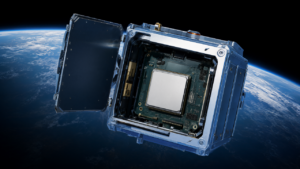
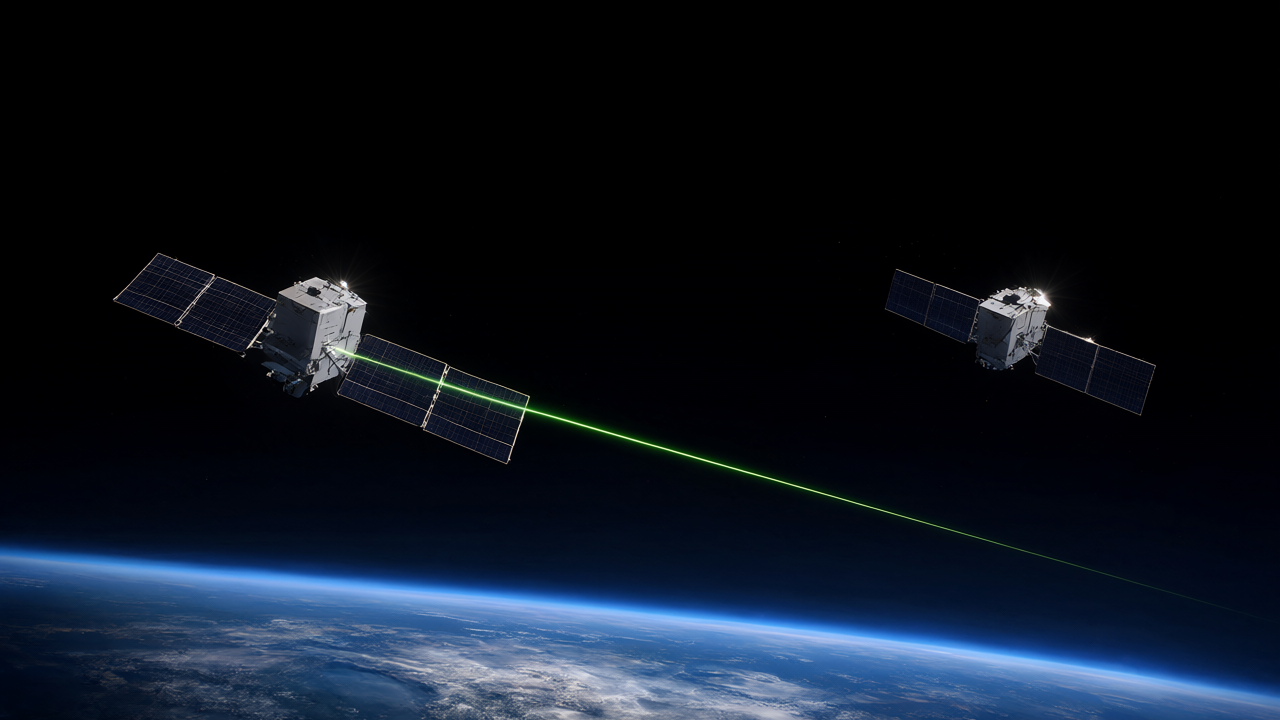
The realization of low-Earth orbit (LEO) data centers hinges on the successful development of terabit-per-second (Tbps) optical inter-satellite link (OISL) technology. This advanced communication infrastructure is crucial for elevating orbital data processing capabilities to a level comparable with terrestrial data centers, thereby unlocking a new frontier in space-based computing.
Technical / Clinical Details
Orbital data centers present a revolutionary concept, operating on abundant and sustainable solar power without consuming valuable land on Earth. However, for these space-based facilities to efficiently handle large-scale data processing, they require the ability to transmit vast amounts of data at high speeds between orbital nodes and to ground stations. Current satellite communication technologies fall short of this demand, necessitating the terabit-class data speeds that OISL can provide.
Engineers designing these OISL systems confront significant technical hurdles. Foremost among these is the need to withstand the extreme environmental conditions of space, which include cosmic radiation that degrades sensitive optical and electronic components, severe vibrational loads during rocket launches, and wide-ranging thermal fluctuations (from cryogenic cold to intense heat) in the vacuum of space. Developing robust hardware and software that can maintain stable performance over long durations under these conditions is paramount to success.
Specific technical requirements involve highly precise pointing and tracking systems to accurately establish and maintain delicate optical beams between rapidly moving satellites. Furthermore, advanced optical amplification technologies and error correction coding are essential to minimize signal loss and enable long-distance data transmission.
Background & Context
The concept of space data centers has gained significant traction as a sustainable solution amid the exponential growth in cloud computing demand and the increasing saturation of terrestrial infrastructure. Space-based computing offers independent data processing capabilities unconstrained by geographical boundaries or reliance on specific regional power grids. Its ability to efficiently harness solar energy also promises a lower environmental footprint compared to traditional ground-based data centers.
Strategic Significance & Outlook
The successful establishment of terabit-class optical inter-satellite link technology will transform orbital data centers from a theoretical concept into a tangible reality, with the potential to revolutionize global data processing capabilities. Progress in this technology is expected to enable real-time processing of Earth observation data, AI-driven services from space, and the construction of ultra-high-speed communication networks for deep space exploration missions. Engineering teams are focused on integrating state-of-the-art advancements in material science, optical engineering, and digital signal processing to achieve both reliability and performance in the space environment, developments that will shape the future of the entire space industry.
Get our weekly technology intelligence — free
Receive an infographic that lets you judge at a glance whether each field’s analysis report is worth reading.
Subscribe Free — Weekly Tech Intelligence
By subscribing, you’ll receive Troy-Technical’s weekly technology intelligence newsletter.
- Your email and selected fields are used only to deliver the newsletter.
- We never share your information with third parties.
- You can unsubscribe anytime via the link in each email.
See our Privacy Policy for details.
Takes about a minute · Unsubscribe anytime