Key Findings
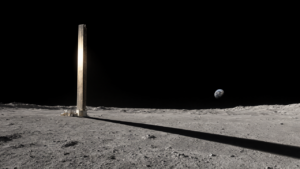
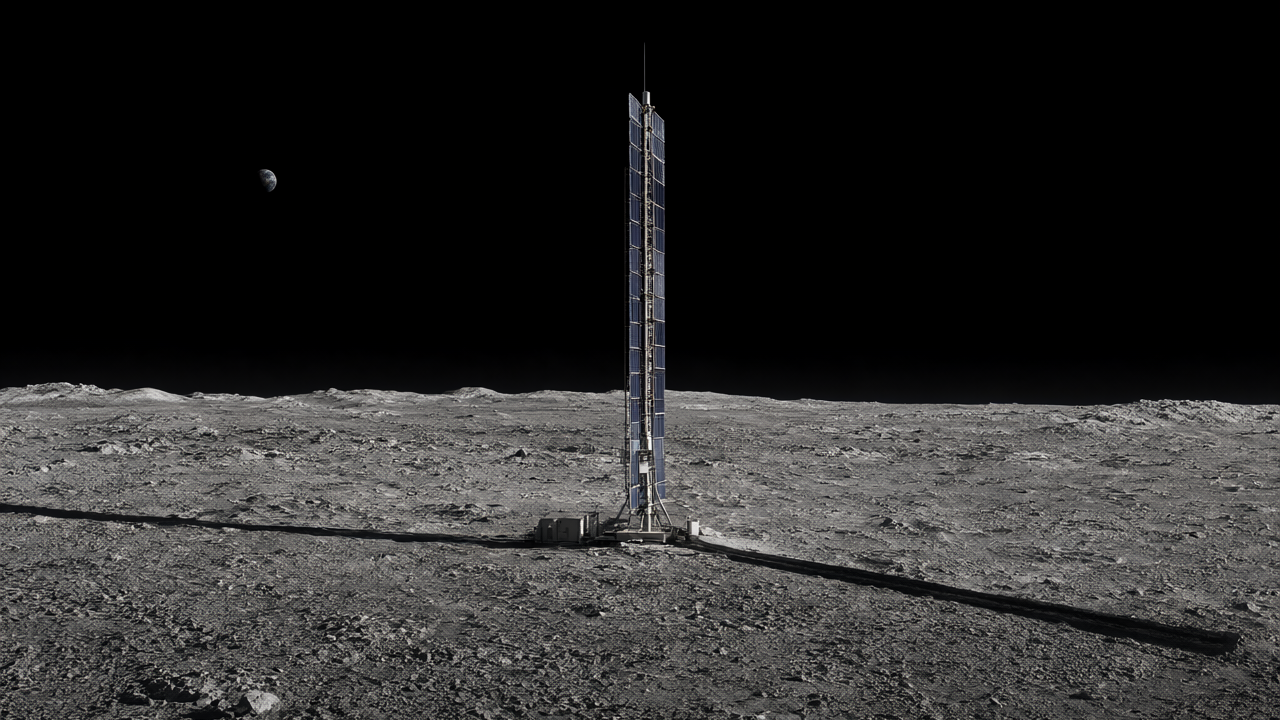
Blue Origin has unveiled its “Power Tower,” a 20-meter-tall vertically deployed solar array specifically designed to generate over 10 kilowatts (kW) of power for future NASA Moon Base operations, particularly at the lunar South Pole. This system represents a significant step towards achieving sustainable energy supply on the Moon.
Technical / Clinical Details
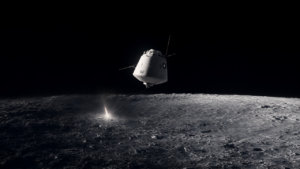
The “Power Tower” features a modular architecture that could allow multiple towers to be interconnected, forming a broader lunar power network. The lunar South Pole presents a unique environment with continuously sunlit “peaks of eternal light” alongside permanently shadowed craters, making consistent energy supply critical for accessing valuable resources like water ice. This technology builds on prior research by Honeybee Robotics, a Blue Origin subsidiary, developed under NASA’s Vertical Solar Array Technology (VSAT) program for vertical solar arrays. The deployable system is designed for efficient transport within limited launch payload volumes and autonomous deployment on the lunar surface. Operating on the Moon requires robust designs capable of withstanding extreme thermal cycling, radiation, and lunar regolith (moon dust).
Background & Context
With humanity’s renewed focus on lunar return and the establishment of lunar bases, as outlined in NASA’s Artemis program, a stable and reliable power supply is crucial for long-duration stays and activities. Given the prohibitively high cost of transporting materials from Earth, in-situ resource utilization (ISRU) and local energy generation are paramount. Blue Origin’s Power Tower offers a concrete solution to this challenge, supporting the initial phases of lunar infrastructure development. While nuclear fission power systems are also being investigated for lunar applications, solar power offers quicker initial deployment and comparatively lower operational risk, making them complementary solutions in a comprehensive lunar energy strategy.
Strategic Significance & Outlook
Blue Origin’s “Power Tower” will serve as a vital power source, enabling activities such as water ice extraction and other resource utilization in the lunar South Pole region. The ability to deploy multiple towers will allow for scalability, supporting the growing power demands of expanding lunar bases and future exploration missions. This technology represents critical infrastructure for enabling a long-term human presence on the Moon and will contribute to the development of a burgeoning lunar economy. Furthermore, the expertise gained from this deployable solar array technology could eventually be applied to energy solutions for Mars and other celestial body exploration missions, extending humanity’s reach across the solar system.
Get our weekly technology intelligence — free
Receive an infographic that lets you judge at a glance whether each field’s analysis report is worth reading.
Subscribe Free — Weekly Tech Intelligence
By subscribing, you’ll receive Troy-Technical’s weekly technology intelligence newsletter.
- Your email and selected fields are used only to deliver the newsletter.
- We never share your information with third parties.
- You can unsubscribe anytime via the link in each email.
See our Privacy Policy for details.
Takes about a minute · Unsubscribe anytime