Key Findings
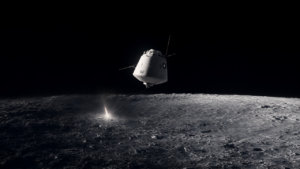
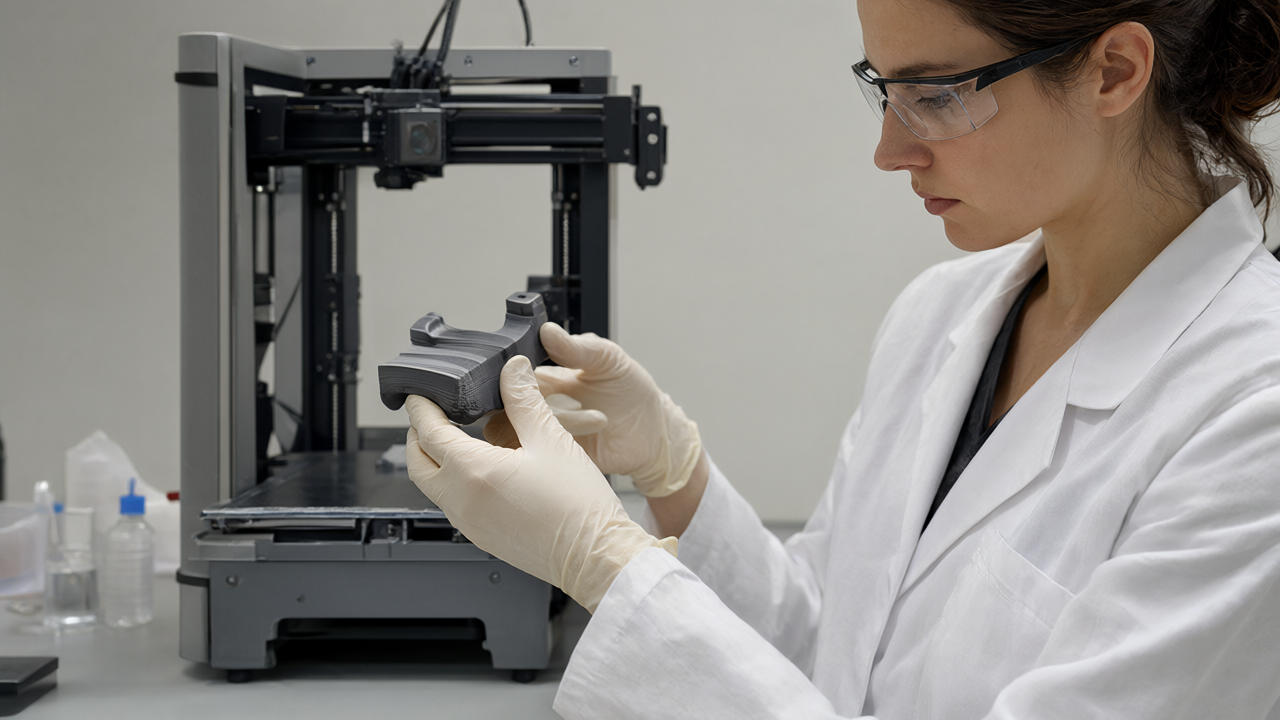
Researchers at Concordia University have successfully demonstrated the ability to 3D print structural components for future lunar missions by combining simulated lunar regolith with recycled high-performance plastic, poly(ether ketone ketone) (PEKK). This groundbreaking study paves the way for In-situ Resource Utilization (ISRU) on the Moon, potentially enabling sustainable space exploration independent of continuous supply missions from Earth.
Technical and Material Details
- Composite Material Composition: The study utilized a blend of lunar regolith simulant and recycled PEKK, a high-strength, heat-resistant thermoplastic. PEKK is widely used in aerospace applications, and its recycling contributes to cost reduction and environmental sustainability.
- 3D Printing Process: These composite materials were formed into components using additive manufacturing (3D printing) technology. 3D printing is particularly effective for constructing lunar bases due to its capability to efficiently produce complex geometries.
- Material Property Discoveries: As reported in ‘Composites Part B: Engineering,’ the addition of regolith simulant to PEKK effectively suppressed shrinkage and warping during the material’s heat treatment phase, a beneficial characteristic for high-precision 3D printing of large structures. However, the research also identified challenges, specifically an increase in material porosity and brittleness with regolith incorporation.
- Closed-Loop Manufacturing Approach: Instead of transporting materials from Earth, this approach combines local resource utilization (lunar regolith) with recycled waste plastics, offering a sustainable “closed-loop” manufacturing system for lunar operations.
Background and Industry Context
As human exploration of the Moon and Mars intensifies, the immense costs and logistical complexities of transporting construction materials and consumables from Earth pose significant barriers to sustainable space exploration. Consequently, the development of In-situ Resource Utilization (ISRU) technologies, which leverage resources found locally on the Moon, has garnered global attention. 3D printing, especially when integrated with ISRU, offers the potential to manufacture necessary components and structures directly on the lunar surface. This dramatically reduces transportation costs and enhances mission autonomy and flexibility. Concordia University’s research advances this fusion of ISRU and 3D printing through concrete material science improvements, holding a significant position within international efforts to establish future lunar bases and long-term habitation.
Strategic Significance and Outlook
While this research marks a crucial step in lunar infrastructure development, further materials science optimization is required to overcome the identified challenges of porosity and brittleness, and to produce structures with practical strength and durability. Future work is expected to address these issues through adjustments in the regolith-plastic composite ratios, exploration of different recycled plastic types, or improvements in manufacturing processes. Once matured, this technology could be used for a wide range of infrastructure on the Moon, including shelters, landing pads, roads, and even solar panel support structures. The realization of autonomous lunar manufacturing is an indispensable technology for accelerating humanity’s expansion into space, and this research provides a tangible roadmap toward that goal.
Get our weekly technology intelligence — free
Receive an infographic that lets you judge at a glance whether each field’s analysis report is worth reading.
Subscribe Free — Weekly Tech Intelligence
By subscribing, you’ll receive Troy-Technical’s weekly technology intelligence newsletter.
- Your email and selected fields are used only to deliver the newsletter.
- We never share your information with third parties.
- You can unsubscribe anytime via the link in each email.
See our Privacy Policy for details.
Takes about a minute · Unsubscribe anytime