Key Findings
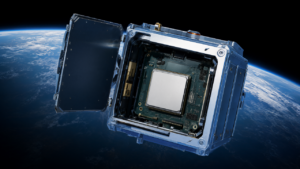
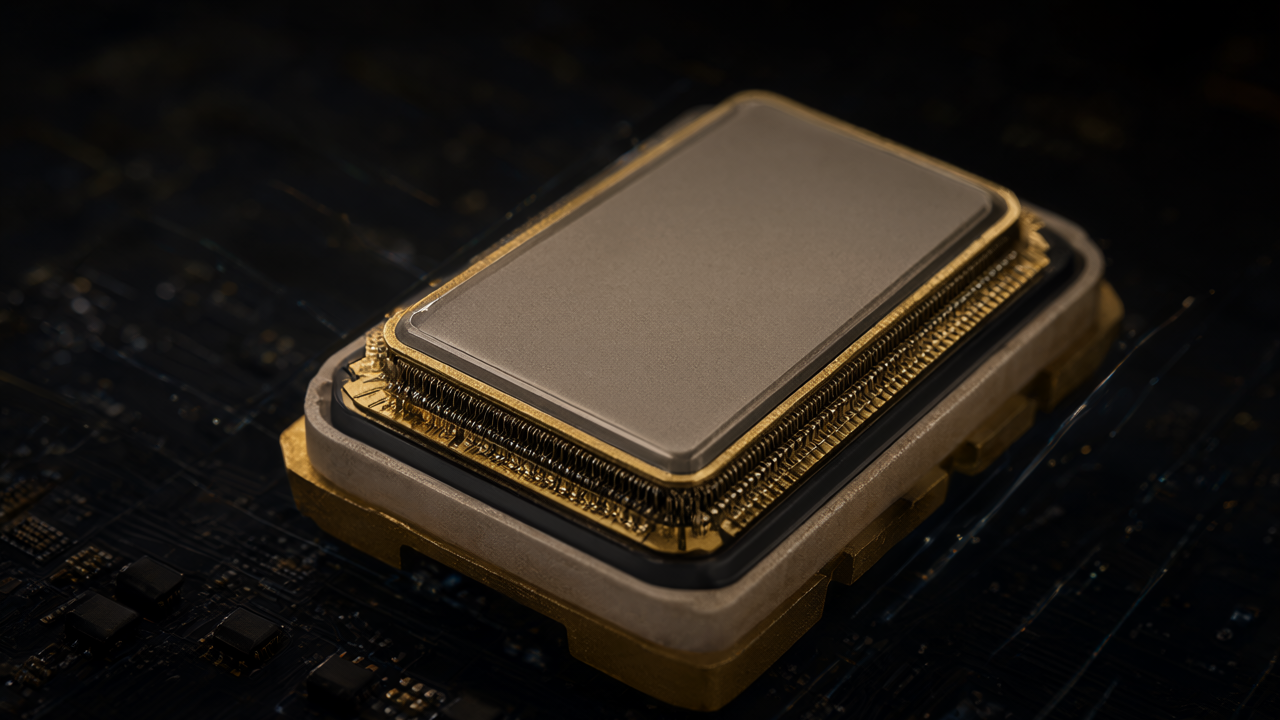
AMD has initiated sampling of its Versal AI Core XQRVC1902 adaptive System-on-Chip (SoC) in an enhanced space-grade package, designed for a remarkable operational lifespan of up to 15 years in demanding space missions. This groundbreaking radiation-tolerant chip integrates programmable logic, high-performance AI engines, and Arm cores, significantly elevating advanced onboard data processing capabilities for space environments such as satellites and lunar landers.
Technical and Product Details
- Versal AI Core XQRVC1902 Adaptive SoC: This SoC employs a hybrid architecture, combining the flexibility of FPGAs (Field-Programmable Gate Arrays) with high-performance AI accelerators and general-purpose Arm cores. This enables real-time processing for complex and diverse space applications, including image processing, signal processing, and AI inference.
- 15-Year Longevity Design: Space missions often span several years to decades, making component reliability and durability paramount. The XQRVC1902 is engineered to withstand the harsh conditions of long-duration missions, contributing to extending the overall mission lifespan.
- Radiation-Tolerant Packaging: In space, high-energy particles and cosmic rays present a constant radiation threat largely absent on Earth. This SoC features a specialized design for radiation hardness and incorporates advanced organic lidless packaging technology to prevent radiation-induced malfunctions and damage. This packaging also mitigates thermal and mechanical stresses, preserving the chip’s integrity in extreme space environments.
- Class Y Flight Qualification: Class Y flight-qualified units, meeting one of the most stringent standards for aerospace applications, are anticipated to be available in the second half of 2027. This signifies that the product adheres to exceptionally high levels of reliability and safety.
Background and Industry Context
The space industry is rapidly expanding its applications, from Earth observation and communication to navigation and deep-space exploration. These missions increasingly demand “onboard processing”—processing raw sensor data directly on the satellite rather than transmitting it back to Earth. Onboard processing offers substantial benefits, including bandwidth conservation, reduced data transmission latency, and alleviation of terrestrial data processing loads. However, the severe space environment (extreme temperature variations, vibrations, radiation) complicates the use of commercial off-the-shelf (COTS) components, creating a demand for specialized space-grade parts. AMD’s new product addresses both the evolution of onboard processing and the growing market need for space-grade semiconductors. The integration of AI processing capabilities is particularly crucial for next-generation space systems requiring real-time analytics and autonomous operations.
Strategic Significance and Outlook
AMD’s Versal AI Core XQRVC1902 is expected to play a central role in future space missions, especially in areas where AI and high-performance computing are indispensable. Applications are diverse, ranging from real-time anomaly detection by Earth observation satellites, autonomous tracking and avoidance of space debris, and autonomous navigation for planetary rovers, to managing orbital data centers and manufacturing facilities. This chip will accelerate the “intellectualization” of space systems, enabling the realization of more complex and autonomous missions. Once Class Y-qualified products are released to the market, they will set a new standard for high-performance computing in the space industry, driving further innovation.
Source: https://shattered.io/amd-space-grade-versal-xqrvc1902-15-year-missions-2026/
Get our weekly technology intelligence — free
Receive an infographic that lets you judge at a glance whether each field’s analysis report is worth reading.
Subscribe Free — Weekly Tech Intelligence
By subscribing, you’ll receive Troy-Technical’s weekly technology intelligence newsletter.
- Your email and selected fields are used only to deliver the newsletter.
- We never share your information with third parties.
- You can unsubscribe anytime via the link in each email.
See our Privacy Policy for details.
Takes about a minute · Unsubscribe anytime