Key Findings
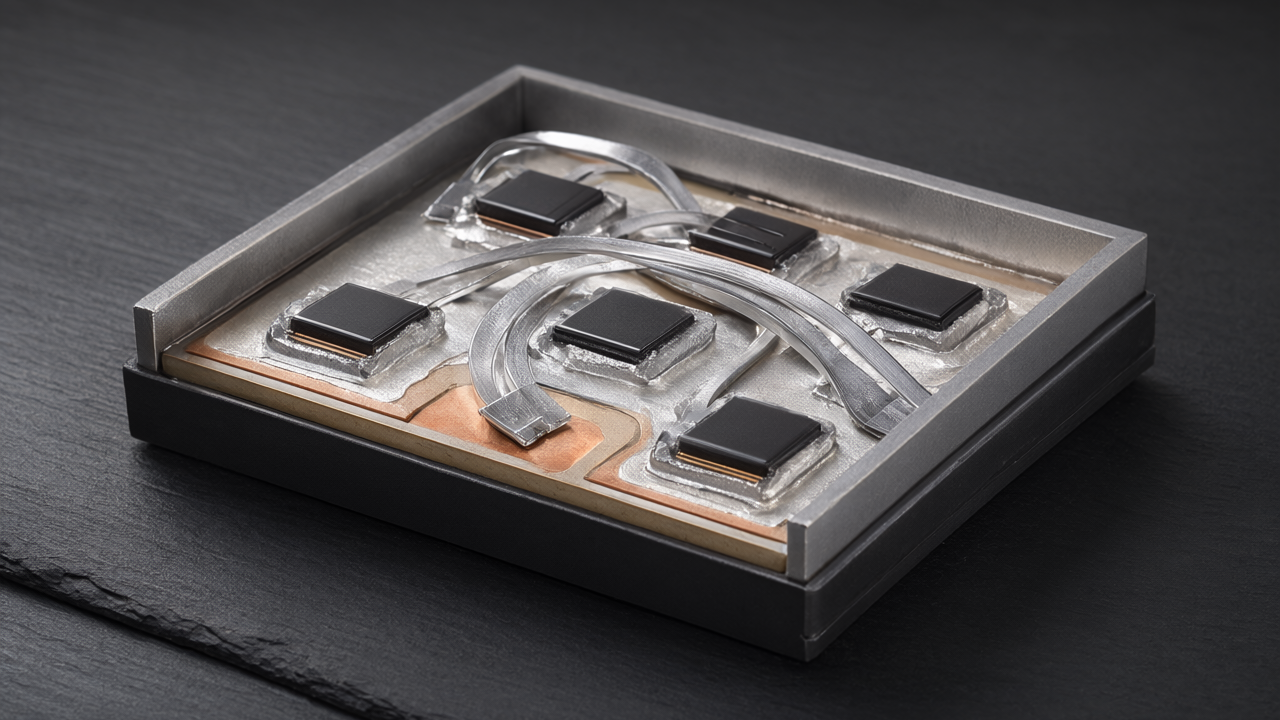
Toshiba Device & Storage Corporation has launched a new 3300V SiC MOSFET module, significantly enhancing the performance and reliability of SiC power devices. The module integrates innovative silver sintering die-attach technology, successfully reducing thermal resistance by up to 40% compared to traditional solder bonding. This improvement dramatically boosts the long-term reliability under severe thermal stress, thereby increasing the overall robustness and lifespan of power electronic systems.
Technical / Clinical Details
Historically, SiC power modules have utilized solder bonding for connecting chips to substrates. However, under high power density and elevated operating temperatures, solder degradation presented a significant challenge. Toshiba’s new module employs silver sintering technology, which uses high-melting-point, highly thermally conductive silver particles for bonding. This technique minimizes voids within the bonding layer, enabling highly efficient heat dissipation from the chip and substantially improving the overall thermal resistance of the module. Specifically, the internal thermal resistance is reduced by over 40% compared to conventional solder-bonded products, suppressing junction temperature rise and enhancing resistance to thermal fatigue, a common failure mode. This allows for higher switching frequencies in inverter and converter designs, contributing to the miniaturization of magnetic filters and heat sinks.
Background & Context
The demand for energy efficiency and higher performance is rapidly increasing in sectors such as electric vehicles (EVs), industrial equipment, and renewable energy systems. SiC (silicon carbide) power devices are considered next-generation power semiconductors due to their low loss and high-speed switching capabilities, making them ideal for these applications. However, the high performance of SiC devices also leads to significant heat generation, making efficient cooling and ensuring reliability critical technical challenges. Toshiba’s silver sintering die-attach technology offers a decisive solution to this challenge, unlocking the full potential of SiC power devices.
Strategic Significance & Outlook
This 3300V SiC MOSFET module is expected to be adopted in a wide range of high-voltage, high-current applications, including railway systems, industrial motor drives, and power grid stabilization equipment. The reduction in thermal resistance and enhancement in reliability will directly contribute to system miniaturization, weight reduction, and extended lifespan, ultimately leading to improved overall energy efficiency. Toshiba plans to further develop this technology and expand its SiC power module lineup across various voltage and current ratings, aiming to contribute to the realization of a next-generation energy-saving society.
Source: https://magazine-industry-usa.com/news/115775-toshiba-launches-3300v-sic-mosfet-module
Get our weekly technology intelligence — free
Receive an infographic that lets you judge at a glance whether each field’s analysis report is worth reading.
Subscribe Free — Weekly Tech Intelligence
By subscribing, you’ll receive Troy-Technical’s weekly technology intelligence newsletter.
- Your email and selected fields are used only to deliver the newsletter.
- We never share your information with third parties.
- You can unsubscribe anytime via the link in each email.
See our Privacy Policy for details.
Takes about a minute · Unsubscribe anytime