Key Findings
Master Bond has introduced EP48TC, a groundbreaking two-component epoxy paste featuring highly thermally conductive fillers. This material is distinguished by its ability to achieve an exceptionally low thermal resistance of 5-7 x 10⁻⁶ K•m²/W, even when applied in ultrathin bond lines measuring just 10-15 microns. This represents a significant advancement in thermal management for demanding electronic and aerospace applications, where compact designs and high power densities are commonplace.
Technical / Clinical Details
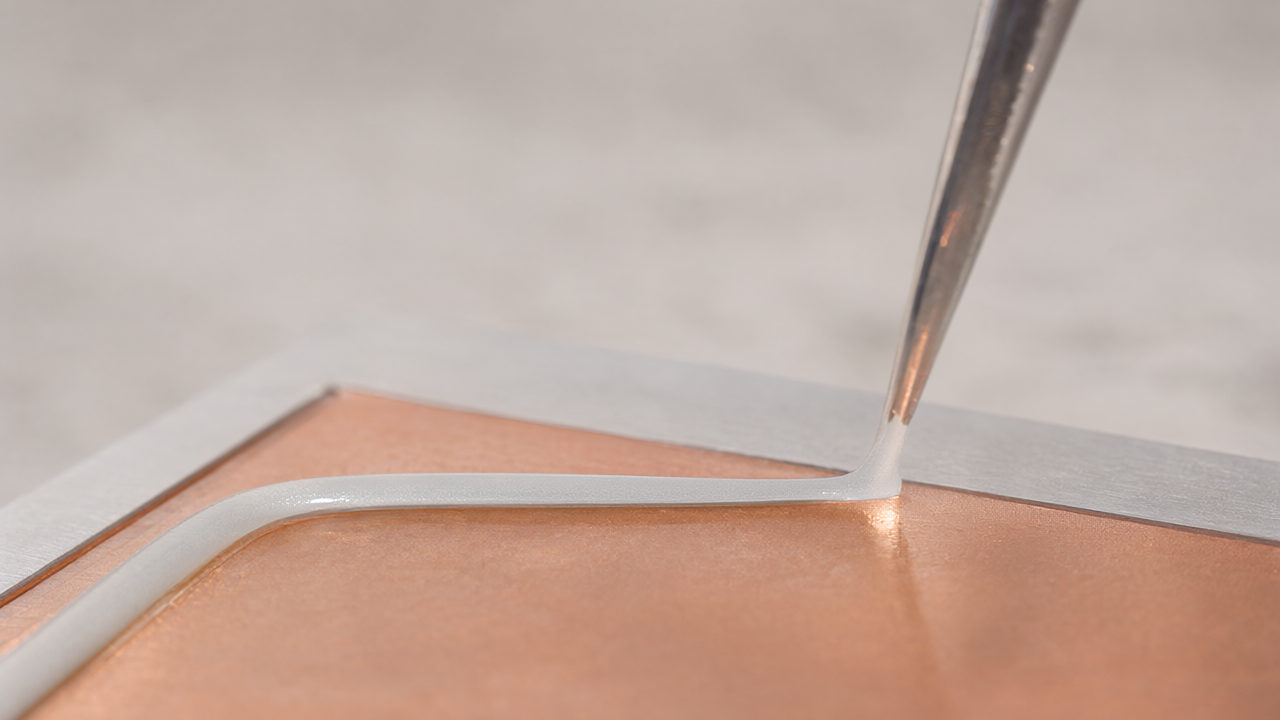
EP48TC’s performance is not limited to its thermal properties. It offers a robust suite of mechanical and electrical characteristics, including high bond strength, reliable electrical insulation, and outstanding resistance to thermal shock, impact, and stress cracking fatigue. Its formulation ensures durability and stability under extreme operational conditions. A critical feature for sensitive applications is its NASA low outgassing approval, affirming its suitability for vacuum environments. The paste consistency facilitates precise application in complex geometries and confined spaces, enhancing manufacturing flexibility for high-performance components.
Background & Context
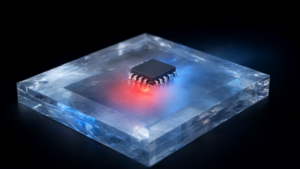
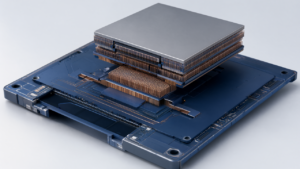
The increasing power density in modern electronics, from advanced semiconductors to electric vehicle battery packs, necessitates increasingly efficient thermal management solutions. Traditional thermal interface materials have often presented limitations in thickness and thermal resistance, impeding further miniaturization and integration. EP48TC directly addresses these challenges by enabling ultrathin, high-performance thermal interfaces. This innovation is pivotal for preventing thermal runaway, extending component lifespan, and optimizing overall system performance in critical applications.
Strategic Significance & Outlook
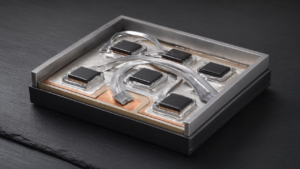
The introduction of Master Bond’s EP48TC is poised to make a substantial impact across industries requiring superior thermal performance and reliability, including aerospace, defense, medical devices, automotive electronics, and high-brightness LED applications. By pushing the boundaries of thermal interface capabilities, this technology will enable engineers to design more powerful and compact electronic systems, unlock new possibilities for device architecture, and contribute to the development of next-generation technologies. Future advancements may focus on further reducing application thickness while maintaining performance, or developing more efficient dispensing methods to broaden its adoption.
Source: https://www.masterbond.com/tds/ep48tc
Get our weekly technology intelligence — free
Receive an infographic that lets you judge at a glance whether each field’s analysis report is worth reading.
Subscribe Free — Weekly Tech Intelligence
By subscribing, you’ll receive Troy-Technical’s weekly technology intelligence newsletter.
- Your email and selected fields are used only to deliver the newsletter.
- We never share your information with third parties.
- You can unsubscribe anytime via the link in each email.
See our Privacy Policy for details.
Takes about a minute · Unsubscribe anytime