Key Findings
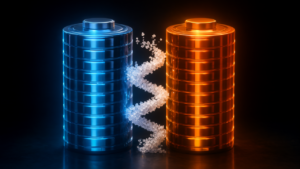
Researchers at Tohoku University have made a significant breakthrough in lithium-sulfur (Li-S) battery technology by developing a novel COF-graphene interlayer. This innovation substantially enhances both the energy density and cycle stability of Li-S cells, addressing critical barriers to their commercialization.
Technical Details
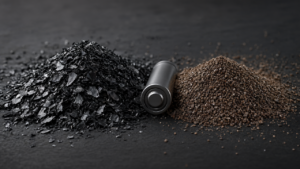
Li-S batteries offer a theoretically high energy density, but their practical application has been hampered by the ‘polysulfide shuttling effect.’ This phenomenon involves the dissolution of polysulfide intermediates from the sulfur cathode into the electrolyte, their migration to the anode, and subsequent re-migration to the cathode, leading to rapid capacity decay and low Coulombic efficiency. The Tohoku University team successfully mitigated this issue by designing an interlayer composed of covalent organic frameworks (COFs) and graphene composites.
Specifically, Li-S pouch cells integrated with this COF-graphene interlayer achieved an impressive initial energy density of approximately 674 Wh kg⁻¹ at a low current density of 0.05 A g⁻¹. This represents a significant improvement over previous Li-S battery designs. Furthermore, the cells maintained a high reversible capacity of 1455.7 mA h g⁻¹ at a current density of 0.2 A g⁻¹. A remarkable highlight of this research is the exceptional long-term durability demonstrated: the cells exhibited a mere 0.034% capacity degradation after 1000 cycles, even under a high current density of 5 A g⁻¹. This performance is attributed to the synergistic effects of the COF material’s uniform pore structure, which effectively adsorbs polysulfides, and graphene’s high electrical conductivity, which promotes efficient electrochemical reactions.
Background & Context
The burgeoning demand for electric vehicles (EVs) and grid-scale energy storage systems necessitates battery technologies with higher energy densities and lower costs than current lithium-ion solutions. Li-S batteries are highly promising candidates due to the abundance of sulfur as a cathode material and a theoretical energy density roughly five times that of conventional lithium-ion batteries. However, challenges such as polysulfide shuttling, significant volume changes during cycling, and the low intrinsic conductivity of sulfur have impeded their practical implementation. This new interlayer technology represents a crucial step in overcoming these hurdles, potentially accelerating the widespread adoption of Li-S batteries.
Strategic Significance & Outlook
The developed COF-graphene interlayer is a pivotal breakthrough for the commercialization of Li-S batteries. The combination of extended cycle life and high energy density offers significant advantages for increasing EV driving ranges and for large-scale renewable energy storage applications. Future efforts will likely focus on further scaling up capacity, optimizing cost, and establishing mass production techniques. This technology is poised to facilitate the realization of Li-S batteries that combine high energy density with long lifespan, opening new horizons in the field of energy storage and potentially impacting global energy transition strategies.
Get our weekly technology intelligence — free
Receive an infographic that lets you judge at a glance whether each field’s analysis report is worth reading.
Subscribe Free — Weekly Tech Intelligence
By subscribing, you’ll receive Troy-Technical’s weekly technology intelligence newsletter.
- Your email and selected fields are used only to deliver the newsletter.
- We never share your information with third parties.
- You can unsubscribe anytime via the link in each email.
See our Privacy Policy for details.
Takes about a minute · Unsubscribe anytime