Key Findings
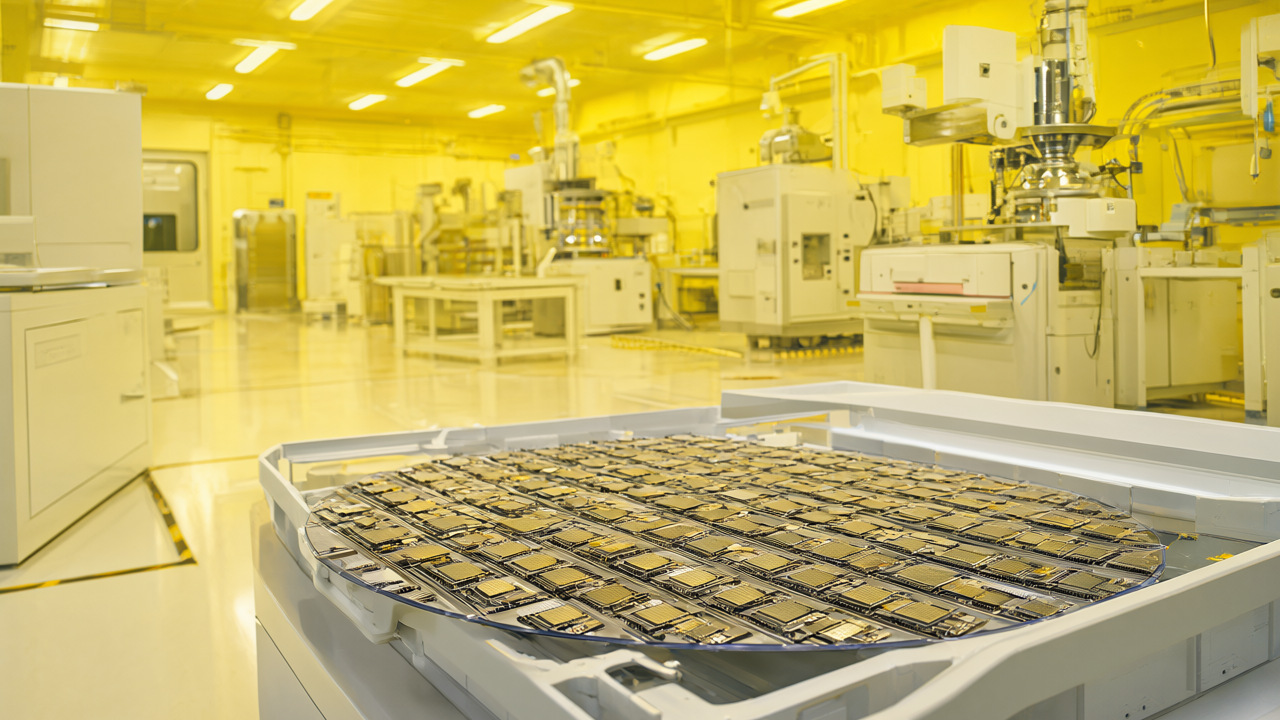
Quantum Foundry Copenhagen, bolstered by a substantial €390 million grant from the Novo Nordisk Foundation, has unveiled plans to establish and operationalize a commercial quantum chip manufacturing facility by 2027. This ambitious initiative positions Denmark as a key player in the industrialization of quantum technology in Europe. Simultaneously, Fujitsu has announced the development of the world’s first operational diamond-spin quantum computer prototype, which embeds tin atoms within diamond films and operates at a relatively elevated temperature of 1.55 Kelvin. Significant breakthroughs were also reported by Northrop Grumman, achieving a >99% fidelity, 10-nanosecond readout of superconducting qubits without microwave pulses, and by researchers from the University of Science and Technology of China and Origin Quantum, who constructed and tested a coherent quantum router with 95.74% routing fidelity using 10 qubits on Origin’s 72-transmon Wukong chip.
Technical / Clinical Details
The Quantum Foundry Copenhagen’s facility aims to address the critical need for scalable and reliable quantum chip production, a bottleneck in the current quantum computing landscape. Fujitsu’s diamond-spin quantum computer leverages tin-vacancy centers in diamond, a novel approach distinct from nitrogen-vacancy (NV) centers, promising enhanced spin coherence and optical interfaces at 1.55 Kelvin, simplifying cryogenic requirements. Northrop Grumman’s rapid, high-fidelity readout for superconducting qubits eliminates the need for complex microwave pulses, reducing system overhead and accelerating qubit measurement, which is crucial for quantum error correction. The Chinese team’s coherent quantum router represents a pivotal advancement in quantum networking and distributed quantum computing, enabling high-fidelity coherent information transfer between distant qubits and paving the way for more powerful, modular quantum architectures. This router was tested on Origin’s state-of-the-art 72-transmon Wukong chip, demonstrating practical applicability.
Background & Context
The global race in quantum computing is characterized by diverse hardware platforms and intense international competition. The European Union, through initiatives like the Novo Nordisk Foundation’s funding, is strategically investing to build a robust quantum ecosystem and secure supply chains. Fujitsu’s innovation with diamond-spin qubits broadens the spectrum of solid-state quantum computing candidates, offering potential advantages in scalability and operating conditions compared to traditional superconducting or ion-trap systems. Northrop Grumman’s work addresses a fundamental challenge in scaling up quantum computers: efficient and low-error qubit control and readout. The Chinese advancements, particularly in quantum routing and networking, highlight China’s aggressive national strategy to achieve quantum supremacy and build a comprehensive quantum information infrastructure, including a quantum internet. These developments collectively underscore a maturing field moving from basic research to engineering practical, scalable quantum systems.
Strategic Significance & Outlook
The establishment of commercial quantum foundries, such as Quantum Foundry Copenhagen, will significantly de-risk the quantum computing supply chain, accelerate the pace of innovation, and enable the mass production of specialized quantum processors. Fujitsu’s diamond-spin approach could lead to quantum computers with lower cooling requirements, potentially reducing the operational cost and footprint of quantum systems, thus broadening their accessibility and application range. Northrop Grumman’s high-speed, high-fidelity qubit readout will be instrumental for fault-tolerant quantum computing, where rapid error detection and correction are paramount for maintaining quantum coherence in larger systems. The coherent quantum router demonstrated by the Chinese collaboration is a foundational technology for building quantum networks and potentially linking multiple quantum processing units (QPUs) to form a massively parallel quantum supercomputer, unlocking unprecedented computational power for complex problems in materials science, drug discovery, and artificial intelligence. These integrated advancements signify a clear trajectory towards more powerful, scalable, and commercially viable quantum technologies.
Source: https://quantum-brief.com/blog/
Get our weekly technology intelligence — free
Receive an infographic that lets you judge at a glance whether each field’s analysis report is worth reading.
Subscribe Free — Weekly Tech Intelligence
By subscribing, you’ll receive Troy-Technical’s weekly technology intelligence newsletter.
- Your email and selected fields are used only to deliver the newsletter.
- We never share your information with third parties.
- You can unsubscribe anytime via the link in each email.
See our Privacy Policy for details.
Takes about a minute · Unsubscribe anytime