Key Findings
Quantinuum’s 98-qubit Helios trapped-ion quantum computer has achieved a remarkable 99.9975% single-qubit gate fidelity and 99.921% two-qubit gate fidelity. Most notably, a September 2026 demonstration showed that Helix logical operations on Helios outperformed physical Clifford gates by 4.28 times, marking a significant step towards practical fault-tolerant quantum computing.
Technical Details
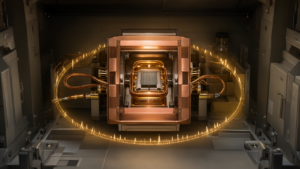
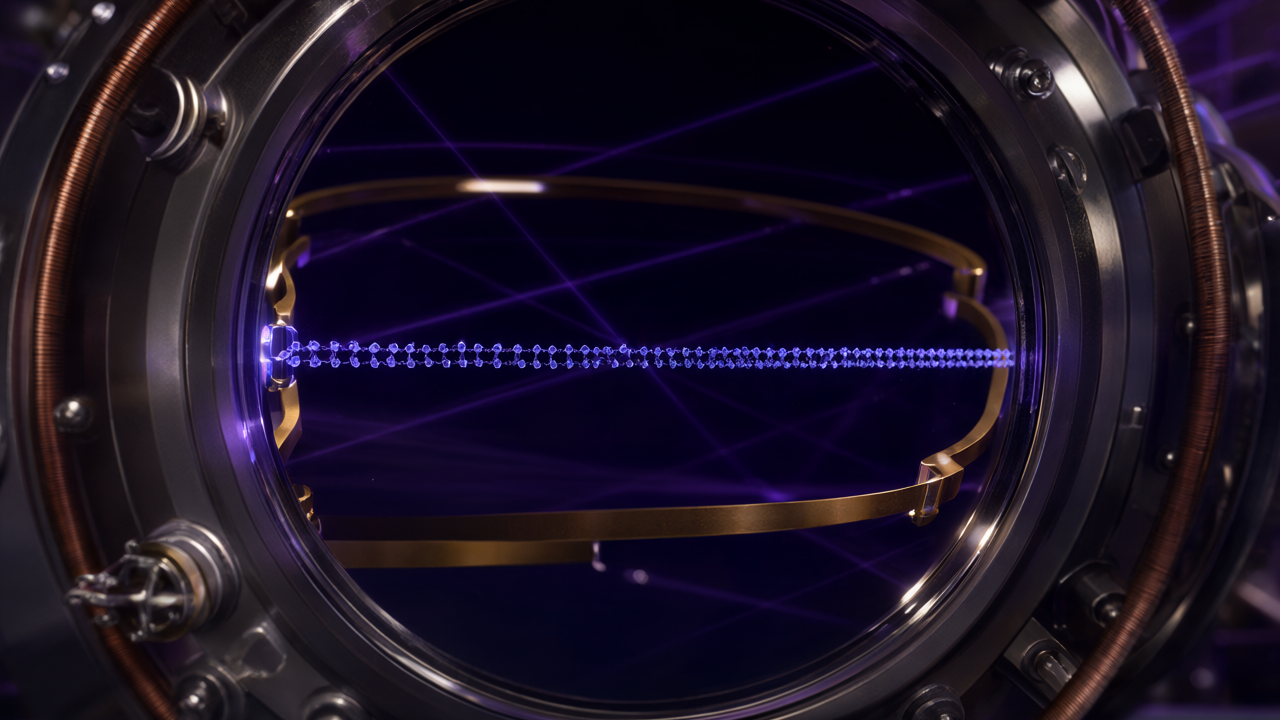
- Qubit Count and Type: Helios features 98 individual barium ion (Ba+) qubits, a trapped-ion architecture known for its high coherence and excellent control precision, making it a leading platform for high-fidelity operations.
- Gate Fidelity: The demonstrated single-qubit fidelity of 99.9975% and two-qubit fidelity of 99.921% place Helios among the highest-performing quantum systems globally, essential for minimizing error accumulation in complex quantum circuits.
- Logical Operation Performance: The 4.28x performance advantage of Helix logical operations over physical Clifford gates underscores the potential for effective error suppression. This is critical for shielding fragile quantum information from environmental noise and intrinsic hardware imperfections, a prerequisite for building truly fault-tolerant quantum computers.
Background and Industry Context
The quantum computing industry is intensely focused on overcoming challenges related to qubit decoherence and gate infidelity, which currently limit the scale and reliability of quantum processors. Quantinuum’s trapped-ion technology offers distinct advantages in these areas, providing longer coherence times and inherently high gate fidelities. Helios is part of Quantinuum’s strategic H-series roadmap, which includes plans for subsequent generations such as Sol in 2027 and Apollo in 2029, aiming for continued increases in qubit count and enhanced performance. The progress with Helios validates this ambitious roadmap and positions Quantinuum at the forefront of the global effort to realize large-scale, fault-tolerant quantum systems.
Strategic Significance and Outlook
The successful demonstration of enhanced logical operation performance on Helios is a pivotal achievement, accelerating the journey toward practical fault-tolerant quantum computing. By demonstrating the ability to perform operations with significantly reduced effective error rates, Quantinuum is paving the way for applications that require high computational precision, such as advanced chemical simulations, novel material discovery, and complex financial modeling. This progress will enable quantum computers to tackle problems currently intractable for even the most powerful supercomputers, potentially transforming numerous scientific and industrial sectors. The continued development of Quantinuum’s integrated hardware and software stack, as outlined in its roadmap, is expected to further consolidate its leadership in the rapidly evolving quantum landscape.
Source: https://www.insidedeeptech.com/quantinuum-helios-98-qubit-trapped-ion-full-guide/
Get our weekly technology intelligence — free
Receive an infographic that lets you judge at a glance whether each field’s analysis report is worth reading.
Subscribe Free — Weekly Tech Intelligence
By subscribing, you’ll receive Troy-Technical’s weekly technology intelligence newsletter.
- Your email and selected fields are used only to deliver the newsletter.
- We never share your information with third parties.
- You can unsubscribe anytime via the link in each email.
See our Privacy Policy for details.
Takes about a minute · Unsubscribe anytime