INSTITUTION PROFILE / QUANTUM COMPUTING
U.S. Department of Energy (DOE)
The U.S. department that funds quantum research at national laboratories and research centers, and is now running a contest to build a quantum computer useful for science
The U.S. Department of Energy (DOE) is a department of the U.S. federal government. It does not build quantum computers itself, and it does not set cryptography standards or regulations. Its role in quantum computing is to provide research funding and to run the national laboratories and large research facilities. Recently it launched a plan called Quantum Genesis, which aims to get companies to compete to deliver a fault-tolerant quantum computer, one that can correct its own errors while it computes. The money mainly reaches U.S. institutions and companies, and DOE also intends to act as the party that tests performance claims. This profile looks at one question: how much influence DOE actually has over quantum computing. Organization names, plans and budgets change quickly, so each is given with a check date (16 October 2026).
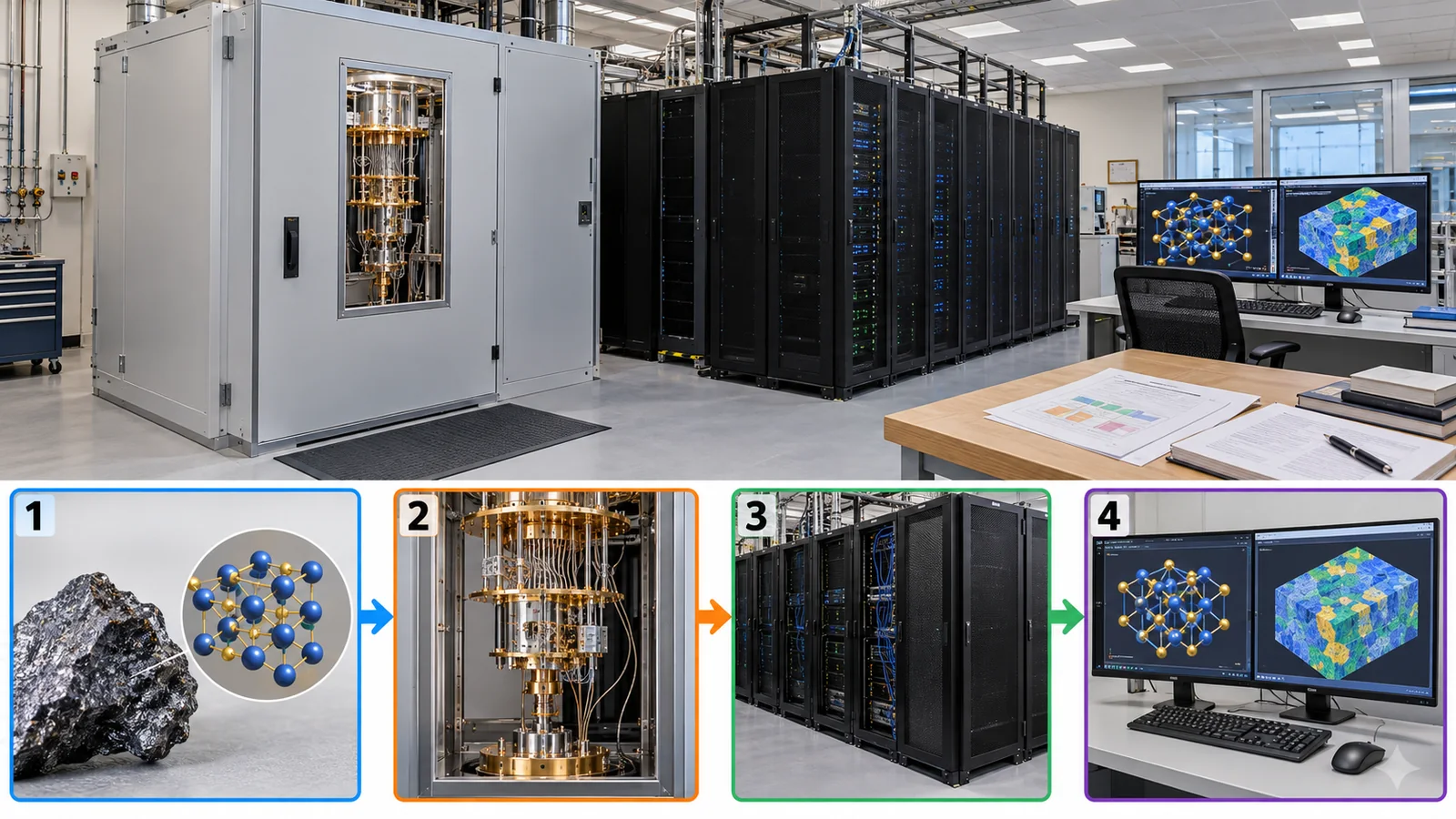
- DOE in 30 seconds
- What kind of body it is: the four types of influence
- What it does for quantum computing
- How far its influence reaches (powers and geography)
- Where the money flows and who is involved
- Outlook
- Glossary, references and claim-to-source audit
1. DOE in 30 seconds
DOE acts like a buyer-like party that tests quantum computers and pays for results. Executive Order 14413 (June 2026) set up an effort, QC-ADDS, aimed at delivering at least one quantum computer for scientific research to a DOE facility. It directs the Secretary of Energy to define the technical specifications, explore partnership models with the private sector, and set up a national center to assess the performance of quantum computing systems Sourced. In response, DOE launched a contest (the Q Competition) that pays companies as they show, by 2028, a fault-tolerant quantum computer with at least 100 logical qubits Sourced. But most of this money is "planned" and depends on future appropriations from Congress. Selections are not expected before 13 November 2026 Not yet confirmed.
The basic building block of a quantum computer is the qubit (quantum bit). Qubits are fragile and are disturbed by their surroundings, so errors creep in during a calculation. One remedy is to combine many physical qubits so that errors can be detected and fixed, and to treat the group as a single sturdy qubit, called a logical qubit. A quantum computer that keeps correcting errors and can run a calculation to the end is called "fault-tolerant". DOE's contest sets a target of at least 100 logical qubits Sourced. For more, see our explainers on quantum error correction and the surface code, and on logical qubits and fault-tolerant quantum computing.
DOE's Quantum Genesis page writes artificial intelligence as "super intelligence (SI)" Sourced. The background is Executive Order 14434 of 29 September 2026, which asks the executive branch to use "Super Intelligence" in place of "Artificial Intelligence" in its documents Sourced. The order says the term refers to the same technology as the existing statutory definition of artificial intelligence. Because this profile is about quantum computing, it touches on AI only in quotations and keeps document titles as originally written.
2. What kind of body it is: the four types of influence
Unlike companies, the "institutions" in quantum computing articles do not build quantum computers themselves. They fall into four types, depending on the route by which they influence the industry.
3. What it does for quantum computing
DOE's work on quantum computing falls into three strands: continuing funding for research centers, basic research run by its Office of Science, and a national quantum computer program (Quantum Genesis) Sourced.
| Activity | Timing and budget | What it involves | Main players |
|---|---|---|---|
| National Quantum Information Science Research Centers (NQISRCs), five centers | Began in 2020 and renewed in 2025. US$625 million in total over up to five years (US$125 million in FY2025 dollars; later years depend on Congress) | Research on quantum computing, simulation, networking and sensing, plus instruments and workforce training. C2QA (materials and modular designs for superconducting and neutral-atom systems), SQMS (superconducting cavities and refrigeration), Q-NEXT (quantum networks between chips and between cities), QSA (error correction), QSC (software linking quantum and conventional supercomputers) | Led by Brookhaven, Fermi, Argonne, Lawrence Berkeley and Oak Ridge national laboratories. Universities and companies take part |
| Office of Science quantum information science research (core programs) | FY2026 US$328.75 million (enacted; US$278.75 million in FY2025) | Spread over seven offices: computing, basic energy sciences, high energy physics, biological and environmental research, fusion, nuclear physics and isotopes. Advanced scientific computing (US$110.52 million) and basic energy sciences (US$98.5 million) are the largest | National laboratories, universities |
| Research infrastructure | Ongoing | Supercomputers, X-ray and neutron sources, nanoscale science research centers, quantum testbeds and foundries for high-quality qubits. DOE also supplies stable isotopes for quantum uses | Office of Science user facilities |
| Quantum Genesis (part of the Genesis Mission) | Announced 23 June 2026 | An effort to develop and deploy, by 2028, a fault-tolerant quantum computer useful for scientific research. Three pillars: (1) the Q Competition, (2) a National Quantum Supercomputing User Facility, and (3) research on uses for quantum computers. On 8 October 2026 DOE also released eight priority science problems (chemistry, materials, subatomic physics, applied mathematics) that serve as the yardstick for performance | DOE national laboratories, research centers, companies, universities |
| Q Competition (call DE-FOA-0003657) | Announced 17 September 2026. A planned US$215 million (US$2.5 million in FY2026 dollars). Applications due 19 October 2026 | Pays companies for results when they deliver a fault-tolerant quantum computer with at least 100 logical qubits. Phase I is up to US$1.5 million. Phase II is a US$100 million shared pool, plus two US$50 million bonus pools for reaching 150 and 200 or more logical qubits. Contracts are streamlined "other transaction agreements" (OTAs) only | The lead applicant must be a U.S. for-profit company. Universities and laboratories can join as partners |
| Validation and verification call for laboratories (Lab Call) | A planned US$45 million (US$14 million in FY2026 dollars) | Builds the capability to validate the Q Competition computers at every layer, from hardware to algorithms | DOE national laboratories only |
The distinctive feature of the Q Competition is that most of the money is a bonus paid only after results are confirmed. The fixed Phase I payments are US$250,000 when DOE approves the validation plan, and US$1.25 million about a year later if a prototype passes DOE validation. The US$100 million Phase II pool is shared equally among companies that demonstrate a first-generation machine, expected in autumn 2028 Sourced. Results are checked with a method that the selected company and a DOE-designated validation team agree on. The company must supply data such as logical qubit error rates, logical gate fidelities, and the width and depth of logical circuits Sourced. In other words, payment depends on values verified by a third party, not on a company's own stated values. This fits the thinking in our explainers on how to read quantum advantage claims and on coherence and fidelity.
DOE's announcement of the contest says "at least 100 logical qubits capable of performing hundreds of millions of fault-tolerant operations". The webinar slides, however, illustrate a first-generation machine as at least 100 logical qubits with "hard operations" on the order of 10 to the power of 5, and say that the numbers are illustrative Sourced. The two figures may count different kinds of operations, but the sources do not explain how they relate, and we could not confirm it Not yet confirmed. Also, the US$215 million is a "plan", and only US$2.5 million is committed in FY2026 dollars. The rest depends on future appropriations.
4. How far its influence reaches (powers and geography)
| Dimension | What DOE has | What it does not have |
|---|---|---|
| Powers | Authority to call for proposals, review them, allocate funding and verify results. It runs the national laboratories and large research facilities. Under Executive Order 14413 it is tasked with defining quantum computer specifications, exploring partnerships with the private sector, and setting up a national center to assess performance | Power to set cryptography standards or regulations (no such provision found; U.S. post-quantum cryptography standards are written by NIST in the Department of Commerce). Power to license or ban the export or sale of quantum computers |
| Geography | Programs funded by the U.S. budget. The lead applicant in the Q Competition must be a for-profit company formed in the United States with a business location there. A foreign entity may be allowed to take part through a waiver | Other countries' policies, or direct funding of companies in other countries |
| Binding force | The terms in each contract (cooperation with validation, supply of data, intellectual property). Selected companies must give DOE access to facilities and machines for validation | Power to force private companies to develop or deploy anything. Power to guarantee that the contest results become an international yardstick |
| Size | Office of Science enacted budget for FY2026 of US$8.25 billion. Quantum information science at US$328.75 million. 17 national laboratories | A total budget for quantum computing alone is not in the materials we could check. A current headcount for the whole of DOE was not found either |
5. Where the money flows and who is involved
| Organization | Relationship | What the primary sources confirm |
|---|---|---|
| National laboratories (17) | Leading research centers, validation, providing facilities | The five NQISRCs are led by five national laboratories. Only national laboratories may apply to the Lab Call |
| Companies applying to the Q Competition | Prospective recipients | Applications closed on 19 October 2026, and the selected companies had not been announced on the check date. This article does not name companies that might apply or be selected |
| Department of War, National Science Foundation (NSF), NASA and others | Coordination | Executive Order 14413 directs these agencies to cooperate. DOE's release of 8 October 2026 also says it works with the Department of War, the Laboratory of Physical Sciences and NASA |
| Department of Commerce (NIST) | A separate track | Letters of intent to quantum companies (from the CHIPS R&D Office) and standards sit on the Commerce side. See our NIST profile |
| DARPA | A separate track | It tests the feasibility of quantum computers. Executive Order 14413 directs agencies to share information from DARPA's Quantum Benchmarking Initiative. See our DARPA profile |
6. Outlook
| What can be read from the sources | Supporting primary information | Type |
|---|---|---|
| The Q Competition's selections come no earlier than 13 November 2026. The funding depends on appropriations and may change | The webinar slides say selections are anticipated no earlier than 13 November 2026 and that funding is subject to the availability of appropriated funds | Not yet confirmed |
| The next deadlines in Executive Order 14413 that concern DOE are coming. A summary of specifications was due within 90 days of the order (around 20 September 2026), and the partnership-model study and the national assessment center within 180 days (around 19 December 2026). On the check date we found no document with that title for the specifications, and no announcement that the assessment center has been set up | Section 4(c), (d) and (e) of Executive Order 14413. The deadline dates are our calculation from the order's date (22 June 2026). We did confirm DOE's call of 17 September 2026 and its release of priority problems on 8 October 2026 | Not yet confirmed |
| The FY2027 request would cut the Office of Science to US$7.14 billion but create a new Office of Artificial Intelligence and Quantum (AIQ) at US$1.2 billion. We could not confirm what Congress decided | DOE's FY2027 budget overview (April 2026). It is a request, not an enacted budget | Not yet confirmed |
| Because agreeing on how to measure performance (such as logical error rates) is the first milestone of the Q Competition, DOE could become a reference point as a third party that checks performance | The slides say DOE will agree an objective evaluation method with applicants, fixed in the first milestone. Executive Order 14413 directs DOE to establish a national assessment center | Inference |
| Even if awards go mainly to U.S. companies, performance figures that DOE has validated could become material that companies and institutions in other countries use to compare quantum computers | The lead applicant must be a U.S. company, but how validation data will be published is not stated (we could not confirm it) | Inference |
7. Glossary
- Office of Science
- A part of DOE. The largest U.S. federal supporter of basic research in the physical sciences, and the steward of 10 national laboratories.
- National laboratory
- A research laboratory owned by DOE and run by contractors such as universities or companies. There are 17 across the country.
- NQISRC
- National Quantum Information Science Research Center. One of five research centers DOE set up under the National Quantum Initiative Act of 2018.
- Logical qubit / fault tolerance
- A unit made of many qubits that corrects errors and acts as one sturdy qubit, and the ability to keep computing while errors are corrected.
- SRQC
- Scientifically relevant quantum computer. DOE's goal: a quantum computer with performance meaningful for scientific research.
- OTA (other transaction agreement)
- A government contract form that is simpler than ordinary procurement or grant rules.
- Genesis Mission
- A U.S. national effort, centered on DOE's national laboratories, to link supercomputers, experimental facilities, data and AI. Quantum Genesis is part of it.
8. References
- DOE A Brief History of the Department of Energy (the Department of Energy Organization Act and activation on 1 October 1977). https://www.energy.gov/lm/brief-history-department-energy
- DOE National Laboratories (17 national laboratories; checked 16 October 2026). https://www.energy.gov/national-laboratories
- DOE Office of Science About (largest supporter of basic research in the physical sciences, steward of 10 national laboratories). https://science.osti.gov/About
- DOE U.S. Department of Energy's Strategy to Support American Space Preeminence (January 2021; about 13,000 federal employees and more than 95,000 contractor staff). https://www.energy.gov/sites/prod/files/2021/01/f82/DOE%20National%20Labs%20Report%20FINAL.pdf
- DOE FY 2027 Congressional Justification, Budget in Brief (April 2026; Office of Science FY2026 enacted of US$8.25 billion, FY2027 request of US$7,138.8 million, requested new Office of Artificial Intelligence and Quantum at US$1.2 billion, 17 national laboratories). https://www.energy.gov/documents/doe-fy-2027-budget-brief
- DOE Office of Science Quantum Information Science at the Office of Science (presentation to the advisory committee, March 2026; enacted quantum information science funding by year and by office). https://science.osti.gov/-/media/About/pdf/scac/meetings/2026/SCAC-QIS-Overview_2026_03.pdf
- DOE Office of Science Quantum Information Science (QIS) (the Office's quantum activities, infrastructure, the National Quantum Initiative Act of 2018). https://science.osti.gov/Initiatives/QIS
- DOE Office of Science National QIS Research Centers (the five centers, their lead laboratories and content; started in 2020, renewed in 2025). https://science.osti.gov/Initiatives/QIS/QIS-Centers
- DOE Energy Department Announces $625 Million to Advance the Next Phase of National Quantum Information Science Research Centers (4 November 2025; US$625 million over up to five years, US$125 million in FY2025 dollars). https://www.energy.gov/articles/energy-department-announces-625-million-advance-next-phase-national-quantum-information
- DOE Energy Department Announces Initiative to Create and Deploy the World's First Scientifically Relevant, Fault-Tolerant Quantum Computers (23 June 2026; three pillars of Quantum Genesis, the 2028 goal). https://www.energy.gov/science/articles/energy-department-announces-initiative-create-and-deploy-worlds-first
- DOE DOE Launches Competition to Accelerate Development of World's First Fault-Tolerant Quantum Computer (17 September 2026; Q Competition, US$215 million, deadline, Lab Call). https://www.energy.gov/science/articles/doe-launches-competition-accelerate-development-worlds-first-fault-tolerant
- DOE Office of Science Informational Webinar: The Quantum Genesis Q Competition, RFA DE-FOA-0003657 (25 September 2026; issue date, selection timing, OTAs, funding by phase, eligibility, validation procedure, intellectual property). https://science.osti.gov/-/media/grants/pdf/foas-resources/2026/Q-Competition-Informational-Webinar.pdf
- DOE DOE Announces Science Applications for Quantum Computing (8 October 2026; Quantum Genesis Priority Applications, eight priority problems, coordination with the Department of War and NASA). https://www.energy.gov/science/articles/doe-announces-science-applications-quantum-computing
- DOE Quantum Genesis (overview of the effort and the "super intelligence (SI)" wording; checked 16 October 2026). https://www.energy.gov/undersecretaryforscience/genesis-mission/quantum-genesis
- The White House Executive Order 14413, Ushering in the Next Frontier of Quantum Innovation (22 June 2026; QC-ADDS, directions to the Secretary of Energy and deadlines). https://www.whitehouse.gov/presidential-actions/2026/06/ushering-in-the-next-frontier-of-quantum-innovation/
- The White House Executive Order 14434, Inaugurating the Era of Super Intelligence (29 September 2026; change of terminology in executive-branch documents). https://www.whitehouse.gov/presidential-actions/2026/09/inaugurating-the-era-of-super-intelligence/
9. Claim-to-source audit
| Claim in the text | Type | Source |
|---|---|---|
| Activated on 1 October 1977, a cabinet-level department | Sourced | Reference 1 https://www.energy.gov/lm/brief-history-department-energy |
| 17 national laboratories across the country | Sourced | Reference 2 https://www.energy.gov/national-laboratories |
| The Office of Science's position and its 10 national laboratories | Sourced | Reference 3 https://science.osti.gov/About |
| About 13,000 federal employees and more than 95,000 contractor staff as of 2021 | Sourced | Reference 4 https://www.energy.gov/sites/prod/files/2021/01/f82/DOE%20National%20Labs%20Report%20FINAL.pdf |
| Office of Science FY2026 enacted budget of US$8.25 billion, FY2027 request (US$7,138.8 million, new AIQ office at US$1.2 billion) | Sourced | Reference 5 https://www.energy.gov/documents/doe-fy-2027-budget-brief |
| Enacted quantum information science funding (US$328.75 million in FY2026, US$278.75 million in FY2025) and the breakdown by office | Sourced | Reference 6 https://science.osti.gov/-/media/About/pdf/scac/meetings/2026/SCAC-QIS-Overview_2026_03.pdf |
| The Office's quantum activities, infrastructure, the National Quantum Initiative Act (December 2018) | Sourced | Reference 7 https://science.osti.gov/Initiatives/QIS |
| Names, lead laboratories and content of the five research centers; started in 2020, renewed in 2025 | Sourced | Reference 8 https://science.osti.gov/Initiatives/QIS/QIS-Centers |
| Renewal of the research centers (US$625 million, up to five years, US$125 million in FY2025 dollars, later years subject to Congress) | Sourced | Reference 9 https://www.energy.gov/articles/energy-department-announces-625-million-advance-next-phase-national-quantum-information |
| Announcement of Quantum Genesis (23 June 2026), its three pillars, the 2028 goal | Sourced | Reference 10 https://www.energy.gov/science/articles/energy-department-announces-initiative-create-and-deploy-worlds-first |
| Announcement of the Q Competition (17 September 2026), US$215 million, US$2.5 million in FY2026 dollars, deadline, Phase I of up to US$1.5 million, Lab Call of US$45 million | Sourced | Reference 11 https://www.energy.gov/science/articles/doe-launches-competition-accelerate-development-worlds-first-fault-tolerant |
| Issue date of the call, selection timing, OTAs, payments by phase, eligibility, validation procedure, the "hard operations" illustration, intellectual property | Sourced | Reference 12 https://science.osti.gov/-/media/grants/pdf/foas-resources/2026/Q-Competition-Informational-Webinar.pdf |
| The eight priority science problems (8 October 2026), coordination with the Department of War and NASA | Sourced | Reference 13 https://www.energy.gov/science/articles/doe-announces-science-applications-quantum-computing |
| The "super intelligence (SI)" wording on the Quantum Genesis page | Sourced | Reference 14 https://www.energy.gov/undersecretaryforscience/genesis-mission/quantum-genesis |
| QC-ADDS, directions to the Secretary of Energy (Section 4) and deadlines, sharing of DARPA QBI information (Section 6) | Sourced | Reference 15 https://www.whitehouse.gov/presidential-actions/2026/06/ushering-in-the-next-frontier-of-quantum-innovation/ |
| The change in terminology under Executive Order 14434 (29 September 2026) | Sourced | Reference 16 https://www.whitehouse.gov/presidential-actions/2026/09/inaugurating-the-era-of-super-intelligence/ |
| The four-type grouping of institutions; the deadline dates (around 20 September and 19 December 2026) | Our calculation | This article's own grouping (deadlines counted 90 and 180 days from the order's date of 22 June 2026 in Reference 15) |
| Selections in the Q Competition, commitment of the US$215 million, Congress's decision on FY2027, the specifications summary and the assessment center | Not yet confirmed | No settled statement in References 11, 12, 5 or 15, or not found. This article does not estimate them |
| How "hundreds of millions of operations" relates to "10 to the power of 5 hard operations", DOE's current total headcount, a total quantum-only budget | Not yet confirmed | Not in References 4 to 6, 11 or 12. This article does not estimate them |
| The two items in the outlook in Section 6 (DOE as a reference for performance checks, validated figures as a comparison material abroad) | Inference | This article's reading of References 12 and 15 |
Last updated 16 October 2026 / Troy Technical
Figures and names come from the websites of DOE and its Office of Science, the competition's webinar slides, budget documents and U.S. executive orders. Plans, budgets and organization change quickly, so the check date (16 October 2026) is stated throughout. Items marked "Inference" are this article's reading of the primary information, not statements by DOE.