


Key Findings
The MASS framework demonstrates that a model can recursively bootstrap its own capabilities by acting as its own optimizer and evaluator. In tests using Qwen3.6-27B, the system achieved a performance increase of 1.2–1.6× per output token across four open-ended public benchmarks over two cycles. Additionally, training on multi-agent trajectories proved more efficient than single-agent data; a student model trained on MASS trajectories outperformed a single-agent student trained on 1.4× more tokens.
Technical Details
MASS addresses the “homogeneous loop” problem—where a single model instance struggles to critique its own reasoning—by implementing a multi-agent topology. The process alternates between two primary phases:
- Evolutionary Workflow Optimization: The base model iteratively proposes, executes, and self-evaluates multi-agent workflows. Constrained by structural guardrails, the model optimizes the computational-graph-like orchestration, determining the most effective roles and information routing.
- Supervised Fine-Tuning: The model is fine-tuned on the high-quality trajectories generated by these optimized workflows.
This approach focuses on optimizing what agents communicate, to whom, and when, rather than simply increasing the number of agents. It jointly trains the model on subagent execution (bounded local tasks) and orchestration (delegation, verification, and integration).
Background & Context
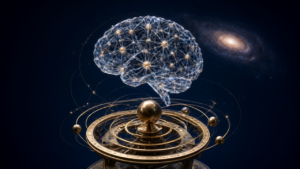
Recursive self-improvement (RSI) is critical for frontier AI contributing to scientific results, such as new gluon-scattering formulas and nanobody designs. However, RSI faces a supervision bottleneck: human experts cannot reliably assess outputs that exceed their own expertise, and manual revision of task decompositions is prohibitively effort-intensive. MASS draws on Minsky’s “Society of Mind” theory, treating intelligence as an emergence of organized interactions among simpler components to break the constraints of a single monolithic generator.
Significance & Outlook
By reorganizing the model’s working style into a structured team, MASS overcomes individual blind spots and prevents the reinforcement of errors common in single-model self-feedback. Because the improved model serves as a more capable optimizer and evaluator for the next cycle, this framework enables continuous, recursive bootstrapping of AI capabilities in open-ended research domains.
Source: https://arxiv.org/html/2610.12176v1
Get our weekly technology intelligence — free
Receive an infographic that lets you judge at a glance whether each field’s analysis report is worth reading.
Subscribe Free — Weekly Tech Intelligence
By subscribing, you’ll receive Troy-Technical’s weekly technology intelligence newsletter.
- Your email and selected fields are used only to deliver the newsletter.
- We never share your information with third parties.
- You can unsubscribe anytime via the link in each email.
See our Privacy Policy for details.
Takes about a minute · Unsubscribe anytime