


Key Findings
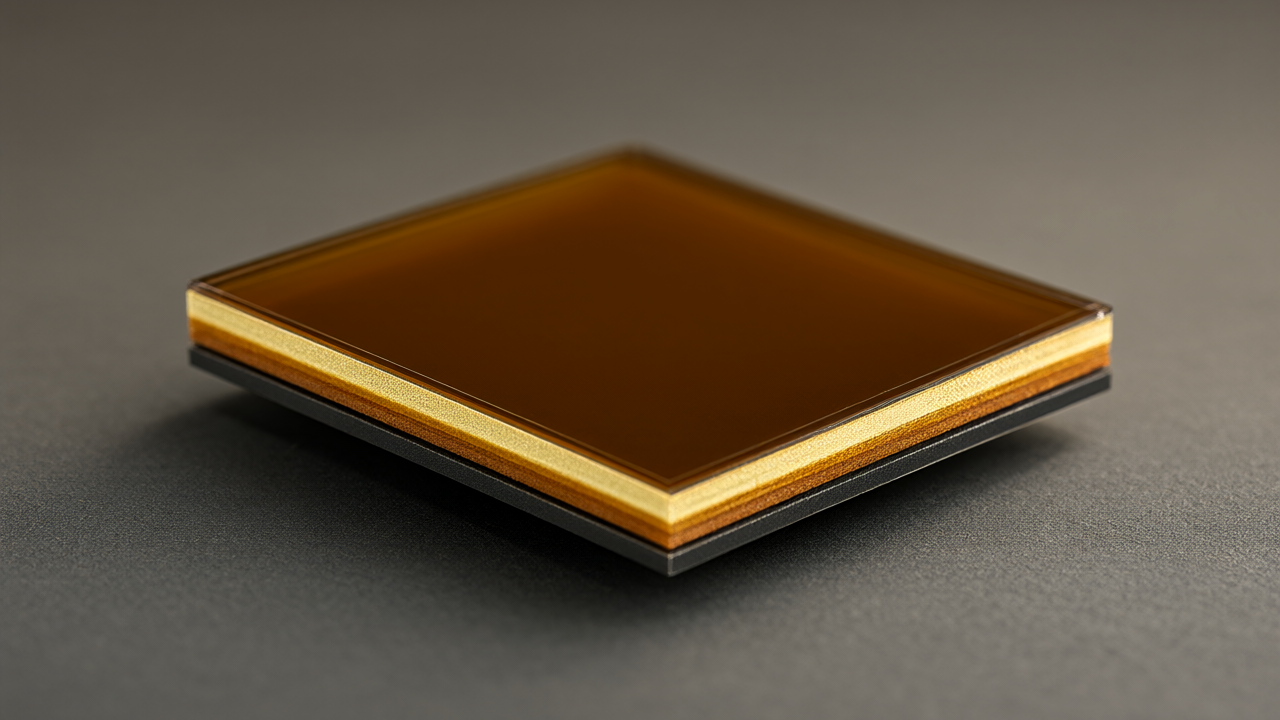
A numerical study by researchers at the Maulana Azad National Institute of Technology indicates that a lead-free, all-inorganic perovskite solar cell using Cs2PdBr6 can reach a power conversion efficiency of 27.48%. This result was achieved by optimizing the interface between the absorber and the hole transport layer. The simulated device utilizing vanadium pentoxide (V2O5) demonstrated an open-circuit voltage of 1.26 volts, a short-circuit current density of 25.1 milliamperes per square centimetre, and a fill factor of 87.3 percent.
Technical Details
The research focused on the valence band offset (VBO), the energy difference between the valence band edge of the hole transport layer and the absorber. Using the SCAPS-1D simulator, the team analyzed three alignment regimes:
- Cliff-type: Occurs when the absorber’s valence band sits above the transport layer’s. This leads to weak interfacial electric fields and increased interfacial recombination.
- Excessive Spike-type: Occurs when the offset is too large, creating a transport barrier that causes carrier accumulation at the interface.
- Optimized Spike-type: A balanced positive VBO that generates an optimized depletion field, assisting the drift transport of holes while suppressing recombination.
V2O5 was identified as the optimal material, providing a valence band offset of plus 0.3 electron volts relative to the Cs2PdBr6 absorber. Quantum efficiency analysis showed that this alignment enhances long-wavelength carrier collection by extending the effective drift region across the bulk of the absorber.
Background & Context
Conventional lead-halide perovskites face challenges regarding toxicity and the volatility of organic components. Cs2PdBr6 is an all-inorganic, lead-free alternative that eliminates these specific commercialization hurdles. However, the material requires precise energetic alignment with selective contacts to translate its optoelectronic properties into practical efficiency.
Significance & Outlook
The study shifts the design focus from the absorber’s internal composition to the interface energetics. By treating the VBO as a primary design variable, the researchers have demonstrated a hypothetical device that performs within the range of the best experimentally reported lead-based perovskite cells.
Get our weekly technology intelligence — free
Receive an infographic that lets you judge at a glance whether each field’s analysis report is worth reading.
Subscribe Free — Weekly Tech Intelligence
By subscribing, you’ll receive Troy-Technical’s weekly technology intelligence newsletter.
- Your email and selected fields are used only to deliver the newsletter.
- We never share your information with third parties.
- You can unsubscribe anytime via the link in each email.
See our Privacy Policy for details.
Takes about a minute · Unsubscribe anytime