

Key Findings
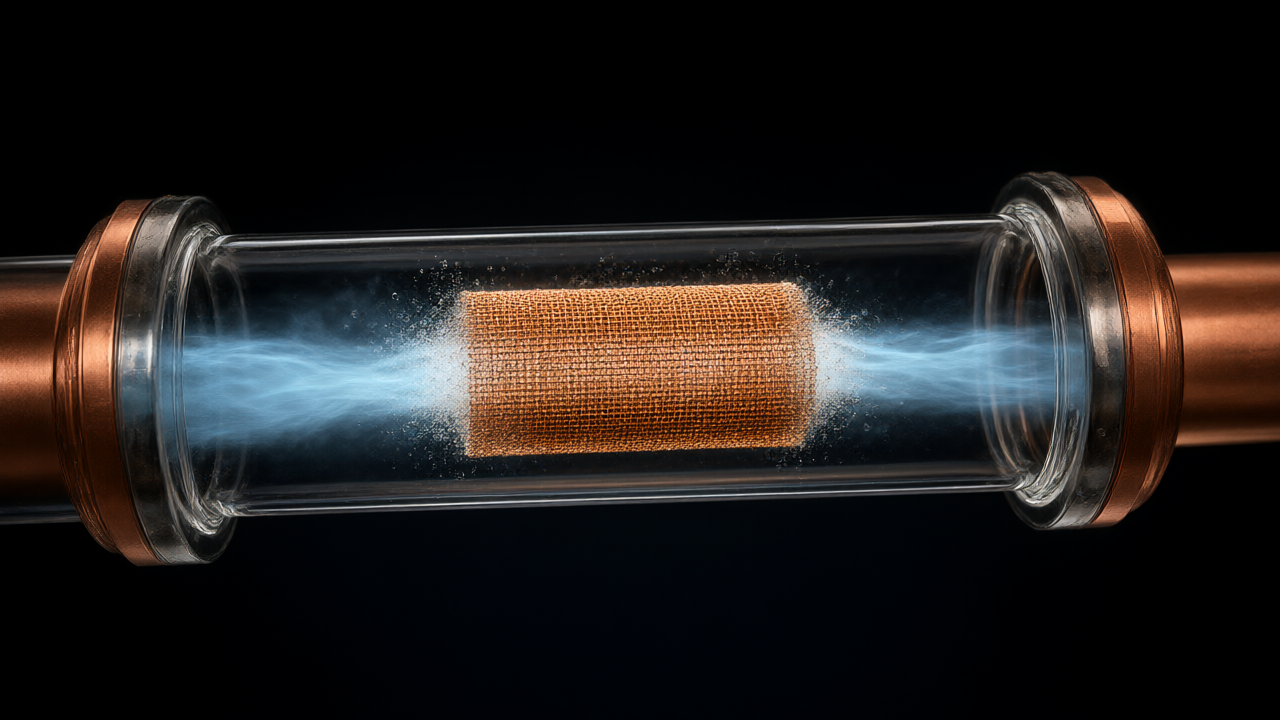
The integration of machine learning and quantum mechanics simulations has revealed thousands of previously overlooked chemical reactions that facilitate the conversion of carbon dioxide (CO2) into fuels. By expanding the reaction network from 152 to 9,389 individual reactions on a copper catalyst, researchers achieved a predicted CO2 conversion rate approximately 40 times higher than that of the original, smaller model.
Technical Details
The research team first established a database of 152 reactions using quantum mechanics simulations. They then trained machine learning models to estimate energy barriers for additional reactions involving 105 chemical species on the catalyst surface. This automated approach corrected previous model errors; while the 152-reaction network incorrectly predicted formic acid as the primary product, the expanded 9,389-reaction network correctly identified methanol and carbon monoxide as the major products, aligning with experimental data.
A significant discovery involves a non-conventional hydrogen pathway. The data indicates that hydrogen can be transferred to intermediate chemical compounds as molecular H2, rather than splitting into separate hydrogen atoms first. Quantum mechanics calculations confirmed this pathway is particularly favorable when hydrogen is transferred to intermediates containing oxygen.
Background & Context
CO2 recycling via hydrogenation typically uses catalysts to react CO2 with hydrogen to form methanol. However, simulating every possible step using quantum mechanics is computationally prohibitive, leading researchers to traditionally focus on a limited selection of reactions. This simplification often omits critical steps, leading to inaccurate predictions of product yields and conversion rates.
Significance & Outlook
The discovery that hydrogen can transfer as an intact molecule challenges established chemical assumptions and suggests that catalysts with stronger interactions with H2 could enhance methanol production. Beyond CO2 hydrogenation, this computational framework—combining quantum simulations, machine learning, and reaction rate models—may be applied to other industrial processes, including nitrogen reduction, water splitting, and CO2 reduction using alternative catalysts.
Source: https://www.sciencedaily.com/releases/2026/10/261013015758.htm
Get our weekly technology intelligence — free
Receive an infographic that lets you judge at a glance whether each field’s analysis report is worth reading.
Subscribe Free — Weekly Tech Intelligence
By subscribing, you’ll receive Troy-Technical’s weekly technology intelligence newsletter.
- Your email and selected fields are used only to deliver the newsletter.
- We never share your information with third parties.
- You can unsubscribe anytime via the link in each email.
See our Privacy Policy for details.
Takes about a minute · Unsubscribe anytime