
Key Findings
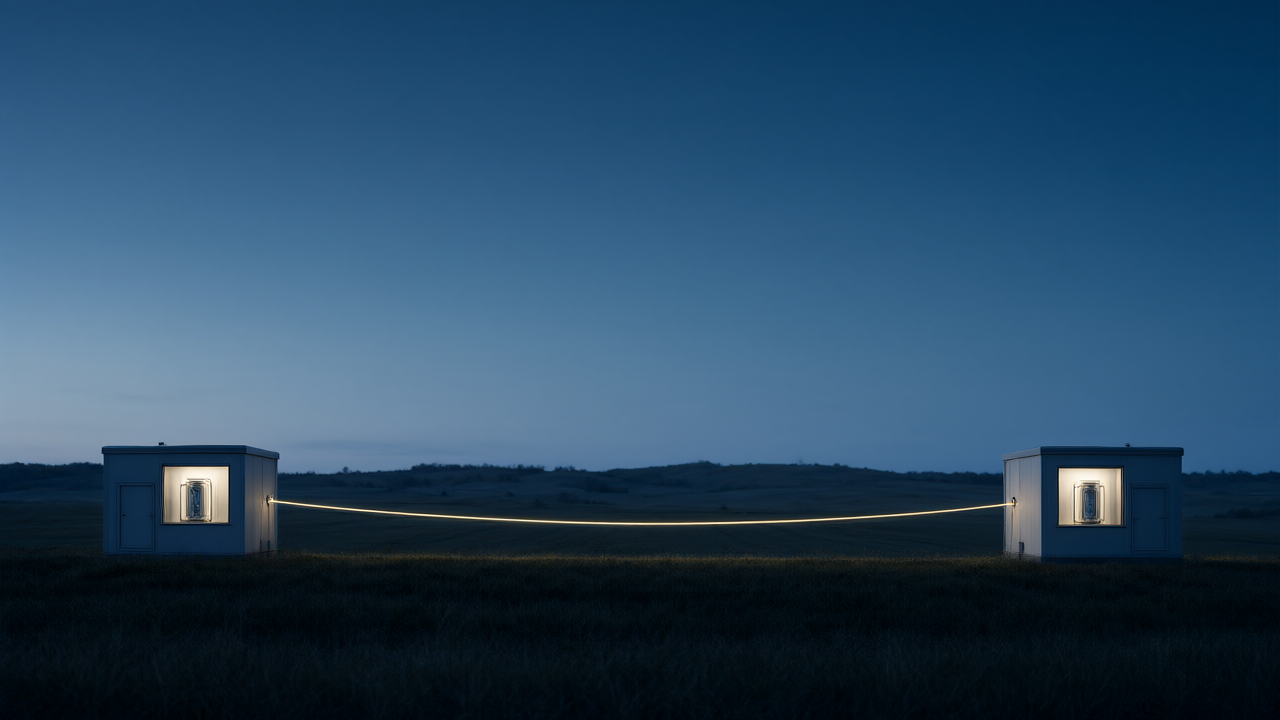
Numerical simulations conducted in the QuTiP environment demonstrate that the TESQR architecture increases the rate of long-distance entanglement distribution by an average of 63% over photonic-only architectures. In certain assessments, the success probability showed a maximum improvement of 159%. Furthermore, after implementing an entanglement purification scheme, the system maintains end-to-end fidelities exceeding 0.8 across distances of up to 20 kilometers.
Technical Details
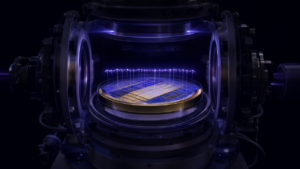
The TESQR framework utilizes a hybrid design that combines the high transmission speeds of photonic qubits in optical fiber with the high-fidelity processing of superconducting circuits. The architecture consists of three primary components:
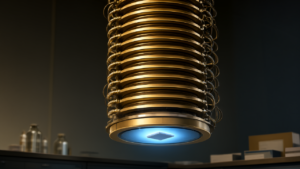
- Quantum transduction for converting optical photons to microwave photons.
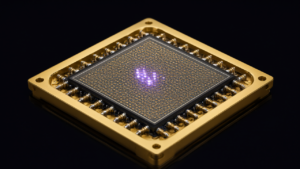
- Direct coupling to a superconducting quantum processing unit (QPU).
- A functional layer enabling these interactions.
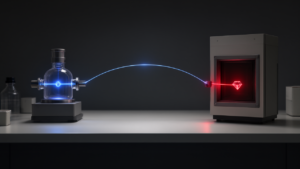
The process involves converting photons via a quantum transducer, coupling them to a superconducting QPU, and applying CNOT and Hadamard gates for entanglement swapping. The researchers used realistic noise models, including thermal noise and imperfections in gate operations, to evaluate performance.
Background and Context
Traditional quantum repeaters rely on Bell state measurements, which are inherently probabilistic and suffer from a 50% failure rate due to the nature of photon interactions. These systems often abort transmission upon photon loss. In contrast, the TESQR architecture eliminates the need for probabilistic Bell state measurements, allowing for deterministic processing operations that yield a final state at remote nodes even when photon loss occurs.
Significance and Outlook
The ability to consistently generate final states at remote nodes represents a critical step toward deterministic entanglement distribution. While current microwave-optical transduction efficiency has not yet reached the levels required for immediate large-scale deployment, the simulation results indicate that the architecture can overcome current limitations in long-distance quantum communication. The achievement of fidelities above 0.8 over 20km is noted as a critical threshold for practical application.
Source: https://quantumzeitgeist.com/tesqr-superconducting-circuits-boost-63-percent/
Get our weekly technology intelligence — free
Receive an infographic that lets you judge at a glance whether each field’s analysis report is worth reading.
Subscribe Free — Weekly Tech Intelligence
By subscribing, you’ll receive Troy-Technical’s weekly technology intelligence newsletter.
- Your email and selected fields are used only to deliver the newsletter.
- We never share your information with third parties.
- You can unsubscribe anytime via the link in each email.
See our Privacy Policy for details.
Takes about a minute · Unsubscribe anytime