


Key Findings
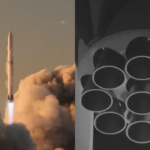
Ohara, an optical glass manufacturer based in Sagamihara, announced on October 20, 2026, that its products are employed in JAXA’s MMX probe. The mission, launched on October 20, 2026, via the H3 rocket flight 10, aims to land on the Martian moon Phobos, collect surface samples, and return them to Earth.
Technical Details
Ohara’s glass is utilized in two primary instruments:
- OROCHI Wide-Angle Spectrograph: This camera captures visible light reflected from the satellite surface across multiple wavelengths to analyze terrain and the distribution of organic matter and hydrated minerals. Ohara’s glass is used in the lenses to enable precise imaging.
- RAX Raman Spectrometer: Integrated into the IDEFIX rover—a joint development by the French National Centre for Space Studies (CNES) and the German Aerospace Center (DLR)—this instrument analyzes the mineral composition of Phobos’ regolith.
For the RAX instrument, Ohara provided “radiation-resistant optical glass.” This specific material prevents the discoloration typically caused by space radiation, which otherwise reduces light transmission. According to the company, the transmittance of this glass remains nearly constant even in space radiation environments, maintaining the optical performance of the observation equipment over long-term exploration.
Background & Context
The MMX mission seeks to clarify the origins of the solar system’s planets and the evolutionary process of the Martian sphere. The IDEFIX rover lands before the main MMX probe to assess the properties of regolith, thereby reducing risks associated with the main probe’s landing and sample collection.
Significance & Outlook
Ohara has a long history of supplying materials for space and astronomy, including the Skylab space station (1973), the Columbia space shuttle (1982), the Subaru Telescope (1999, 2012), and the Nancy Grace Roman Space Telescope (2026). Recent adoptions include NASA’s Perseverance rover (2021) and JAXA’s SLIM lunar lander (2023). The MMX mission represents the latest application of these materials in a world-first attempt at a sample return from a Martian moon.
Source: https://sorae.info/space/20261021-ohara-mmx.html
Get our weekly technology intelligence — free
Receive an infographic that lets you judge at a glance whether each field’s analysis report is worth reading.
Subscribe Free — Weekly Tech Intelligence
By subscribing, you’ll receive Troy-Technical’s weekly technology intelligence newsletter.
- Your email and selected fields are used only to deliver the newsletter.
- We never share your information with third parties.
- You can unsubscribe anytime via the link in each email.
See our Privacy Policy for details.
Takes about a minute · Unsubscribe anytime