

Key Findings
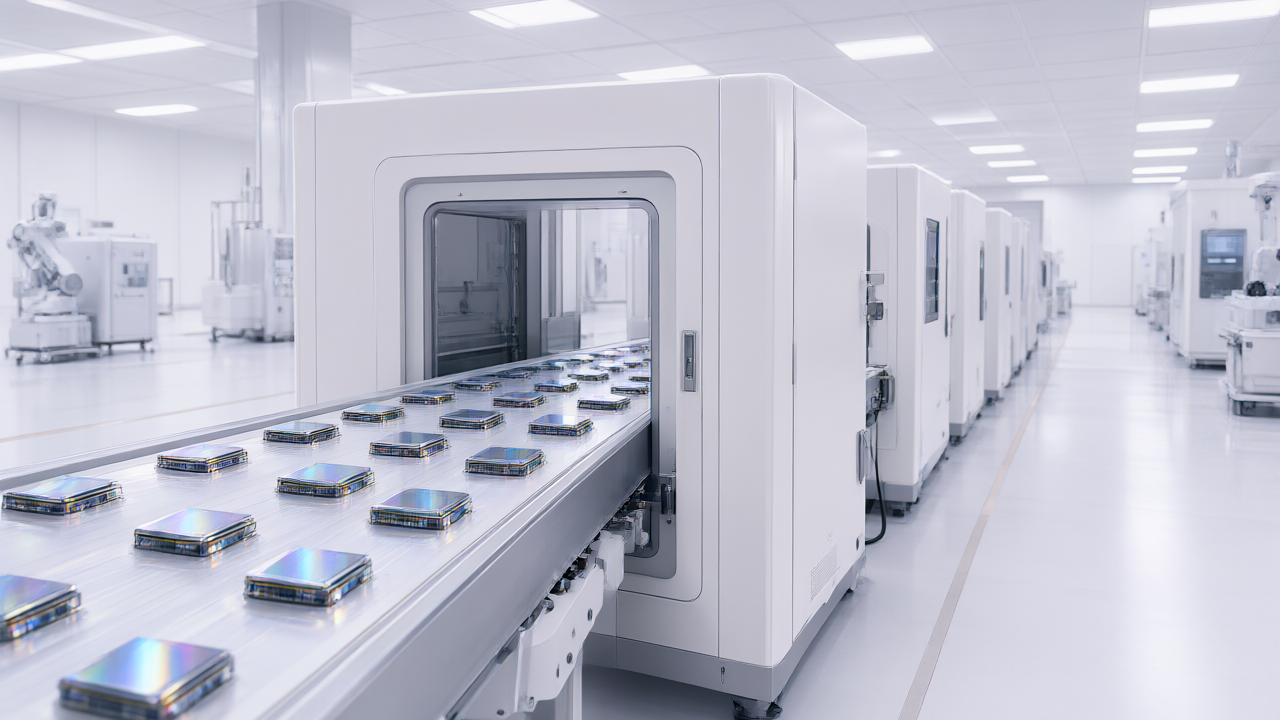
NTT, Japan Semiconductor (JSC), Furukawa Electric, and Shinko Electric Industries are collaborating to establish a mass production line for optical chiplets at the JSC Iwate plant by 2028. The initial production capacity is set at 10,000 units per year, with plans to scale to 100,000 units by 2031 and 1 million units by 2033. This initiative is supported by a NEDO grant covering approximately 160 billion yen of a total project cost of 240 billion yen.
Technical Details
Optical chiplets replace electrical signal transmission between semiconductor packages, such as CPUs and GPUs, with optical wiring. The technology employs a “membrane device” approach, integrating thin-film indium phosphide (InP) onto silicon photonics substrates to create high-efficiency optoelectronic fusion devices. Performance targets for mass production include:
- Transmission speed: 400 gigabits per second or higher.
- Power consumption: 2 picojoules per bit or lower.
- Production efficiency: A target increase of over 10 times compared to the research and development phase.
The production roles are divided among the partners: JSC handles silicon wafer technology; Furukawa Electric manages thin-film related technologies; NTT Innovative Device and JSC oversee back-end-of-line (BEOL) implementation and inspection; and Shinko Electric Industries manages the final assembly into semiconductor packages.
Background and Context
The rise of AI has led to a surge in data traffic between GPUs. While electrical transmission consumes significantly more power as transmission distances on circuit boards increase, optical communication maintains lower power consumption regardless of distance. This technology represents the third generation of NTT’s IOWN (Innovative Optical and Wireless Network). NTT previously commercialized the first generation for data center and server connections in 2023 and introduced second-generation optoelectronic fusion switches for board-to-board connections in 2025.
Significance and Outlook
NTT aims to reduce power consumption to 1/100th of conventional levels by the 2030s. With overseas IT giants like Nvidia increasing their presence in optoelectronic fusion, the establishment of a rapid, low-cost, and stable mass production supply chain is critical for securing a 30% global market share.
Source: https://newswitch.jp/p/50593
Get our weekly technology intelligence — free
Receive an infographic that lets you judge at a glance whether each field’s analysis report is worth reading.
Subscribe Free — Weekly Tech Intelligence
By subscribing, you’ll receive Troy-Technical’s weekly technology intelligence newsletter.
- Your email and selected fields are used only to deliver the newsletter.
- We never share your information with third parties.
- You can unsubscribe anytime via the link in each email.
See our Privacy Policy for details.
Takes about a minute · Unsubscribe anytime